




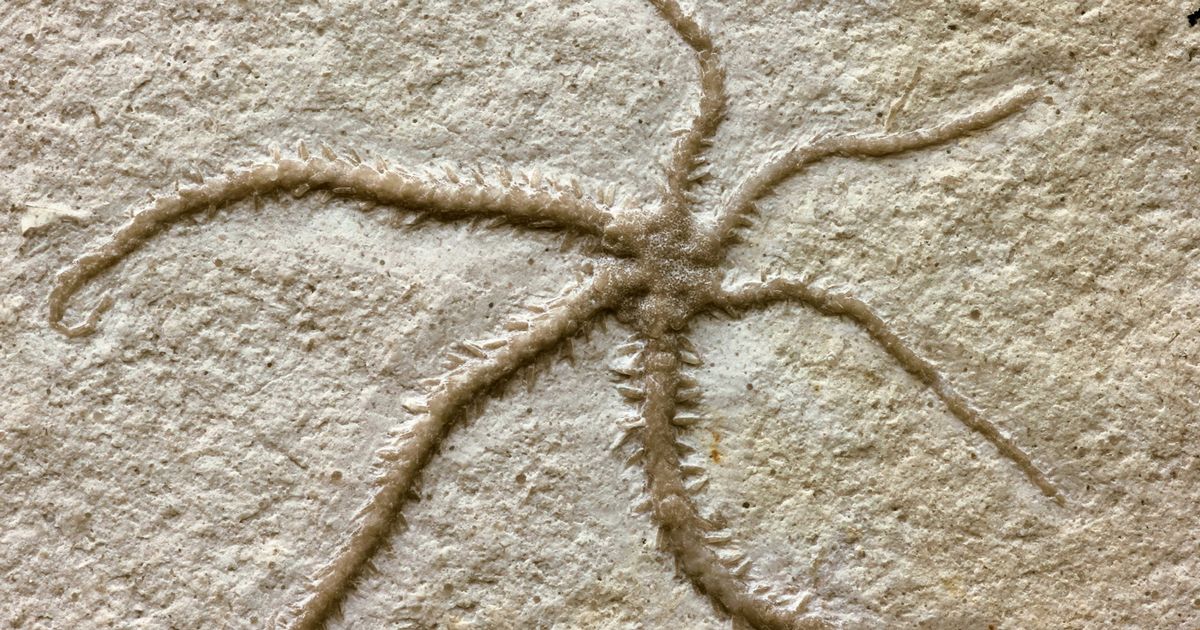
A 155-million-year-old six-armed brittle star fossil has been discovered, showcasing the process of regenerating one body half and providing evidence of clonal fragmentation in star-shaped echinoderms. The fossil, named Ophiactis hex, was found in limestone during a 2018 excavation in southern Germany. This new species is the first fossil case of a fissiparous ophiuroid, shedding light on the evolutionary origins of clonal fragmentation and a means of asexual reproduction. The specimen was petrified in the act of regenerating itself, showcasing the deep evolutionary roots of this process, which has been linked to life on a host and six-fold symmetry since the Jurassic period. The discovery was hailed as an exceptional find by the international team of paleontologists involved.
The study describes how some brittle stars and starfish have a unique way of reproducing through clonal fragmentation, where they split in halves and regrow missing body parts. While the biology of this process is relatively well-understood, little is known about its evolutionary origins. The previously unknown six-fold symmetry and clonal fragmentation displayed by the 155-million-year-old brittle star fossil provide crucial evidence suggesting that these processes have deep evolutionary roots. This finding supports the idea that clonal fragmentation, combined with six-fold symmetry and an epizoic lifestyle, was established as a means of asexual reproduction in ophiuroids by the Late Jurassic period. The fossil specimen offers a glimpse into the ancient history of these star-shaped creatures and their unique reproductive strategies.
This discovery has significant implications for understanding the evolution of reproduction in echinoderms and sheds light on the remarkable diversity of life forms that existed during the Jurassic period. By studying ancient fossils like the 155-million-year-old brittle star, scientists can piece together the puzzle of how different species reproduced and evolved over millions of years. The fossilization of the regenerating brittle star provides a rare snapshot of a specific moment in time, offering valuable insights into the reproductive strategies of ancient marine creatures. This find underscores the importance of paleontological research in unraveling the mysteries of prehistoric life forms.
The unique characteristics of the new brittle star species, Ophiactis hex, highlight the complexity and diversity of ancient marine ecosystems during the Jurassic period. The fossilized specimen offers a glimpse into the fascinating world of clonal fragmentation and asexual reproduction in star-shaped echinoderms, providing crucial evidence of these processes’ deep evolutionary roots. The study’s findings contribute to our understanding of the mechanisms underlying reproduction and regeneration in ancient marine organisms, offering new insights into the evolutionary history of these unique creatures. By unraveling the secrets of ancient fossils, researchers can reconstruct the evolutionary paths taken by different species and gain a deeper understanding of the processes that shaped life on Earth millions of years ago.
In conclusion, the discovery of the 155-million-year-old fossil of Ophiactis hex represents a groundbreaking find in paleontology, shedding new light on the evolutionary origins of clonal fragmentation and asexual reproduction in star-shaped echinoderms. The unique characteristics of this fossilized specimen provide compelling evidence of the deep evolutionary roots of clonal fragmentation and its association with life on a host and six-fold symmetry since the Jurassic period. By studying ancient fossils like this, scientists can unlock the secrets of ancient marine ecosystems and gain a better understanding of the diverse forms of life that existed millions of years ago. This discovery opens up new avenues for research into the evolutionary history of reproduction in marine organisms and underscores the importance of paleontological research in uncovering the mysteries of prehistoric life on Earth.