





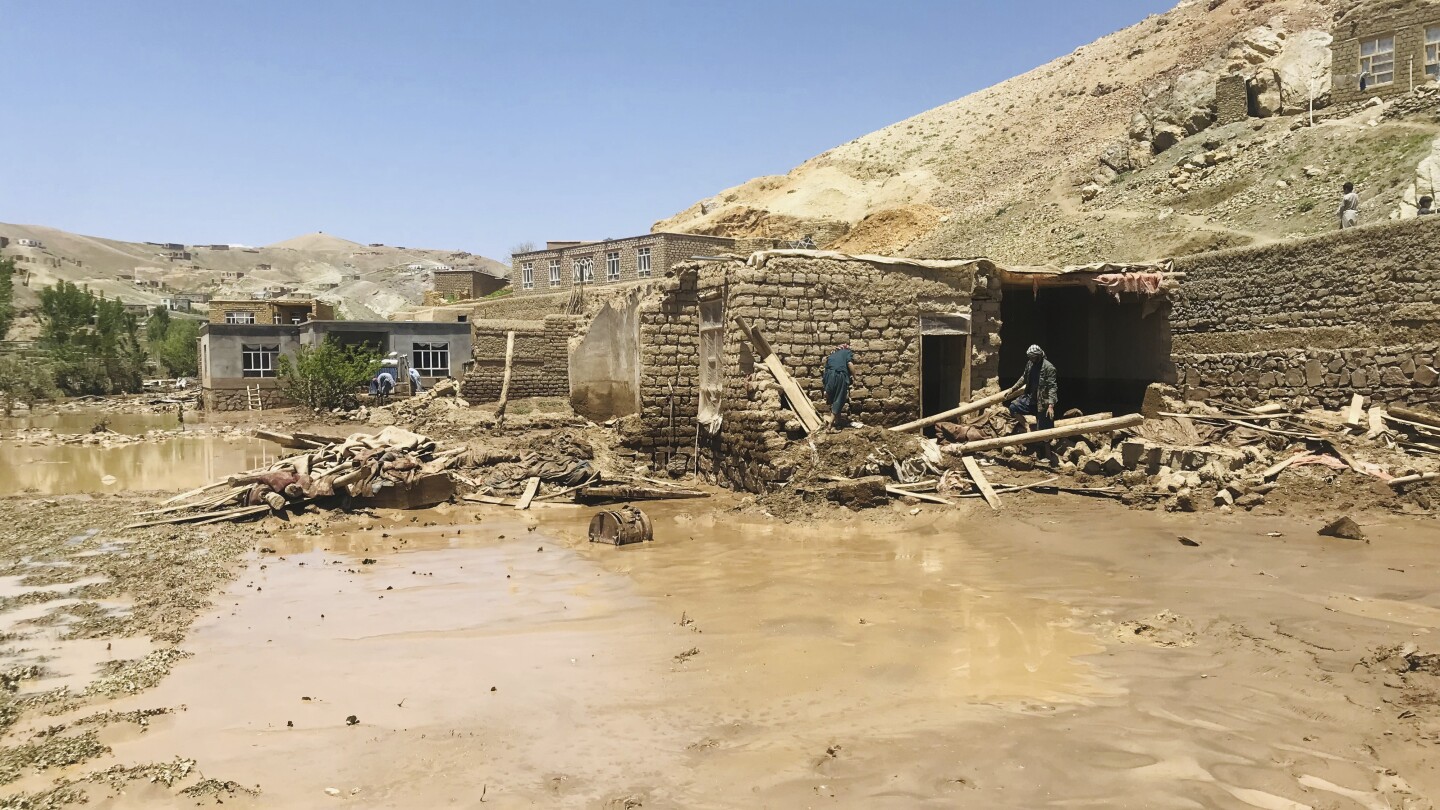
As heavy seasonal rains continue to wreak havoc in Afghanistan, at least 68 people have been reported dead due to flash floods. The Taliban officials confirmed the death toll, with the worst hit being the western province of Ghor where 50 people lost their lives. The province has also suffered significant financial losses, with thousands of homes and properties damaged, and agricultural land destroyed. In the northern province of Farayab, 18 people were killed, and damages to property and land were reported across four districts. The U.N. food agency has stated that Ghor was the most affected by the floods, impacting 2500 families, and assistance teams are on the ground to provide aid.
The Taliban’s government chief spokesman expressed sadness over the loss of fellow Afghans and called on responsible authorities to provide necessary support to alleviate the suffering. He also urged donors and humanitarian organizations to help the affected communities with aid. The World Food Program (WFP) reported that the heavy rains in Afghanistan have taken more than 300 lives and destroyed thousands of houses, particularly in the northern province of Baghlan. Survivors in Baghlan are left without homes, land, or a source of livelihood. WFP mentioned the challenges of delivering aid to inaccessible areas in Baghlan, but they are exploring all options to ensure food reaches the survivors.
The recent disaster in Afghanistan follows devastating floods in April that claimed the lives of at least 70 people. The floods also caused destruction to about 2,000 homes, three mosques, and four schools in provinces such as Farah, Herat, Zabul, and Kandahar. The continuous heavy rainfall has led to a series of disasters in the country, leaving many communities displaced and in need of urgent assistance. The Afghan government, along with international organizations like WFP, are working to provide support to those affected by the floods and mitigate the impact of the natural disasters in the region.
The widespread damage caused by the floods highlights the vulnerability of communities in Afghanistan to natural disasters, exacerbated by climate change. The need for long-term solutions to strengthen infrastructure, disaster preparedness, and response mechanisms is evident. The Afghan government must work to build resilience in communities and improve early warning systems to minimize the impact of such disasters in the future. International support and cooperation are crucial in providing humanitarian aid and relief to those affected by the floods, ensuring that they receive the assistance needed to rebuild their lives and livelihoods.
Despite the challenges faced by Afghanistan, the resilience and solidarity of the Afghan people shine through in times of crisis. Communities come together to support each other, and organizations like WFP play a crucial role in providing essential aid and relief. As the country continues to grapple with the aftermath of the floods, there is a need for sustained support and collaboration to ensure that affected communities can recover and rebuild. The international community must stand in solidarity with Afghanistan and provide the necessary resources to help the country respond to the ongoing humanitarian crisis and address the underlying vulnerabilities that make communities susceptible to natural disasters.