




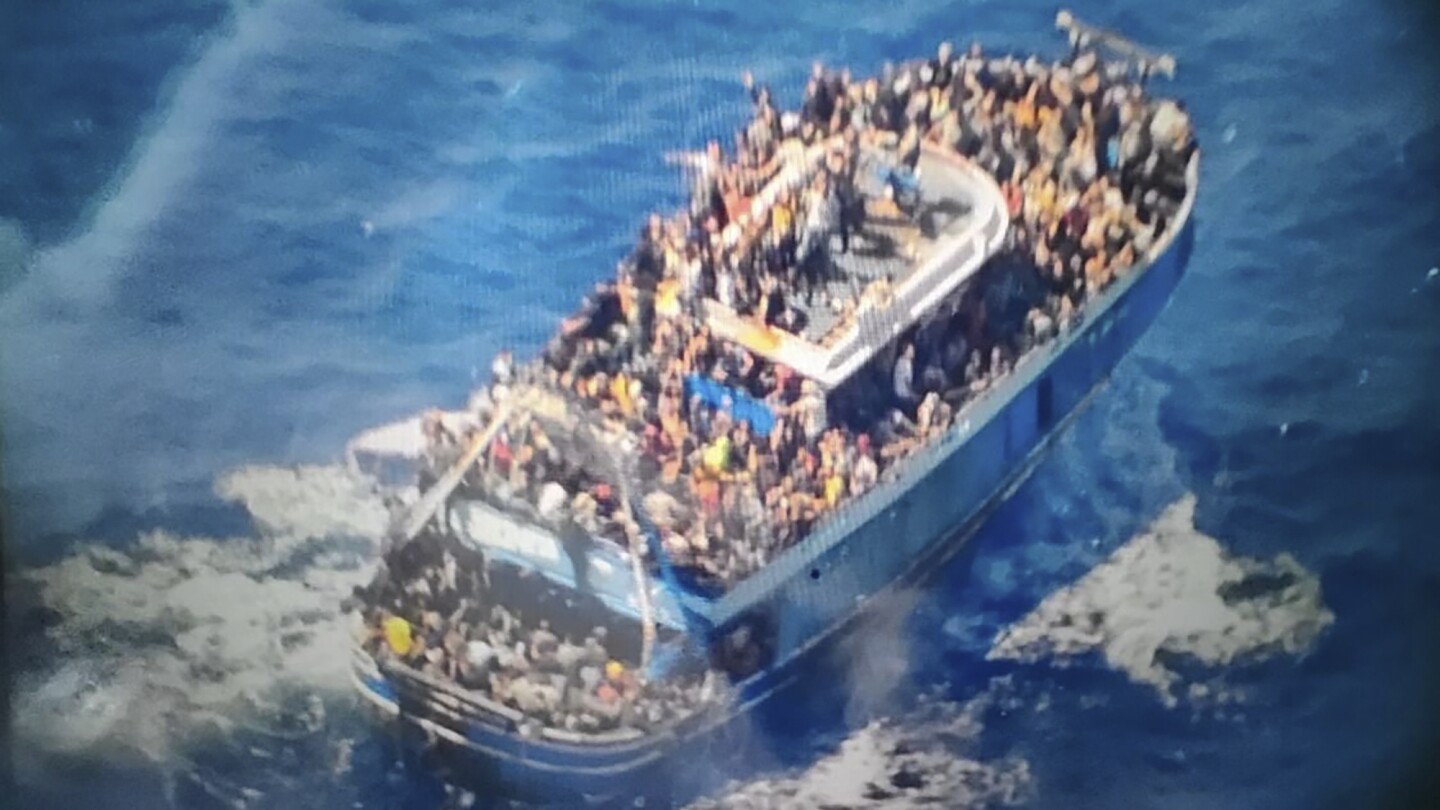
A legal defense team for nine Egyptian men accused of causing one of the Mediterranean’s deadliest shipwrecks argued that Greece has no jurisdiction in the case and insisted their clients were innocent survivors who have been unjustly prosecuted. The men, ranging in age from early 20s to early 40s, are facing charges including migrant smuggling, participation in a criminal organization, and causing a deadly shipwreck. The Adriana, an overcrowded fishing trawler carrying hundreds of asylum-seekers from Libya to Italy, sank on June 14 in international waters off the southwestern coast of Greece. Only 104 people survived, and around 80 bodies were recovered.
The defense team, consisting of Greek lawyers, maintained their clients’ innocence, stating that the defendants were paying passengers misidentified as crew members by other survivors who gave testimonies under duress shortly after being rescued. They argued that the accused were randomly smuggled individuals seeking a better life and were wrongly accused of being part of the smuggling team. The Greek authorities had named the defendants as crew members based on testimonies by other survivors who identified them for simple acts like handing out water or fruit to other passengers.
While the trawler was sailing in international waters, it was within Greece’s search and rescue zone, where the coast guard had been shadowing the vessel for a day without attempting a rescue. Some survivors claimed the coast guard was trying to tow the boat when it sank, leading to accusations of triggering the shipwreck while attempting to tow the boat out of Greece’s zone of responsibility. Greek authorities denied these allegations and asserted that the crew members had refused help from nearby ships and the coast guard. A separate investigation by Greece’s naval court has not reached a conclusion, and the defense team has not been granted access to it.
The defense team argues that since the shipwreck happened in international waters, Greek courts lack jurisdiction to try the case and will move to dismiss it on those grounds during the trial in Kalamata. Greece is a popular route into the European Union for migrants fleeing conflict and poverty in the Middle East, Africa, and Asia. While many cross into the country’s eastern Aegean islands from Turkey, others take the longer and riskier Mediterranean route from North Africa to Italy. In a recent incident, Greece’s coast guard rescued 42 people and was searching for three others after a distress call from a boat sailing south of the island of Crete. The passengers were rescued by nearby ships and a Greek navy helicopter.
The ongoing migration crisis continues to pose challenges for countries like Greece, where rescues at sea are common, and legal battles over jurisdiction and responsibility unfold. The plight of migrants risking their lives to reach Europe often leads to tragic consequences, such as the deadly shipwreck in the Mediterranean. The legal defense team’s efforts to challenge the jurisdiction of Greek courts in the case of the Egyptian men involved in the shipwreck shed light on the complexities surrounding migration and the need for a comprehensive and humane approach to address the challenges faced by migrants and asylum-seekers. As the trial approaches in Kalamata, the outcome will have implications for the prosecution of similar cases and the broader issue of migrant rights and responsibilities in the Mediterranean region.