



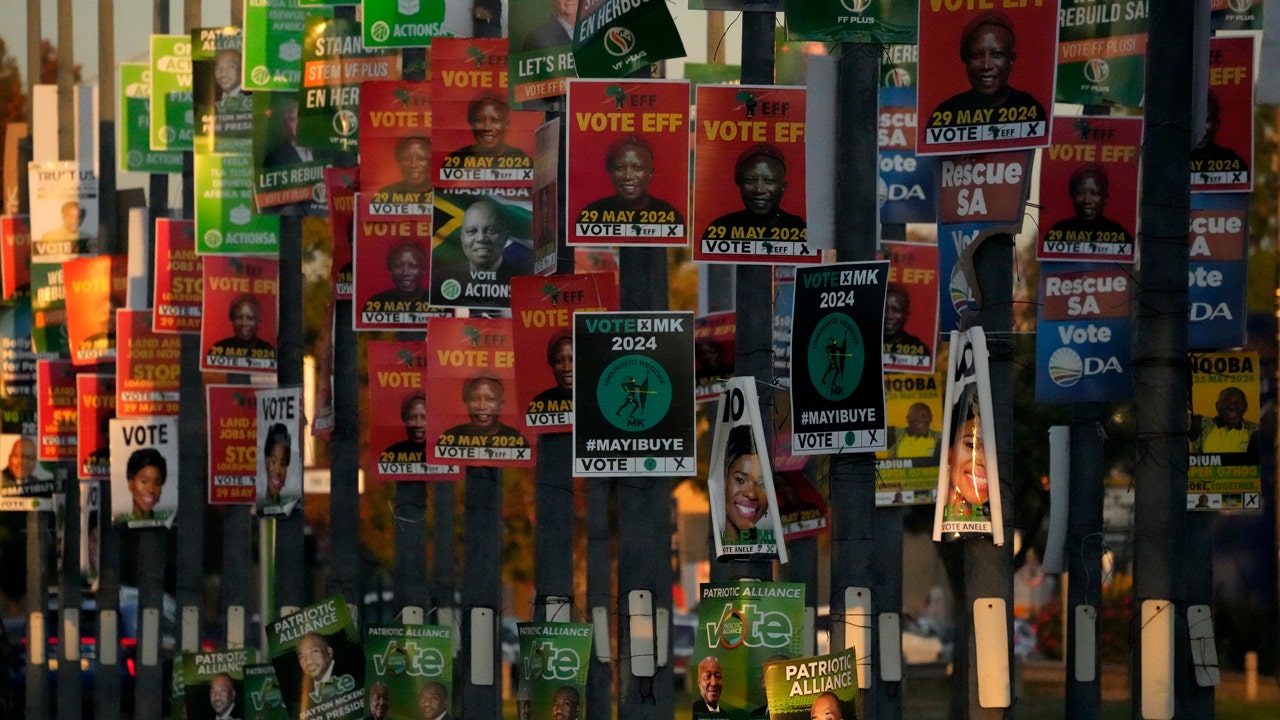
South Africa’s upcoming election will determine the current level of weariness among voters towards the ruling African National Congress (ANC), which has been in power since the end of apartheid 30 years ago. President Cyril Ramaphosa and the ANC are struggling to maintain their parliamentary majority, and opinion polls suggest that the party may receive less than 50% of the national vote for the first time in the May 29 election. Despite this decline in popularity, no viable replacement for the ANC has emerged, leading voters to explore other opposition parties. A coalition government may be necessary for the ANC to remain in power, potentially bringing new complications to the political landscape of South Africa.
South Africans do not directly vote for the president; instead, they vote for parties that secure seats in Parliament based on the national vote share. The National Assembly, made up of 400 members, elects the president. In this election, the ANC may need to form alliances with other parties to secure the necessary 201 votes to reelect Ramaphosa and form a government. The election process begins with overseas voting on Friday and Saturday, followed by the main election on May 29 across all nine provinces. The outcome will determine the composition of both the national and provincial legislatures, with over 27 million registered voters participating.
A record 70 political parties are registered for the election, with independent candidates allowed to run for the first time. The ANC’s fate is a major focus, with Ramaphosa leading the campaign. The Democratic Alliance (DA) is the main opposition party, while the far-left Economic Freedom Fighters (EFF) is the third-largest party. Polls suggest that neither opposition party has significantly increased its popularity compared to the last national election. The election landscape is becoming more diverse, with new parties attracting attention, such as uMkhonto weSizwe, led by former President Jacob Zuma, who has broken away from the ANC.
Unemployment and poverty are among the most pressing issues for voters in South Africa, despite the country’s status as the most advanced in Africa. The unemployment rate is at 32%, the highest globally, and over half of the population lives in poverty. Many Black South Africans feel that the ANC has not adequately improved their lives since the end of apartheid, leading to widespread discontent. Other prominent election issues include high rates of violent crime, government corruption scandals, failing basic services, and a crisis within the state-owned electricity provider, resulting in frequent nationwide blackouts. The turmoil has aggravated an already struggling economy and alienated voters.
While the ANC is expected to receive the largest share of votes in the upcoming election, a coalition government may be required for the party to remain in power. Despite voter dissatisfaction with the ANC, the absence of a strong alternative poses a potential challenge in forming a stable government. The election will be critical in shaping the future of South Africa and addressing key issues like unemployment, poverty, crime, corruption, and infrastructure failures that continue to impede the country’s progress. The outcome of the election will have far-reaching implications for the nation’s political landscape and economic stability.