



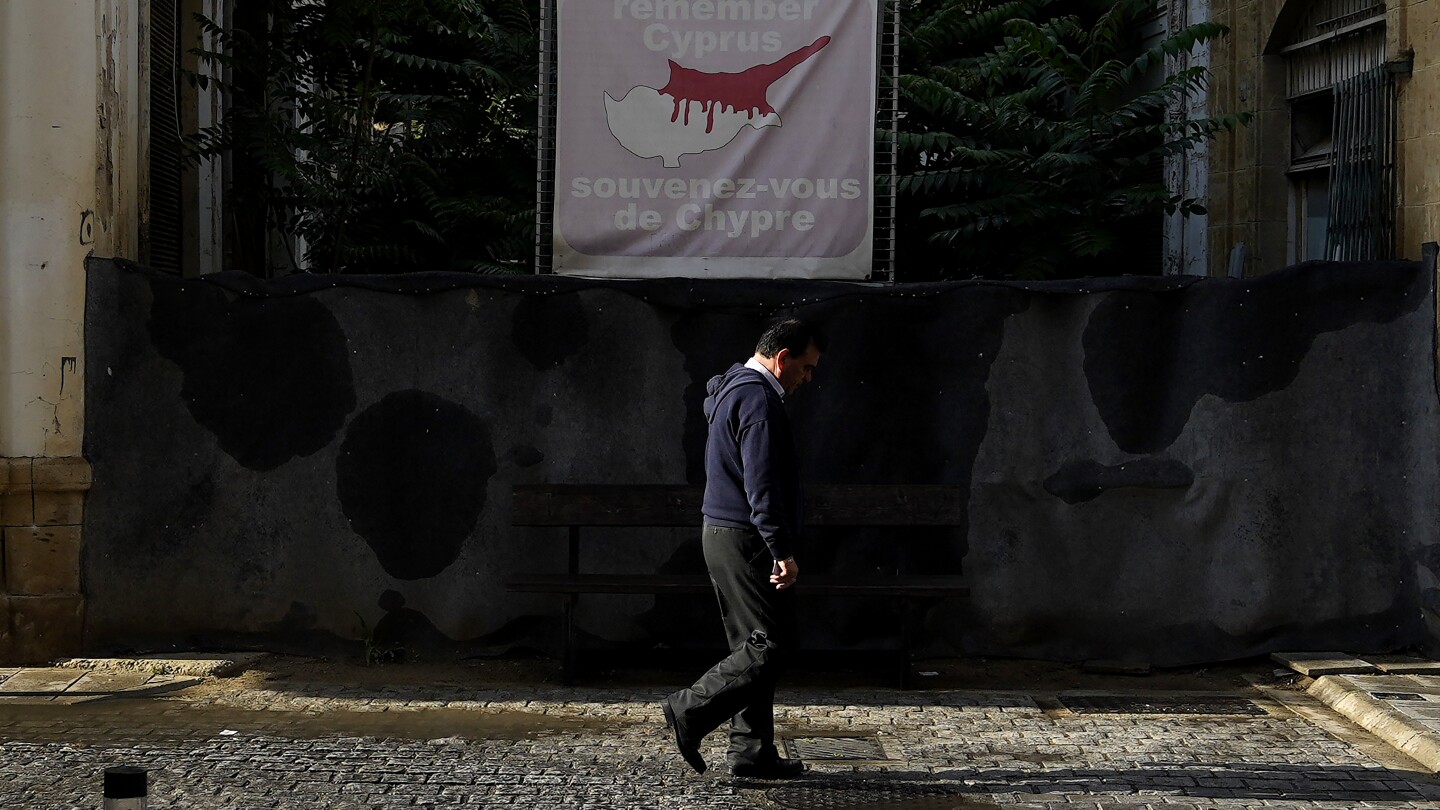
Efforts to restart formal talks to mend the ethnic division in Cyprus appear to be worsening, as the leader of the breakaway Turkish Cypriots expressed a lack of common ground with Greek Cypriots for negotiations. Turkish Cypriot leader, Ersin Tatar, stated that talks cannot happen unless Turkish Cypriot sovereignty in the island’s northern third is recognized internationally on par with the Cyprus republic in the Greek Cypriot south. Tatar emphasized that a permanent Turkish military presence and intervention rights are essential for any peace deal, despite Greek Cypriot opposition to Turkish involvement in a settlement deal.
Tatar’s stance on the issue has remained consistent since he came into power in 2022, and his recent comments to the U.N. envoy signal a deadlock in the negotiations. The majority of Greek Cypriots reject a two-state solution that would formalize the division between Turkish Cypriot and Greek Cypriot zones, as well as the presence of Turkish troops and intervention rights. Tatar’s refusal to compromise on these key issues poses a significant obstacle to restarting talks, despite months of shuttle diplomacy by the U.N. envoy, María Ángela Holguín Cuéllar.
The prospects of resuming formal talks on the Cyprus conflict appear bleak, with the history of failed negotiations dating back to 1974 when the island was divided along ethnic lines. Efforts to reunify Cyprus as a federation have been repeatedly unsuccessful, with Turkey being the only country recognizing the Turkish Cypriot declaration of independence. Despite Cyprus being an EU member, only the Greek Cypriot south enjoys full membership benefits while the Turkish Cypriot north remains isolated politically and economically.
Holguín, who was appointed earlier in the year to assess the possibility of restarting talks, has been engaging with various stakeholders in the region. While she has refrained from revealing much about her contacts, it is evident that Tatar’s rejection of her proposal for a three-way meeting with Cypriot President Nikos Christodoulides indicates a significant obstacle in the negotiation process. Holguín is expected to provide a report to the U.N. Secretary-General soon, outlining her findings and recommendations for the way forward.
Despite the challenges and lack of progress in the negotiations, Christodoulides remains optimistic about the efforts for a resumption of talks. He emphasized the importance of giving diplomacy time to work and reiterated the commitment to finding a peaceful resolution to the long-standing conflict. The international community, including the U.N. and the EU, continue to support efforts for a comprehensive and lasting solution to the Cyprus issue, but the entrenched positions of the parties involved pose significant challenges to achieving a breakthrough in the near future.