





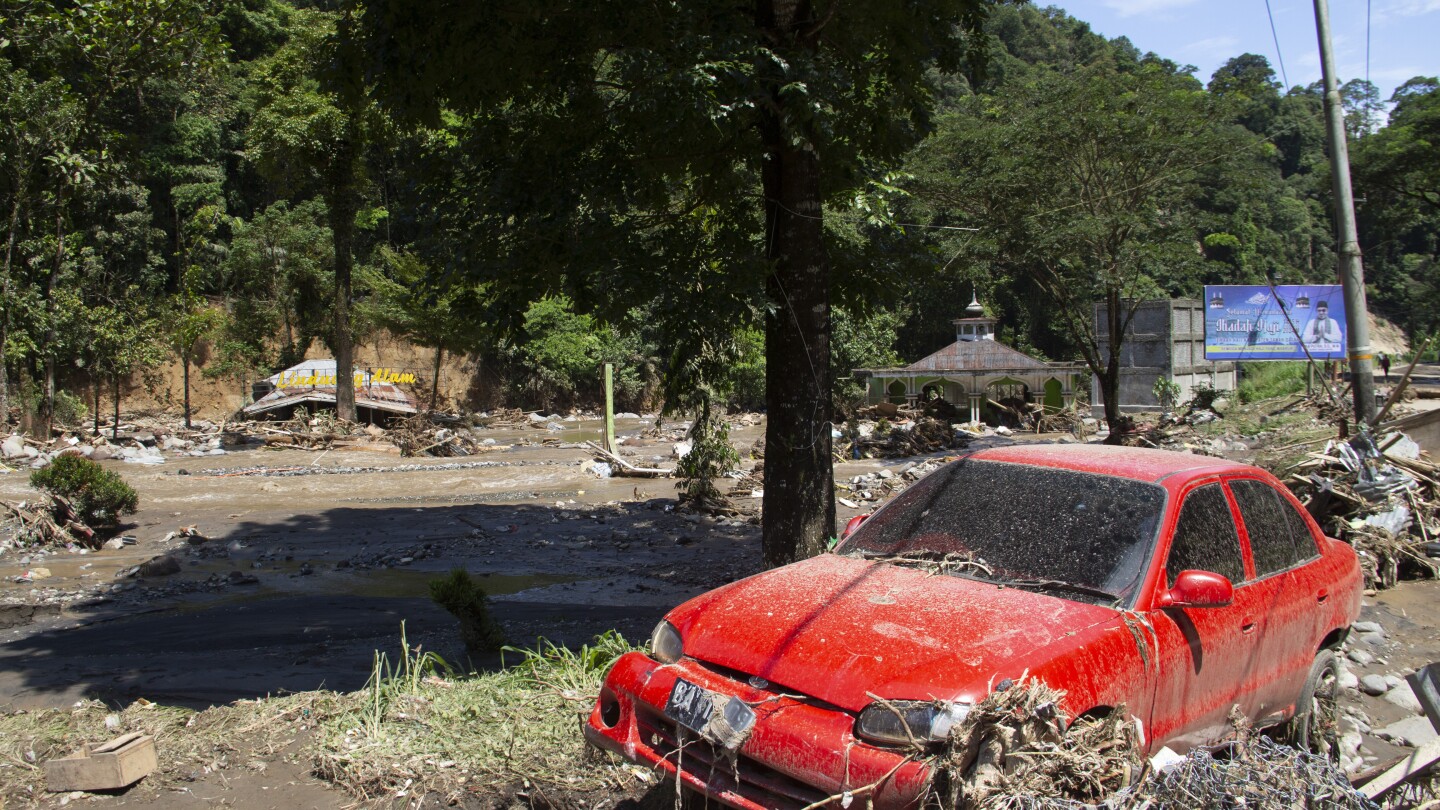
Heavy rains and cold lava flow from Mount Marapi in Indonesia’s Sumatra island triggered flash floods that resulted in the death of at least 37 people and left more than a dozen missing. The floods, caused by monsoon rains and a major mudslide, occurred in four districts in West Sumatra province. The cold lava flow, also known as lahar, is a mixture of volcanic material and pebbles that flows down the volcano’s slopes during rainstorms. The floods swept away people and submerged over 100 houses and buildings in the affected areas. Rescuers recovered bodies from the worst-hit villages, with some bodies found in the mud in various districts.
The National Search and Rescue Agency reported that flash floods also impacted the main roads around the Anai Valley Waterfall area in Tanah Datar district, leading to blockages due to mud, which cut off access to other cities. Videos released by the agency showed roads transformed into murky brown rivers due to the disaster. The recent flash floods come just two months after heavy rains triggered similar incidents in West Sumatra’s Pesisir Selatan and Padang Pariaman districts, resulting in casualties and missing individuals. Mount Marapi, a 2,885-meter volcano, erupted late last year, causing the death of 23 climbers. The volcano has been on the third-highest alert level since 2011, signaling above-normal volcanic activity. Climbers and villagers are advised to stay more than 3 kilometers away from the peak.
Marapi is notorious for its sudden eruptions, which are challenging to predict due to the shallow source near the peak. The volcano’s eruptions are not caused by deep movements of magma, unlike others that produce seismic tremors detectable on monitors. Marapi has been active since a January 2023 eruption that luckily caused no casualties. Indonesia, with over 120 active volcanoes, is located on the Pacific “Ring of Fire,” a zone of volcanic activity and fault lines encircling the Pacific Basin. This geographical positioning makes the country prone to seismic events and volcanic eruptions. The disaster management in Indonesia faces challenges in dealing with natural calamities due to the country’s susceptibility to geological hazards. Efforts are ongoing to rescue those missing and provide assistance to the affected communities.
The coordinated efforts of the National Search and Rescue Agency and other emergency response teams are critical in managing the aftermath of the flash floods in West Sumatra. Rescuers are working diligently to locate the missing individuals and provide relief to the affected villages. The devastating impact of the floods, which submerged houses and buildings, underscores the vulnerability of communities living in volcanic areas. It is essential for authorities to monitor volcanic activity closely and issue timely alerts to prevent loss of life in such disasters. The tragic incidents in West Sumatra serve as a reminder of the unpredictable nature of natural calamities and the need for preparedness and response mechanisms to mitigate their impact on vulnerable populations. The recent flash floods highlight the importance of disaster risk reduction measures and community resilience building in high-risk areas prone to volcanic eruptions and other geological hazards.