




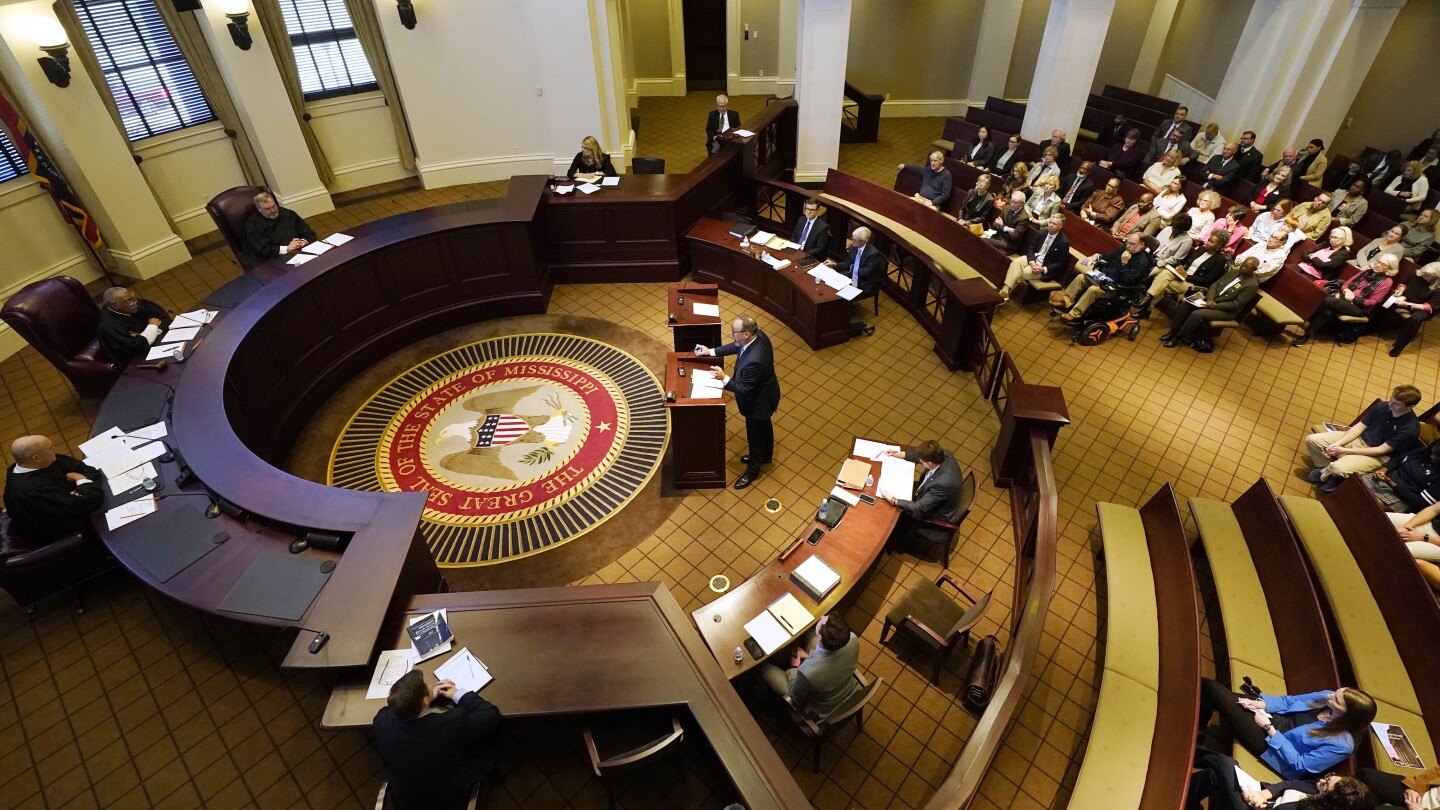
The Mississippi Supreme Court has declined to rule on whether the state is violating its own constitution by allocating $10 million of public money for infrastructure grants to private schools. The court ruled 7-2 that an advocacy group, Parents for Public Schools, did not have legal standing to sue the state. They failed to demonstrate an adverse impact different from the general public, leading the justices to not address the larger constitutional question of public funds going to private schools. In a dissent, Justice Leslie King argued that Parents for Public Schools had proper legal standing as representatives of public school parents and highlighted the constitutional prohibition of funds going to non-free schools.
The $10 million grant program for private schools was created by the Republican-controlled Mississippi Legislature in 2022, using part of the federal pandemic relief funds received by the state. The grants were intended for infrastructure projects such as broadband, water, or drainage and were put on hold after legal action by the American Civil Liberties Union of Mississippi, the Mississippi Center for Justice, and Democracy Forward on behalf of Parents for Public Schools. Public schools were excluded from applying for these grants, raising concerns about the competitive advantage it would give private schools over public schools. Hinds County Chancery Judge Crystal Wise Martin blocked the law in October 2022, citing the potential harm to public schools.
The Legislature had also established a separate program to provide interest-free loans to public schools for building improvements, funded by the state, with repayment required within 10 years. In contrast, the $10 million grants to private schools would not need to be repaid. Three Supreme Court justices heard arguments on the private school grants in February, with all nine participating in the final ruling. The decision not to rule on the constitutional question regarding public funds going to private schools leaves the $10 million grant program in limbo, with no clear resolution on whether it violates the Mississippi Constitution’s provision against appropriations to non-free schools.
The legal battle over the $10 million grant program for private schools underscores the ongoing debate over the use of public funds in education and the disparity between public and private institutions. Advocates for public schools argue that the grants would further disadvantage already underfunded public schools by channeling resources to private entities. On the other hand, supporters of school choice and private institutions contend that such programs provide necessary support and options for families seeking alternative education options. The Supreme Court’s decision not to address the constitutional issue leaves the door open for potential future challenges or legislative actions regarding the allocation of public funds for private school infrastructure projects.
The involvement of advocacy groups like Parents for Public Schools, the American Civil Liberties Union of Mississippi, and the Mississippi Center for Justice highlights the importance of civic engagement in advocating for equitable education policies. By challenging the legality of the $10 million grant program, these organizations seek to ensure that public funds are used in a manner that upholds the principles of equal access to education and fair distribution of resources. The decision of the Mississippi Supreme Court, while not providing a definitive resolution, serves as a reminder of the complexities and controversies surrounding education funding and the ongoing efforts to address disparities within the education system. As the legal battle continues, the fate of the $10 million grant program for private schools remains uncertain, with implications for the broader debate on public education and the use of public funds in supporting various educational institutions.