




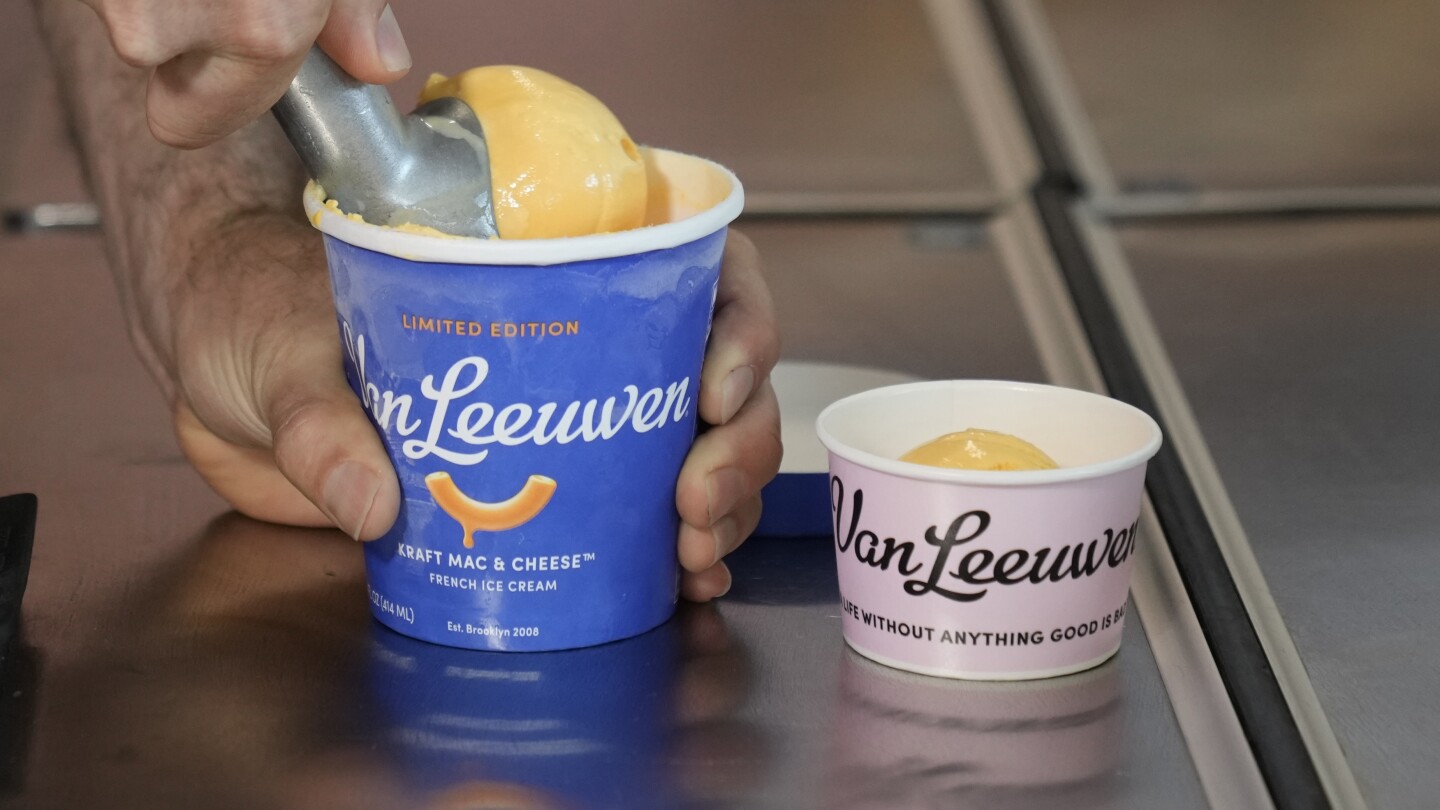
The food and beverage industry is currently experiencing a trend of surprising flavor combinations, with companies like Van Leeuwen Ice Cream introducing unique flavors such as Hidden Valley Ranch and pizza ice cream. This trend is driven by consumers with changing and expanding tastes, as well as companies’ efforts to stay relevant in a crowded marketplace. Manufacturers are now able to experiment with oddball pairings more frequently, thanks to advancements in technology and efficiency. Limited-edition flavors are designed to attract new customers and make existing ones pick up the original flavor as well.
Brands like Mondelez International, the maker of Oreo cookies, are embracing the trend by releasing limited-edition flavors like Sour Patch Kids Oreos. Kristen Braun, the senior brand manager for Oreo innovation, stated that companies are exploring more creative options as consumers are no longer just limited to one type of flavor preference. These unique flavors take around one to two years to develop and typically stay on shelves for about nine weeks, showcasing the dedication and innovation of food companies in responding to consumer demands.
Generation Z, known for being diverse and adventurous, is also driving innovation in the food industry. Chefs like Kyle Shadix of PepsiCo are experimenting with flavors from different cuisines such as Mexican, Korean, and Japanese to cater to this new generation of consumers. Shadix believes that Gen Z’s openness to trying new foods will push the industry to explore even more innovative flavors at a faster pace than before. By tapping into this adventurous consumer base, brands can continue to stay relevant and attract a wider audience.
Combining brands through flavor pairings can also help boost brand associations in consumers’ minds. For example, Peeps-flavored Pepsi conveys a message of fun and relevance for the Pepsi brand, while mustard-flavored Skittles can make a well-established brand like French’s seem playful and innovative. These unconventional collaborations are a way for companies to stand out in a competitive market and attract consumer attention. By offering unique and unexpected flavors, brands can create a memorable experience for consumers and drive sales.
Despite the success of some unique flavor combinations, not all novelty flavors are well-received by consumers. Van Leeuwen Ice Cream, known for its innovative flavors, encountered challenges with unusual combinations like Hidden Valley Ranch ice cream. While these shock flavors create excitement and buzz, they often have limited “eat-ability” and may not become part of the permanent menu. Brands like Brach’s faced similar challenges with their Turkey Dinner Candy Corn, which had a “gross-out” factor, resulting in limited consumer interest.
In conclusion, the current trend of surprising flavor combinations in the food and beverage industry reflects a shift towards catering to evolving consumer tastes and preferences. Companies are embracing creativity and innovation to stand out in a competitive market, with limited-edition flavors designed to capture consumer attention and drive sales. By experimenting with unique flavor pairings and collaborating with other brands, companies can engage consumers and create memorable experiences that resonate with a diverse audience. As the industry continues to evolve, consumers can expect to see more adventurous and unconventional flavors that push the boundaries of traditional food and beverage offerings.