





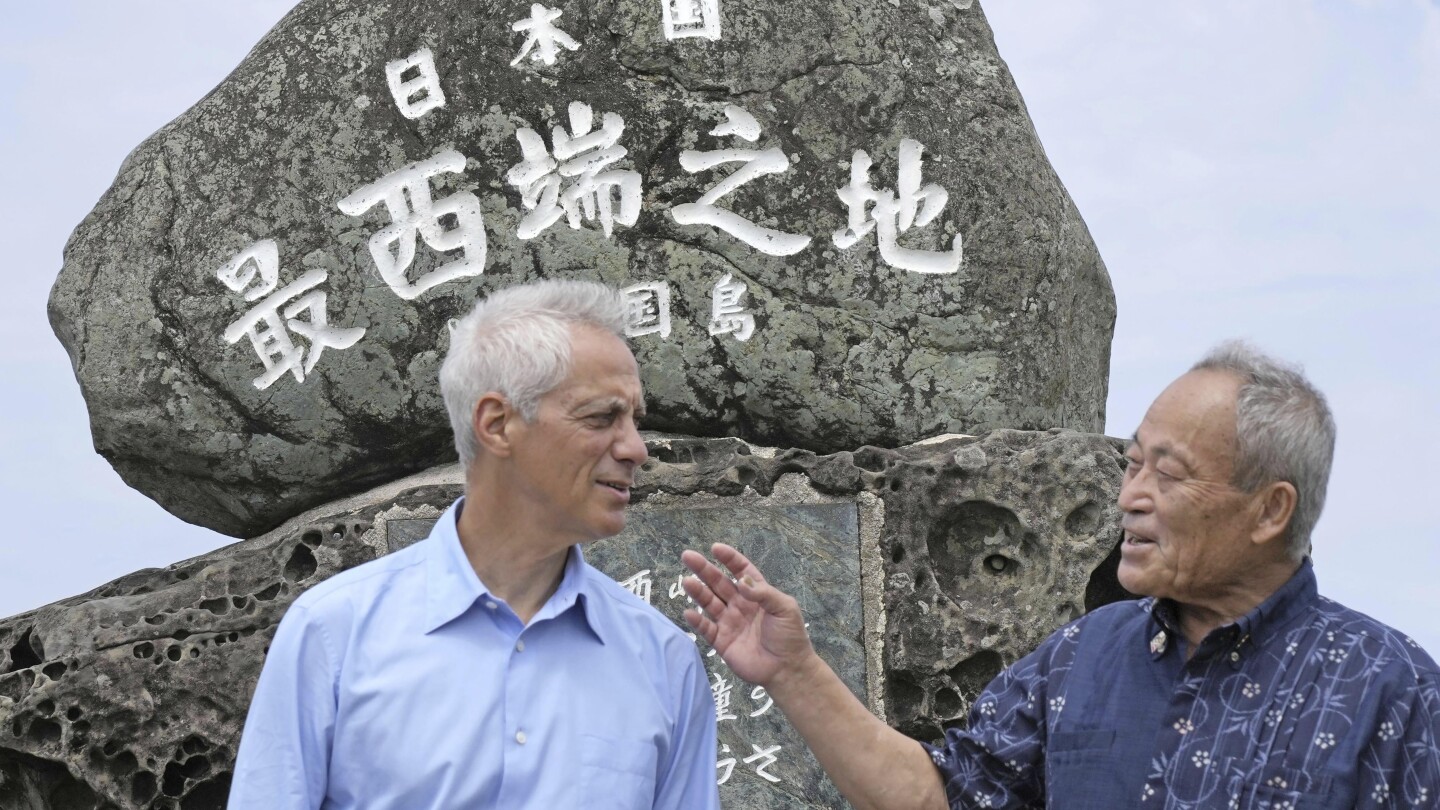
The U.S. ambassador to Japan visited two southwestern Japanese islands, Yonaguni and Ishigaki, where tensions with Beijing are high due to territorial disputes. The ambassador emphasized the importance of increased deterrence and expressed his country’s commitment to its key ally. Japan has been shifting its defense posture towards the southwest and is accelerating its military buildup under a security strategy focused on counter-strike capability. The visit aimed to show U.S. support for the local fishing community, which has been affected by China’s assertive actions in regional waters, including firing missiles into Japan’s exclusive economic zone.
During his visit to Ishigaki, the ambassador discussed the significance of deterrence in maintaining peace, security, and economic prosperity. He highlighted the role of the fishing community in supporting the local economy and reinforcing Japanese territorial rights. In Ishigaki, Japan’s coast guard protects fishing boats in disputed waters around the East China Sea islands, known as Senkaku in Japan and Diaoyu in China. The ambassador’s trip to the islands was welcomed by Japan’s Chief Cabinet Secretary, who noted the deployment of additional military units and missile defense systems in the region. However, concerns were raised by local residents about the potential impact on them in the event of a U.S.-China conflict.
Okinawa’s Governor, Denny Tamaki, supports the Japan-U.S. security alliance but has called for a reduction in the number of American troops on the island. About half of the 50,000 American troops in Japan are based in Okinawa. Tamaki also criticized the use of Yonaguni’s commercial airport by a U.S. military aircraft used during the ambassador’s visit. The visit highlighted the complex geopolitical dynamics in the region, with tensions between Japan and China over territorial disputes and the presence of U.S. forces playing a significant role in regional security. The U.S. ambassador’s visit underscored the importance of deterrence in maintaining stability and security in the region, while also recognizing the economic significance of the fishing industry to local communities on the islands.
Overall, the visit emphasized the strong partnership between the U.S. and Japan in addressing regional security challenges, particularly in the southwest where tensions with China are high. The reinforcement of Japanese troops on the islands and the deployment of missile defense systems reflect Tokyo’s efforts to enhance its security capabilities in the region. The visit also highlighted the concerns of local residents about the potential impact of escalating tensions between the U.S. and China on their communities. Despite these challenges, the visit demonstrated a shared commitment to upholding peace, security, and prosperity in the region through deterrence and alliance cooperation.