




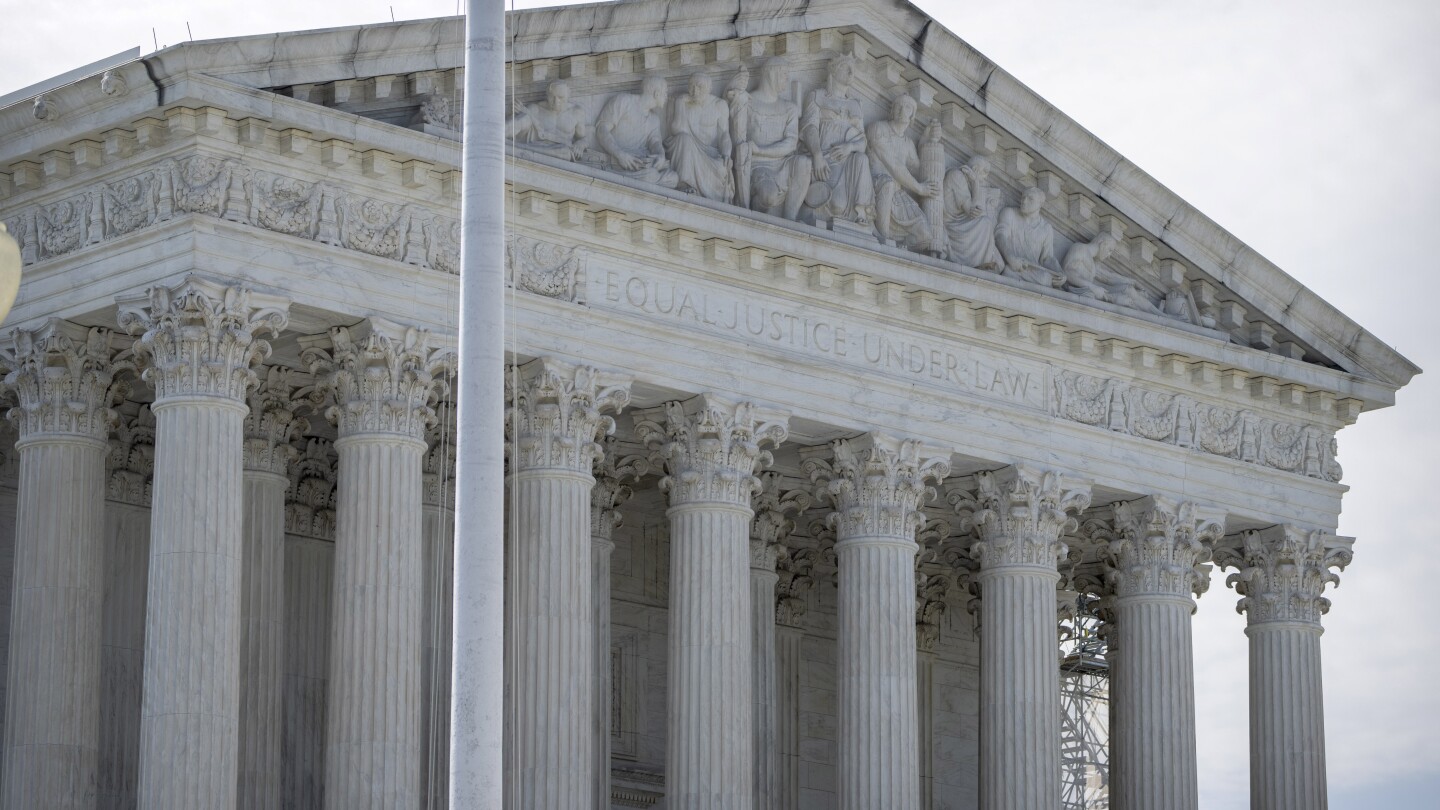
Virginia has requested the U.S. Supreme Court to intervene in a case regarding the removal of roughly 1,600 voters from its rolls whom the state believes are noncitizens. This request comes after a federal appeals court upheld a federal judge’s order restoring the registrations of these voters who were purged under an executive order by the state’s Republican governor. The governor’s program was ruled illegal under federal law because it systematically purged voters during a 90-day “quiet period” ahead of the November election. The Justice Department and private groups sued to block the removal program, arguing that it could lead to legitimate voters being removed due to errors or mistakes. Youngkin, the governor, says he was upholding a state law requiring the cancellation of noncitizens’ registrations.
The ruling from the 4th U.S. Circuit Court of Appeals sided with the judge who ordered the restoration of voters’ registrations, stating that Virginia’s process for removing voters did not establish proof that those purged were actually noncitizens. Youngkin’s executive order required daily checks of data from the Department of Motor Vehicles against voter rolls to identify noncitizens. Voters identified as noncitizens were notified and given the chance to dispute their disqualification before being removed. However, the plaintiffs argued that a legitimate voter and citizen could have their registration canceled by checking the wrong box on a DMV form, leading to confusion and potential disenfranchisement.
A similar lawsuit in Alabama saw a federal judge ordering the state to restore eligibility for over 3,200 voters deemed ineligible noncitizens, with evidence showing that many of them were actually legal citizens. Virginia’s Republican attorney general has filed an appeal to the U.S. Supreme Court, seeking intervention in the case. The state argues that requiring these changes less than a week before the presidential election could create confusion and overwhelm registrars in the critical week before the election. The 4th Circuit opinion emphasized that the state has the right to remove noncitizens from the voter rolls, even during the quiet period, but must do so through an individualized process rather than systematically relying on data transfers from the DMV. Nearly 6 million Virginians are registered to vote.
The request for intervention by the U.S. Supreme Court comes after a federal appeals court upheld a ruling restoring the registrations of 1,600 voters in Virginia who were believed to be noncitizens. The dispute stems from an executive order by the state’s governor, Glenn Youngkin, which aimed to remove noncitizens from the voter rolls. However, the program was deemed illegal under federal law for systematically purging voters during a 90-day quiet period before the November election. The appeals court found that Virginia’s removal process did not provide sufficient proof that those purged were actually noncitizens, leading to concerns about legitimate voters being disenfranchised.
Youngkin’s executive order required daily checks of DMV data against voter rolls to identify noncitizens, who were then given the chance to dispute their disqualification before being removed. However, the plaintiffs argued that the process could lead to confusion and could result in legal citizens having their registrations canceled due to minor errors. A similar case in Alabama saw a federal judge ordering the restoration of eligibility for thousands of voters who were mistakenly deemed noncitizens. The appeal to the U.S. Supreme Court aims to challenge the restoration of voter registrations and argues that Virginia’s process is in violation of state law and common sense.
The 4th Circuit opinion, which upheld the restoration of voter registrations, emphasized that the state has the right to remove noncitizens from the voter rolls but must do so through an individualized process rather than a systematic one relying on data transfers from the DMV. The state’s argument that requiring changes before the election could create confusion and overwhelm registrars is being contested, as the panel of judges believes that following the correct process is essential to protect the integrity of the voting system. The case highlights the ongoing debate over voter registration processes and the importance of ensuring that all eligible voters have the opportunity to participate in elections without facing arbitrary barriers.