




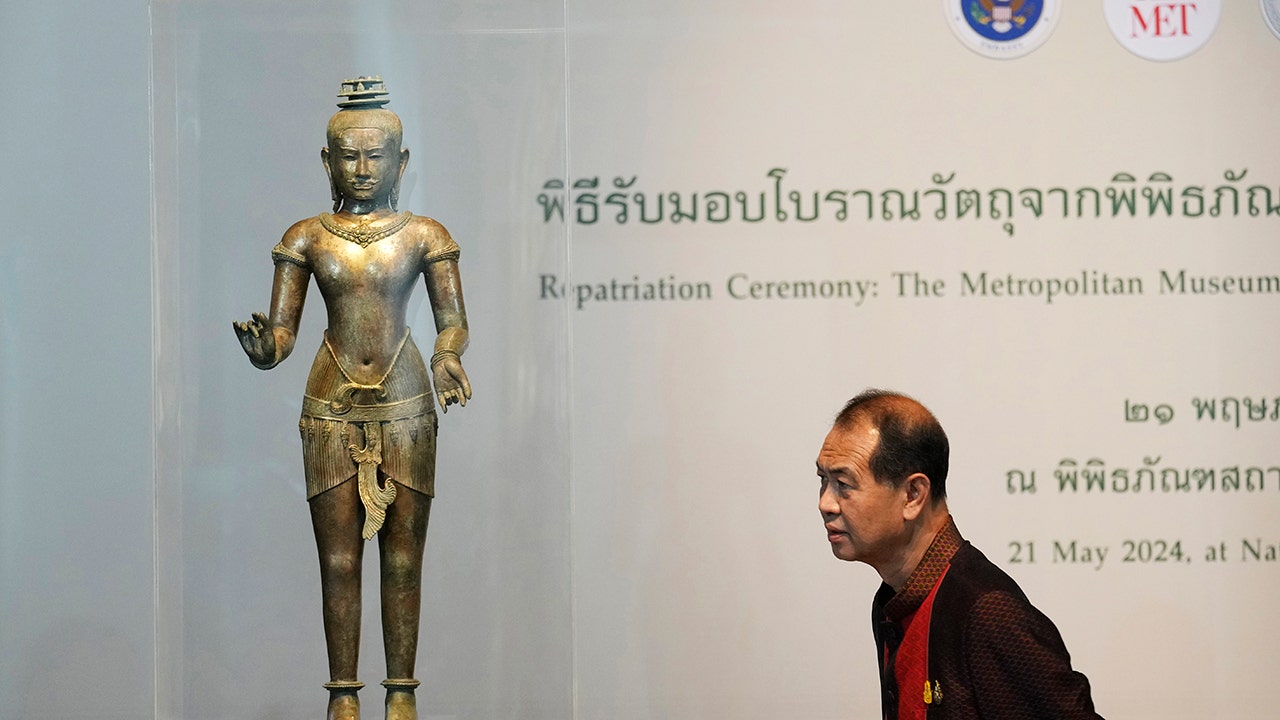
Thailand’s National Museum recently hosted a welcome-home ceremony for two ancient statues that were illegally trafficked from Thailand and returned from the collection of New York’s Metropolitan Museum of Art. The objects, a bronze figure called the “Standing Shiva” and a smaller sculpture called “Kneeling Female,” are believed to be around 1,000 years old. This repatriation comes as museums in the U.S. and Europe are dealing with collections containing looted objects from Asia, Africa, and other places during colonialism or times of upheaval.
In December, the Metropolitan Museum announced that it would return over a dozen artifacts to Thailand and Cambodia after they were linked to Douglas Latchford, an art dealer and collector accused of running an antiquities trafficking network in Southeast Asia. Latchford, who passed away the following year, denied any involvement in smuggling. Speaking at the ceremony, the Metropolitan’s curator of Asian and Southeast Asian art, John Guy, referred to the returned works as “unrivalled masterpieces” of their period and emphasized the significance of Thailand’s art in world culture.
“The Met initiated the return of these objects after determining that they rightfully belonged to the Kingdom of Thailand,” Guy stated. The museum’s Cultural Property Initiative, which was launched last year, focuses on responsible collecting of antiquities and shared stewardship of the world’s cultural heritage. Thai Culture Minister Sudawan Wangsuphakijkosol expressed gratitude for the return of the items, referring to them as national assets for all Thais. Additionally, the Metropolitan Museum recently signed a memorandum of understanding with Thailand in New York, formalizing a commitment to collaborate on art exchanges, expertise, and the display and study of Thai art.
Aside from the repatriation of the statues, the Metropolitan Museum recently addressed the controversial issue of cultural property acquisition. The museum has implemented various measures including a review of the works in its collection, hiring provenance researchers, engaging staff and trustees, and participating in public discourse on cultural property. These efforts are part of the museum’s commitment to responsible collecting practices and the preservation of cultural heritage. The return of the ancient statues to Thailand reflects a positive step towards rectifying past injustices and preserving the country’s rich cultural heritage.
The ceremony signifies the importance of recognizing and respecting the cultural heritage of nations and the need for collaboration and cooperation among institutions to address issues of antiquities trafficking and cultural property acquisition. By returning the ancient statues to Thailand and formalizing a commitment to collaborate on art exchanges and expertise, the Metropolitan Museum is taking significant steps towards promoting ethical collecting practices and ensuring the preservation of cultural heritage. This repatriation serves as a reminder of the importance of cultural artifacts in providing insights into the history and traditions of different societies, and the responsibility of museums to uphold ethical standards in acquiring and displaying cultural objects.