





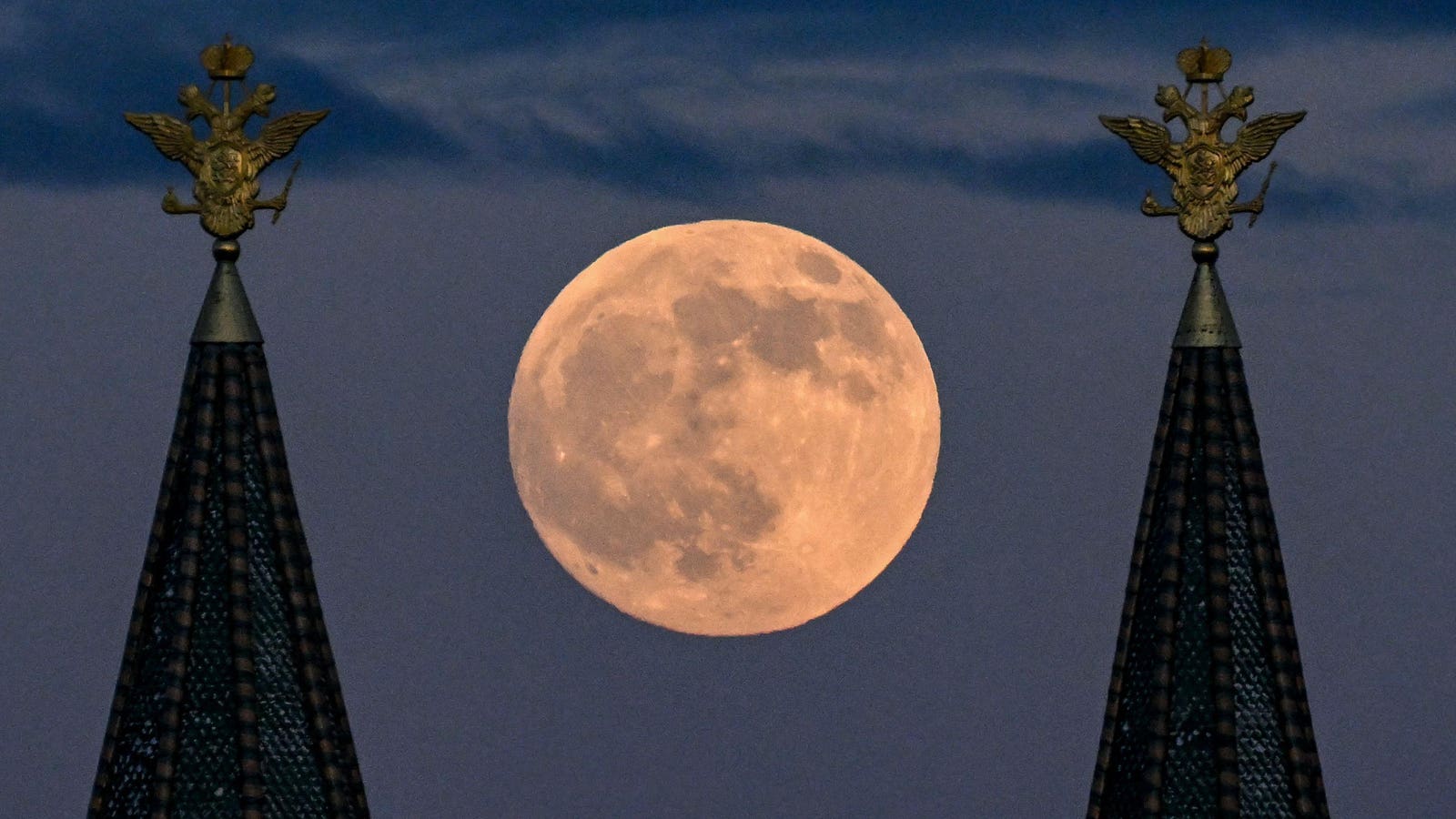
This week in the night sky, stargazers can look forward to the rise of the “Flower Moon,” the fifth full moon of 2024. Along with this celestial event, there are numerous other highlights to observe, including the moon’s proximity to the bright star Spica in the constellation Virgo on Monday. Tuesday brings the rising of Vega, a prominent star in the northern hemisphere’s summer night sky. Known for its appearance in the movie Contact as the source of an alien signal, Vega is one of Earth’s closest neighboring stars and will soon become a dominant feature in the night sky as part of the “Summer Triangle” asterism.
On Wednesday, viewers can catch a preview of the “Flower Moon” as it rises almost full in the evening sky. The following day, Thursday, marks the full moon’s ascent with a special treat—a sighting next to the red supergiant star Antares in the constellation Scorpius. This event, known as the “Flower Moon,” is also referred to as the “Milk Moon” and the “Hare Moon.” In some locations in the southeastern U.S., central America, and Brazil, the moon will even pass in front of Antares in an occultation.
For those looking to practice their star-hopping skills, the week presents an excellent opportunity with the “Arc to Arcturus, Spike to Spica” technique. By locating the Big Dipper and following the arc of its handle to Arcturus in Boötes, stargazers can then navigate to the next bright star, Spica in Virgo. These two stars serve as anchors in the spring and summer night sky and can help guide observers to other celestial objects throughout the seasons.
In addition to star-hopping, viewers can also seek out the famous Double Double star in Lyra, located near Vega in the evening sky. This unique double star system appears as one star to the naked eye, two stars in binoculars, and four stars in a telescope. The Double Double is actually a complex system of five stars about 162 light-years away. Furthermore, the Ring Nebula (M57) in Lyra offers a stunning sight as the remains of a sun-like star in a blue-green ring shape. While the Ring Nebula may be more challenging to view, it remains a captivating target for stargazers.
Overall, this week’s night sky offers a variety of celestial wonders to explore, from the “Flower Moon” and its proximity to Antares to star-hopping techniques and double star systems. Whether observing from mid-northern latitudes or consulting online planetariums for specific information, stargazers are encouraged to enjoy the beauty and mystery of the cosmos. So, grab your telescope, find a clear spot with wide eyes, and immerse yourself in the captivating sights of the night sky.