





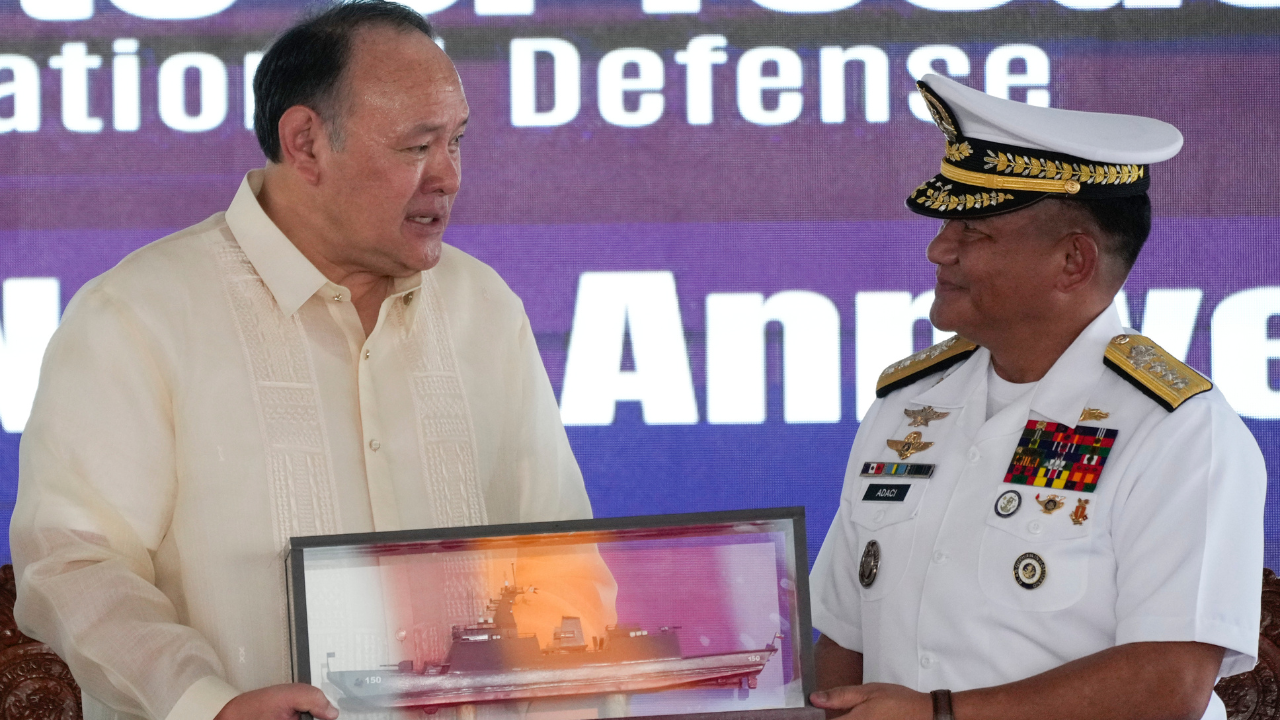
The Philippines, under Defense Secretary Gilberto Teodoro, will continue to forge security alliances and conduct joint drills in disputed waters, particularly in response to China’s increasingly aggressive actions in the South China Sea. The Philippine military recently conducted joint live-fire exercises with U.S. forces in these waters, drawing criticism from China. The Philippines is the U.S.’s oldest treaty ally in Asia, allowing for close military cooperation. Teodoro has dismissed China’s criticisms of these joint drills, calling them paranoia and stressing the Philippines’ commitment to defending its territorial interests.
In recent years, territorial hostilities with China have escalated in the South China Sea, prompting the Philippines to strengthen security alliances with various Asian and Western countries. Under President Ferdinand Marcos Jr.’s administration, the Philippines has allowed increased U.S. military presence in its bases under a 2014 defense pact. The Philippine military has also conducted joint combat exercises with U.S. forces, drawing further objections from China. Teodoro has criticized China’s actions in the region, noting that the Philippines will not tolerate aggression and provocative moves and will continue to engage in joint exercises with allies to enhance its defense capabilities.
The Philippines’ defense pacts with countries like the U.S., Australia, and Japan have allowed for joint military exercises in the disputed waters, including combat-readiness and disaster-response training. The country is negotiating additional agreements with Japan and France to strengthen its defense capabilities further. In response to China’s objections to these activities, Teodoro has emphasized that the Philippines has a constitutional duty to defend its exclusive economic zone in the South China Sea and will continue to work with like-minded nations to enhance regional security.
In a clear reference to China, Teodoro has denounced the idea that cooperative activities with allies are aimed at containment or provocation. He has stressed that the ultimate goal of such activities is to enhance the capabilities of allied forces to respond to regional challenges. The Philippines has conducted joint maneuvers with the U.S., Australia, and Japan, demonstrating a commitment to enhancing regional security. Despite China’s opposition to external interference in the South China Sea, the Philippines will continue to defend its territories and engage in collaborative efforts to safeguard its interests in the region.
As tensions in the South China Sea continue to escalate, the Philippines has shifted its military focus from domestic anti-insurgency operations to external defense, particularly in response to China’s actions. President Marcos has directed the military to prioritize territorial defense given the growing concerns in the region. This shift aligns with efforts by the U.S. under President Joe Biden to strengthen alliances in the Indo-Pacific region to counter China’s assertive behavior. The South China Sea remains a key global trade route, and territorial disputes involving China, the Philippines, Vietnam, Malaysia, Brunei, and Taiwan continue to pose challenges to regional stability.
In conclusion, the Philippines, under the leadership of Defense Secretary Gilberto Teodoro, will continue to advance security alliances, conduct joint drills, and defend its territorial interests in the face of escalating tensions with China in the South China Sea. The country’s collaboration with allies like the U.S., Australia, and Japan reflects a commitment to enhancing regional security and safeguarding international waters. Despite objections from China, the Philippines will persist in its efforts to protect its exclusive economic zone and work with like-minded nations to address challenges in the region. Through strategic partnerships and joint exercises, the Philippines aims to strengthen its defense capabilities and contribute to a stable and secure environment in the South China Sea.