




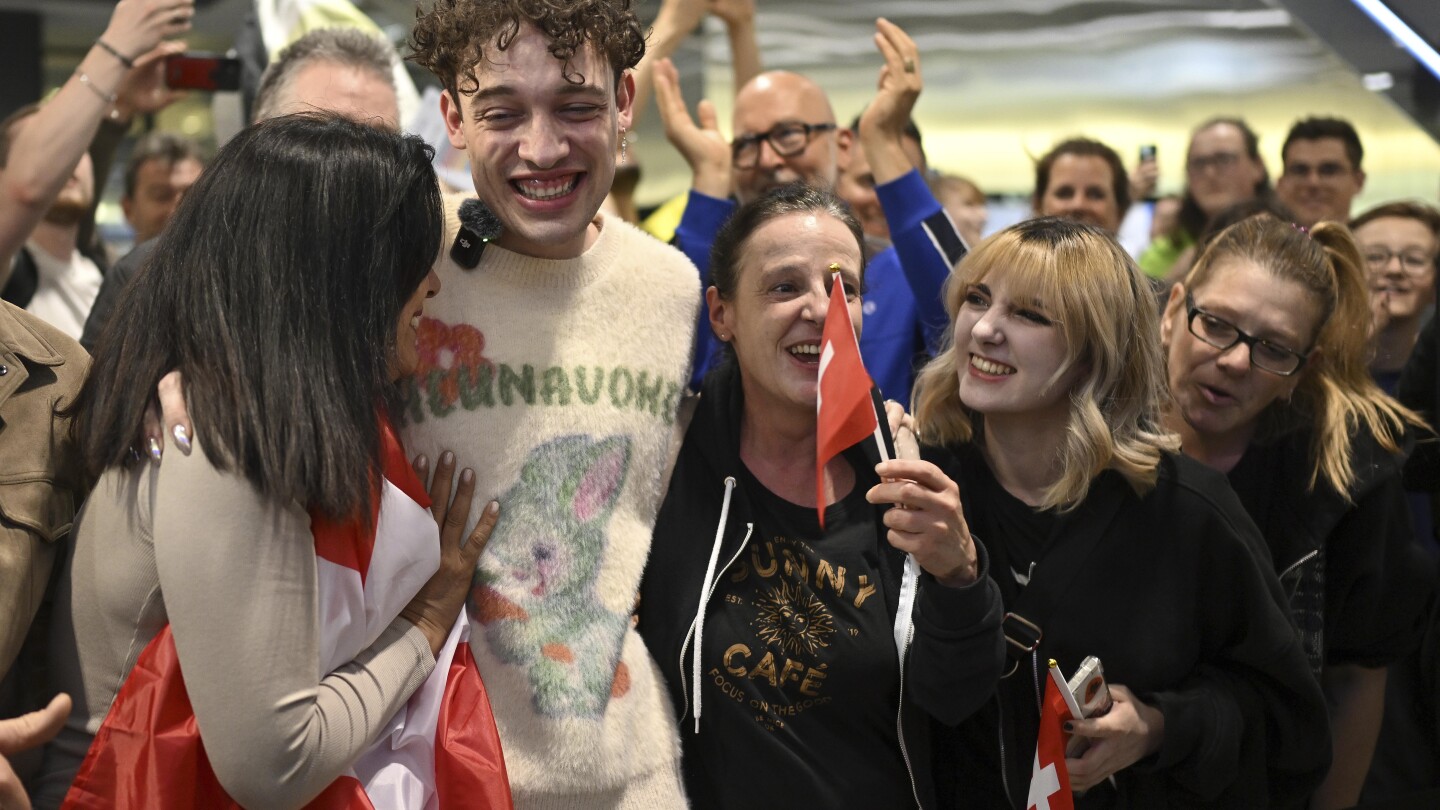
Swiss singer Nemo emerged victorious at the 68th Eurovision Song Contest with their operatic pop-rap song “The Code,” which celebrates the singer’s journey towards embracing a non-gender identity. The 24-year-old, who currently resides in Berlin, is the first nonbinary winner of the contest and the first Swiss winner since 1988 when Celine Dion competed under the Swiss flag. Nemo’s win has been hailed as a significant moment for the LGBTQ community, with the singer emphasizing the need for compassion and empathy during a post-victory news conference.
The singer’s hometown of Biel, Switzerland, expressed their pride and readiness to celebrate Nemo’s success. The town congratulated the newly-crowned star and highlighted Nemo’s representation of Biel on the global stage. Biel, known for its bilingualism in German and French and as the watchmaking capital of Switzerland, praised Nemo’s ability to traverse different cultural realms, emphasizing the inclusive and dynamic culture that the town embraces. Nemo’s win at the Eurovision contest has garnered widespread attention and support from fans around the world.
As Switzerland prepares to host the next Eurovision contest following Nemo’s victory, cities like Geneva, Basel, and St. Gallen have already expressed interest in competing as hosts for the competition. The event, which attracts millions of viewers globally, presents an artistic and touristic opportunity for Switzerland to showcase its cultural vibrancy. Nemo, who also considers Berlin as their adopted second hometown, has praised the creative and evolving nature of the city, expressing love for its diverse and dynamic atmosphere.
In Croatia, fans gathered to welcome second-placed Baby Lasagna back home in Zagreb, where the singer performed his rock number “Rim Tim Tagi Dim.” The song touches on the issue of young Croatians leaving the country in search of better opportunities. Baby Lasagna, who received a warm reception from his supporters, expressed gratitude for their love and efforts during the contest. Despite falling short of the top spot, Baby Lasagna’s performance was praised by Croatia’s Prime Minister, who highlighted the significance of the achievement for the country since its independence in 1991.
Overall, the 68th Eurovision Song Contest was marked by diverse performances from artists representing 25 countries, showcasing a range of musical styles from rock to techno. Nemo’s win as a nonbinary artist and the first Swiss champion in decades has resonated with audiences globally, emphasizing the importance of authenticity and diversity in music and culture. The event served as a platform for artists to share their stories and connect with viewers around the world, fostering a sense of unity and celebration of creativity. As the music world looks ahead to future contests, the impact of Nemo’s historic win is expected to influence the inclusive and diverse spirit of the Eurovision Song Contest for years to come.