




The escalating conflict between Israel and the Palestinian territories often brings focus on the tensions between Judaism and Islam, the two majority religions in the region. However, the ongoing war and its sociopolitical ramifications threaten to further smother the already dwindling Christian presence on both sides of a broken Holy Land. Christians of all denominations together make up only 2% of the entire population in Israel and the Palestinian territories, with approximately three-quarters of Christians in the region being Arab and belonging to ancient apostolic denominations. The messiah’s birth, ministry, death, and resurrection are not confined to either Israel or the Palestinian territories, and Christians in the Holy Land may have Israeli or Palestinian passports, their faith does not align itself exclusively with either country.
In the Holy Land, priests and lay leaders in the Catholic Church are not uniform in their thoughts about the conflict and the path forward for their church. It’s universally understood that the current situation cannot continue for much longer without severe harm to Christian witnesses in the land where Jesus walked. Irish priest Eamon Kelly, who lives in the Holy Land, emphasizes the importance of appealing to human dignity in the midst of the conflict and calls for strengthening people’s basic strength to not yield to despair and discouragement. He urges Christians to go deeper into their faith and maintain a unique witness to universal dignity in a region marked by political strife and violence.
Shadi Khalloul, an Israeli citizen of Lebanese heritage and president of the Aram Christian Galilee Center, advocates for Christian communities to embrace assimilation into Israeli society as a means of sustainable growth and safety. Khalloul is hawkish on ending the conflict and is an outspoken advocate for imposing Western ideologies onto the Islamic world. However, Israel’s relationship with its Christian demographics and their leadership is currently far from collaborative, with multiple Israeli municipalities initiating tax proceedings against Christian churches, seeking to end long-established exemptions for Christian real estate holdings that are not directly used for worship.
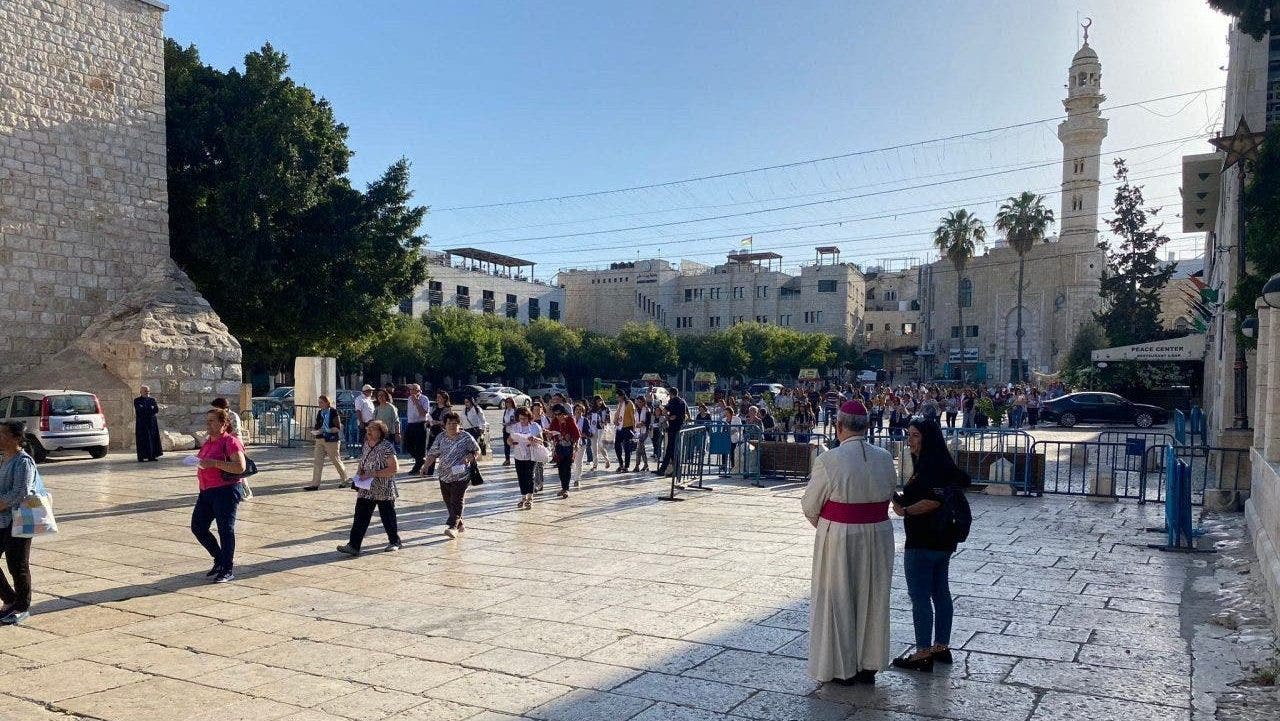
In Bethlehem, the birthplace of Jesus Christ, the Christian population is rapidly dwindling. Bethlehem is home to the Church of the Nativity, a sacred location in Christianity that has seen a collapse of tourism and pilgrimage due to the latest conflict between Israel and Hamas. Amidst economic collapse and Christian flight from the city, the Franciscan friar Rami Asakrieh speaks out against Israeli policies that he believes drive peaceful Palestinians into poverty and disrupt society. Rami emphasizes the need for radical belief in the universal humanity of all people as the first step in ending the divisions between Israelis and Palestinians. He calls for peace, forgiveness, and understanding as a means to end the conflict and preserve the Christian presence in the Holy Land.
Ambassador Michèle Burke Bowe, a diplomat of the Order of Malta, speaks about the Catholic Church’s lack of effective political power as a blessing in disguise, allowing the Church to exist outside of secular conflicts and focus on providing a safe place to worship and relieve suffering. Bowe argues that the Church and its believers serve as spiritual missionaries outside the secular conflict, witnesses that must be guarded. Despite the ongoing conflict between the IDF and Hamas, missionaries and charity workers continue to fight against overwhelming odds to continue the Catholic Church’s humanitarian work in the Holy Land. Without a sustainable and earnest effort to give room for Christian flourishing, there may soon come a day when hardly any Christians are left in the cities where Jesus preached to their ancestors.