





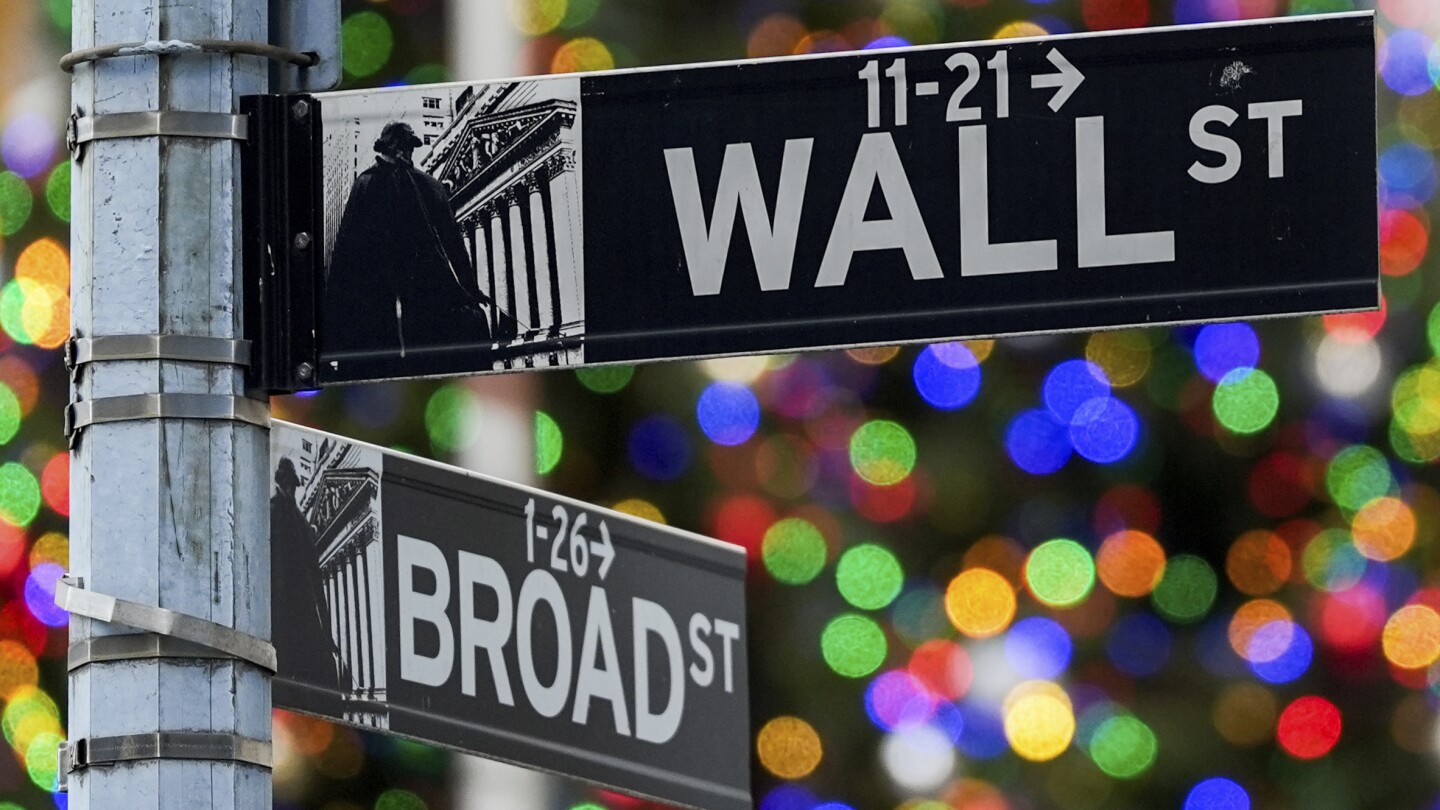
Stock indexes closed mostly lower on the final day of 2024, marking the end of another milestone-shattering year on Wall Street. The S&P 500 finished down 0.4%, despite setting 57 record highs throughout the year and achieving a 23.3% gain. This was the second consecutive year with a gain of more than 20% for the benchmark index, the last time being in 1998. The Dow Jones Industrial Average slipped 0.1%, while the Nasdaq composite lost 0.9%, with Big Tech stocks leading this year’s rally and pushing the Nasdaq to a yearly gain of 28.6%.
The stellar performance of U.S. markets in 2024 was attributed to a combination of factors, including a growing economy, solid consumer spending, and a strong job market. Companies in the artificial-intelligence sector, such as Nvidia and Super Micro Computer, saw skyrocketing prices, contributing to the market’s new heights. Additionally, solid corporate earnings growth played a significant role, with expectations for earnings growth in the S&P 500 to be more than 9% for the year. The market also received a boost from the economy avoiding a recession following interest rate hikes by the Federal Reserve, which aimed to combat high inflation.
Despite concerns about inflation remaining sticky and the incoming administration of President-elect Donald Trump, the market remained optimistic about the potential for multiple interest rate cuts in the upcoming year. Bitcoin and gold saw significant gains in 2024, with Bitcoin surpassing $100,000 for the first time and gold achieving a 27.4% gain for the year. While technology stocks experienced a slide on the final trading day, energy stocks helped offset some of the declines. Notably, Warren Buffett’s Berkshire Hathaway disclosed an increased stake in VeriSign, boosting the internet domain registry services company’s shares.
The market closed lower on Tuesday, with the S&P 500 falling by 25.31 points, the Dow Jones losing 29.51 points, and the Nasdaq sliding 175.99 points. This mini post-Christmas slump raised doubts about a potential ‘Santa Claus’ rally, which correlates with positive returns in January and the upcoming year. However, history has shown that a negative Santa Claus rally does not necessarily indicate negative outcomes, with an average gain of almost 6% in the subsequent year. Bond yields were mixed, while crude oil prices rose 1% and indexes in Europe mostly rose. Asian markets had a mixed performance, with Tokyo and Seoul closed for New Year holidays.
Looking ahead, markets will be closed on Wednesday for the New Year’s Day holiday. On Thursday, investors will receive an updated snapshot of U.S. construction spending for November, followed by an update on manufacturing for December on Friday. The New York Stock Exchange and Nasdaq will close their equity and options markets on January 9 in observance of a National Day of Mourning for former President Jimmy Carter, who passed away at the age of 100. Wall Street will continue to monitor global events and economic indicators as it enters into a new year with optimism and caution.