



Authorities have reported that an Iranian-American journalist, Reza Valizadeh, who worked for Radio Farda, a U.S.-funded broadcaster, has been detained by Iran for several months. Radio Farda is the Iranian branch of Radio Free Europe/Radio Liberty, providing factual, objective, and professional journalism in Farsi. Valizadeh’s detainment is viewed as a response to his work at an outlet that Iran’s theocracy considers hostile. This incident coincides with Iran marking the 45th anniversary of the American Embassy takeover and hostage crisis, with Supreme Leader Ayatollah Ali Khamenei threatening the U.S. and Israel with a “crushing response” amidst rising tensions in the region.
In February, Valizadeh had indicated on social media that his family members in Iran were detained and pressured to persuade him to return to the country. Subsequent posts suggested that he had indeed returned to Iran without assurances for his safety, engaging in negotiations with the Revolutionary Guard’s intelligence department. Human Rights Activists News Agency reported that Valizadeh was arrested and taken to Evin prison, lacking legal representation and facing undisclosed charges. The U.S. State Department is working with their Swiss partners, as the protecting power for the U.S. in Iran, to gather more information on the case. Iranian officials have not acknowledged Valizadeh’s detention, and he is reportedly the first American known to be detained by Iran since 2023.
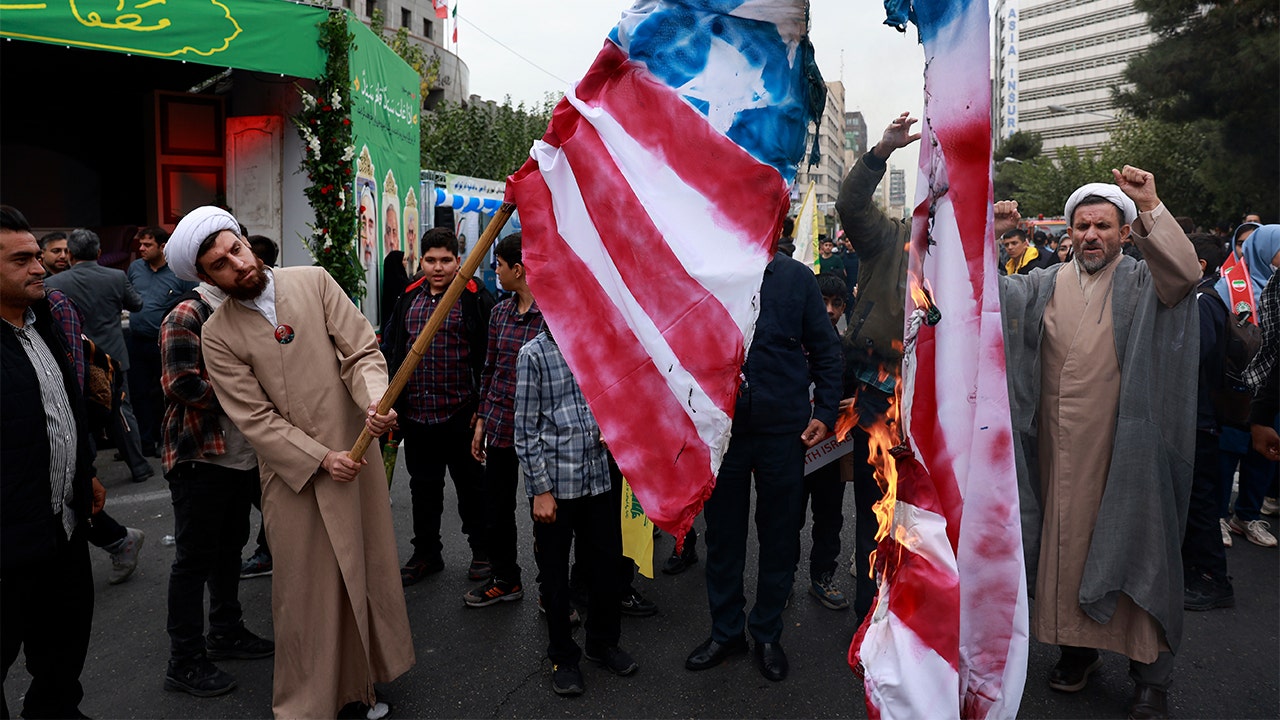
Iran marked the anniversary of the embassy takeover with demonstrations featuring anti-American and anti-Israeli sentiments, including calls for death to America and Israel. Thousands of demonstrators gathered outside the former U.S. Embassy, burning flags and displaying images of slain leaders from Iran-backed terrorist groups. Gen. Hossein Salami, head of Iran’s Revolutionary Guard, reiterated Khamenei’s pledge to respond to the U.S. military presence in the Middle East and increased tensions between Israel and Hezbollah. Salami emphasized Iran’s commitment to equipping itself for confrontation against perceived enemies.
Over the years, Iran has utilized prisoners with Western ties as bargaining tools in negotiations with the international community, a tactic dating back to the 1979 U.S. Embassy crisis. For instance, in 2023, five Americans detained in Iran were released in exchange for five Iranians held in U.S. custody and the release of $6 billion in frozen Iranian assets by South Korea. Despite Valizadeh’s detainment being in line with Iran’s history of unjustly imprisoning individuals for political purposes, State Department officials have condemned the practice as cruel and contrary to international law. Efforts are ongoing to gather more information about Valizadeh’s detention through diplomatic channels.
The current situation involving Valizadeh represents a concerning development in U.S.-Iran relations, especially given the heightened tensions in the region. Valizadeh’s role as a journalist for a U.S.-funded broadcaster has placed him in a precarious position, leading to his imprisonment in Iran. The U.S. government is actively working to secure information and ensure the safety and well-being of Valizadeh, as Iran continues to use individuals as political leverage in its interactions with the international community. The commemoration of the embassy takeover serves as a reminder of the longstanding animosity between Iran and the U.S., with recent threats and demonstrations further exacerbating the strained relationship between the two nations. The situation underscores the complex dynamics at play in the Middle East and the ongoing challenges in diplomatic engagement with Iran.