



South Korean officials announced on Monday that they will be conducting safety inspections of all Boeing 737-800 aircraft operated by the country’s airlines after a plane crash on Sunday that killed 179 people. The crash, the worst aviation disaster in decades for South Korea, has raised concerns about the country’s ability to handle such a tragedy given the recent political turmoil caused by the impeachments of President Yoon Suk Yeol and Prime Minister Han Duck-soo. Acting President Choi Sang-mok has instructed authorities to review the country’s aircraft operation systems to prevent similar incidents in the future.
The Boeing 737-800 plane involved in the crash, operated by Jeju Air, aborted its first landing attempt for unknown reasons and then received a bird strike warning before its pilot issued a distress signal during the second landing attempt. The plane ultimately landed without its front landing gear deployed, overshot the runway, and burst into flames after hitting a concrete fence. While the aircraft is considered a “proven airplane,” South Korea’s Transport Ministry plans to conduct safety inspections on all 101 Boeing 737-800 jetliners operated by the country’s airlines and review safety standards at Jeju Air.
Experts have analyzed video footage of the crash and suggested possible reasons for the tragedy, including a hydraulic failure that may have prevented the pilots from deploying flaps or slats to slow the aircraft and manually lowering the landing gear. Despite these issues, the plane was reportedly under control and traveling in a straight line, with observers noting that the location of the concrete barrier next to the runway significantly worsened the outcome of the crash. Investigations will also look into potential communication problems between air traffic controllers and the pilot during the landing process.
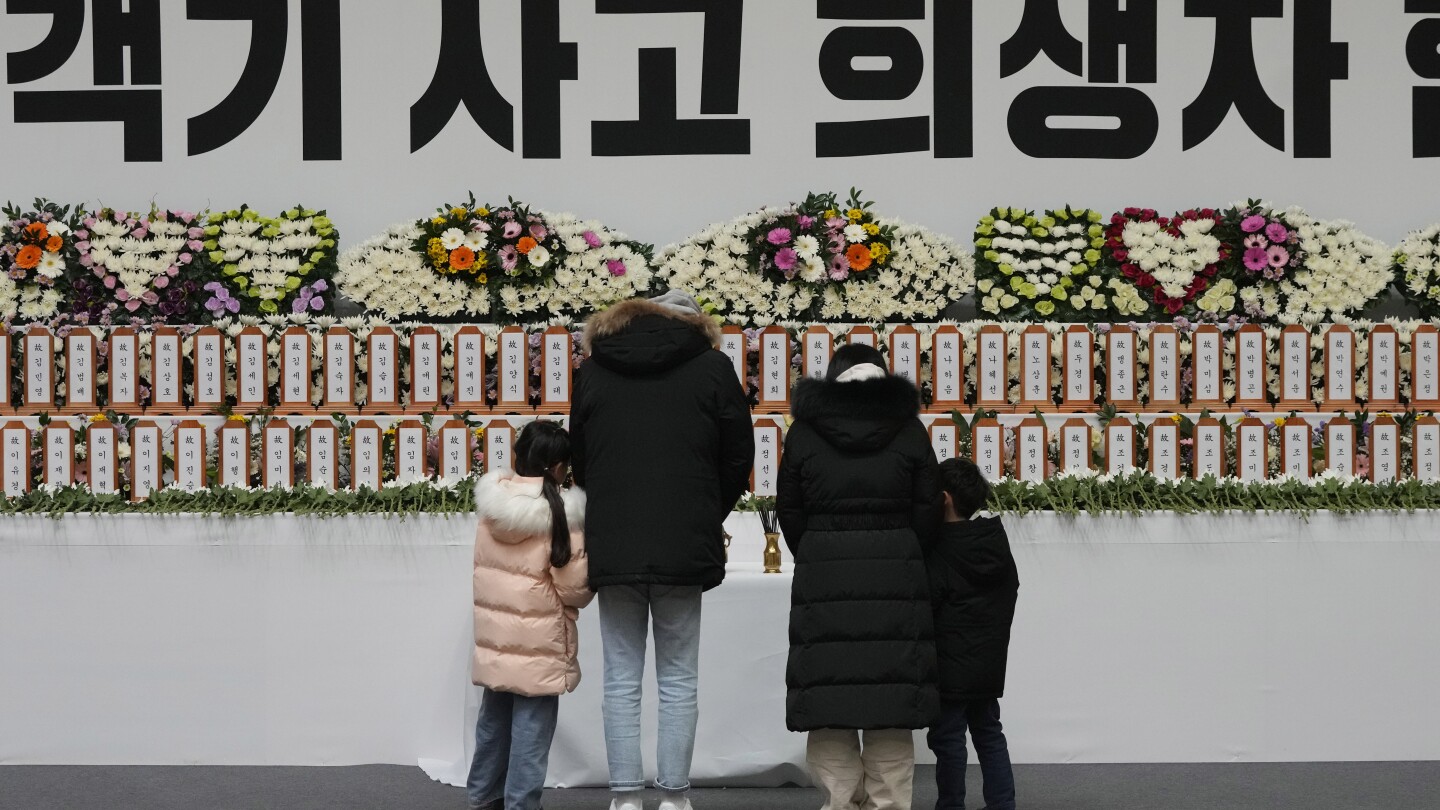
The crash has deeply impacted South Koreans, leading the government to declare a seven-day national mourning period. The Transport Ministry has identified 146 bodies from the crash and is working to collect DNA and fingerprint samples from the remaining 33 victims. Families of the victims have expressed anguish over the condition of their loved ones’ bodies, with calls for a swift return of remains. The tragedy has added to the country’s existing challenges, including a recent political crisis triggered by Yoon’s imposition of martial law, which led to his impeachment along with the Prime Minister and other officials.
The lack of top officials due to the political turmoil has raised concerns about the government’s ability to manage the aftermath of the disaster. The opposition-controlled National Assembly’s actions following Yoon’s martial law decree have further complicated the situation, with the safety minister resigning and the police chief being arrested. Many in South Korea are worried about the effectiveness of the country’s disaster response and aviation safety measures, especially in light of recent tragic incidents such as the Halloween crush in 2022 and the 2014 ferry sinking. Investigations into the Muan airport crash are ongoing, with the involvement of U.S. authorities and Boeing representatives to determine the root cause of the tragic event.