




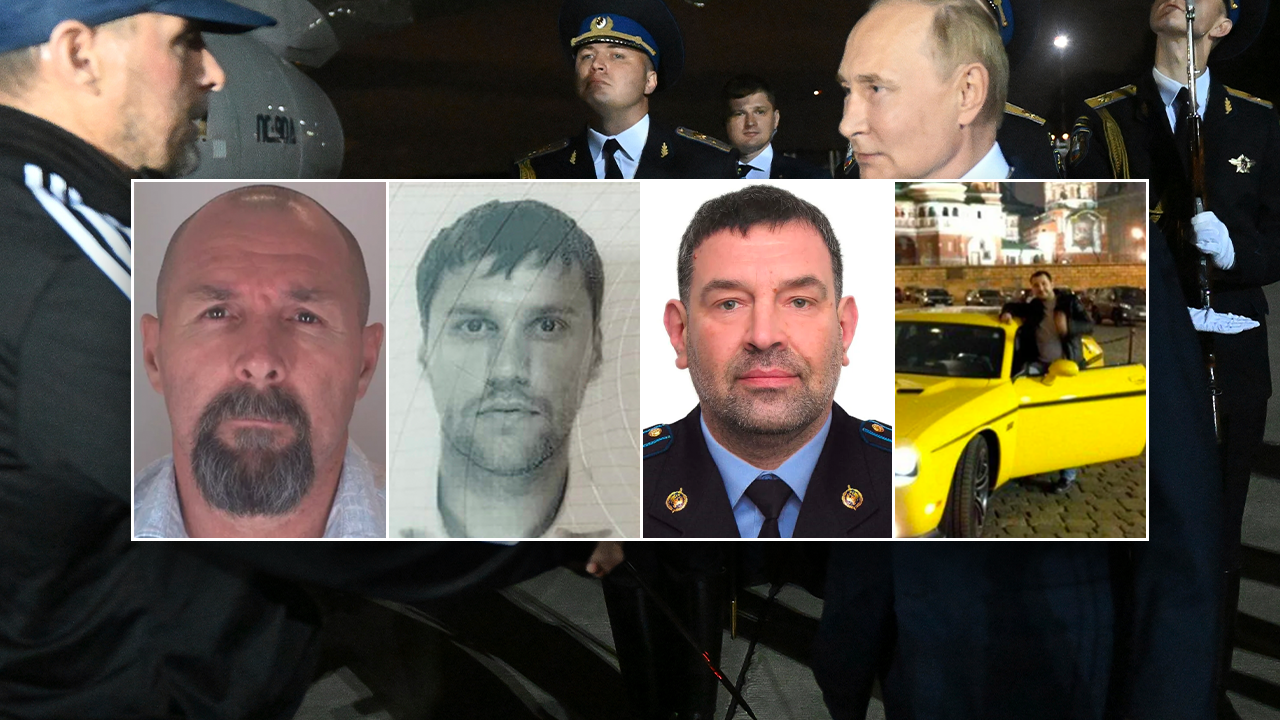
Russia recently participated in a historic prisoner swap deal that involved multiple countries, including the U.S. and Germany. This exchange resulted in the release of a total of 24 detainees, eight of whom were criminals allowed to return to Russia. One of the high-profile criminals on the list was hitman Vadim Krasikov, who was convicted by a German court for assassinating a former Chechen commander in 2019 near Berlin. Another individual, Roman Seleznev, the son of a Russian Parliament member, was sentenced to 27 years for hacking into over 500 U.S. businesses and stealing millions of credit card numbers.
Vadim Konoshchenok, a Russian with suspected ties to Russia’s Federal Security Service, was accused of providing U.S.-made electronics and ammunition to the Russian military. He was extradited from Estonia to the U.S. where he faced criminal charges related to exporting sensitive American-made goods in violation of U.S. export controls and sanctions. Another criminal, Vladislav Klyushin, was convicted for taking part in a sophisticated hack-to-trade scheme that netted around $93 million using confidential corporate information stolen from U.S. computer networks. Klyushin was arrested in Switzerland in 2021 and extradited to the U.S.
A Russian spy identified as Pavel Rubtsov by Poland’s Internal Security Agency in 2022 was working as a journalist under a false identity in Spain. He was arrested on espionage charges near the Ukrainian border shortly after Russia’s invasion. A Russian couple, Artem Dultzev and Anna Dultseva, were also arrested on espionage charges in Slovenia while posing as Argentine citizens. The couple reportedly used Slovenia as a base to travel to neighboring countries and relay Moscow’s orders to other sleeper agents. They pleaded guilty and served 19 months in prison.
Mikhail Mikushin was arrested in Norway in 2022 on espionage charges. He was living under a fake identity while working as an intelligence operative for Russia. According to Norwegian investigators, he entered the country claiming to be a Brazilian citizen. This historic exchange also involved the release of unjustly imprisoned Americans and American green-card holders from Russia. Among the released were Paul Whelan, Evan Gershkovich, Alsu Kurmasheva, and Vladimir Kara-Murza. President Biden described the swap deal as a “feat of diplomacy” and conveyed his gratitude to several world leaders who helped facilitate the process.
House Foreign Affairs Committee Chairman Michael McCaul raised concerns about the implications of trading Russian criminals for detained Americans, warning that it could send a dangerous message to Russian President Vladimir Putin and encourage further hostage-taking by his regime. Despite celebrating the return of the detainees, McCaul emphasized the potential risks associated with such negotiations. President Biden personally reached out to world leaders to thank them for their partnership in the exchange, which brought home Americans and others detained in Russia. Biden is expected to greet the returned prisoners at Joint Base Andrews in a show of support and appreciation.