






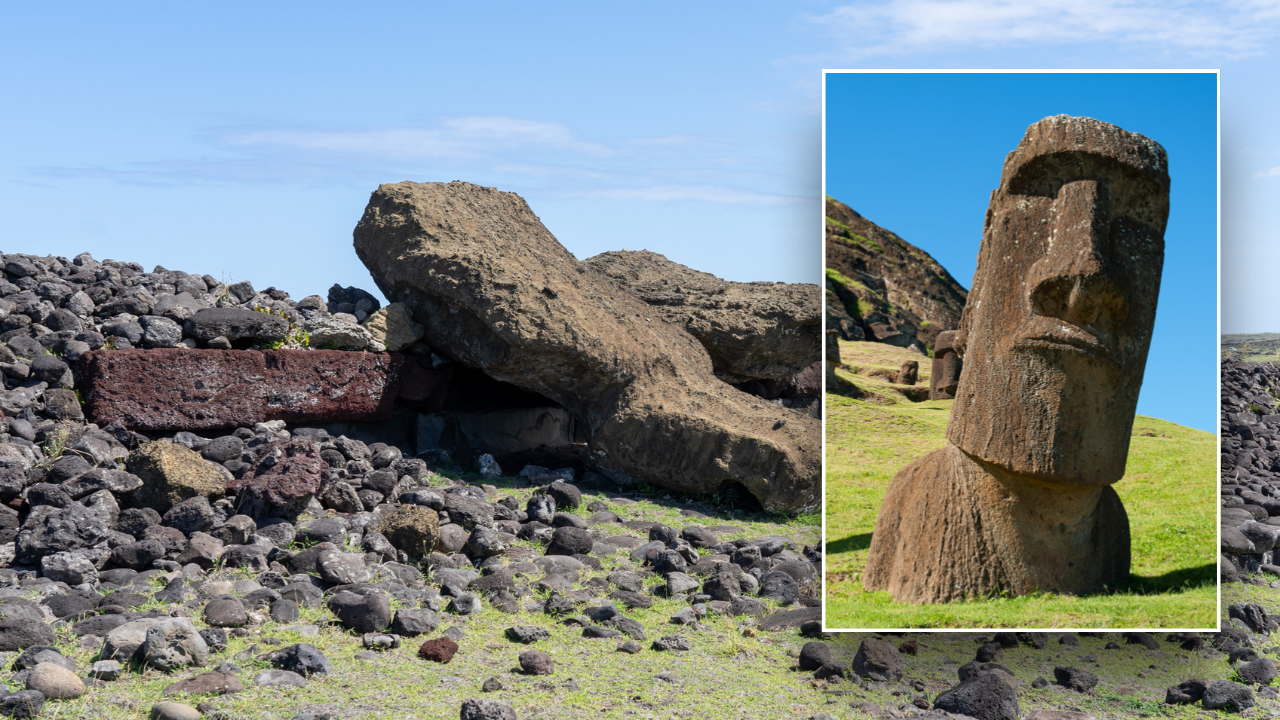
A recent study published in Science Advances challenges the popular myth that ancient rock gardening practices caused the downfall of Easter Islanders. The study, titled “Island-wide characterization of agricultural production challenges the demographic collapse hypothesis for Rapa Nui,” debunks the notion that overexploitation of limited resources led to a catastrophic population collapse on Easter Island. The island, also known as Rapa Nui, was thought to have suffered a decline in population due to the practice of “slash and burn” agriculture, followed by rock gardening to enrich the soil.
Contrary to the belief that rock gardening was detrimental to soil health, the study reveals that the practice actually enhanced plant productivity by increasing available soil nutrients and maintaining soil moisture. Nearly half of the Rapanui diet consisted of terrestrial foods, demonstrating the importance of rock gardening in supporting pre-contact Rapanui subsistence. Understanding the extent of rock gardening is crucial for determining the island’s pre-contact environmental carrying capacity and reevaluating population estimates.
Researchers used shortwave infrared (SWIR) satellite imagery and machine learning to challenge previous population estimates for Easter Island. The study suggests that the island’s population was likely smaller than previously claimed, with the maximum population supported by rock gardening estimated at 3901, as opposed to the previously claimed 17,000. This challenges the idea that the island’s population in 1722 was substantially smaller than it had been centuries earlier, debunking the notion of a rapid rise and fall in population growth rates driven by rock gardening.
Despite research findings suggesting a different narrative, the myth that Rapanui society caused its own demise from unsustainable resource use and uncontrolled population growth remains popular outside of academia. The study’s authors acknowledge that the myth persists in disciplines such as ecology, paleoecology, and mathematics, even as recent archaeological literature debunks the idea of a pre-European collapse on Easter Island. While many researchers have shifted their narratives away from assumptions of a collapse caused by overexploitation, the story remains prominent in popular culture.
Overall, the study challenges long-held beliefs about the impact of ancient rock gardening practices on Easter Island’s population decline. By providing new insights into the benefits of rock gardening for soil productivity and plant growth, the research sheds light on the complexity of Rapanui subsistence and calls for a reevaluation of population estimates based on island-wide agricultural production. The findings offer a fresh perspective on the factors that may have influenced the demographic history of Easter Island, challenging prevailing myths and narratives about its ancient civilization.