




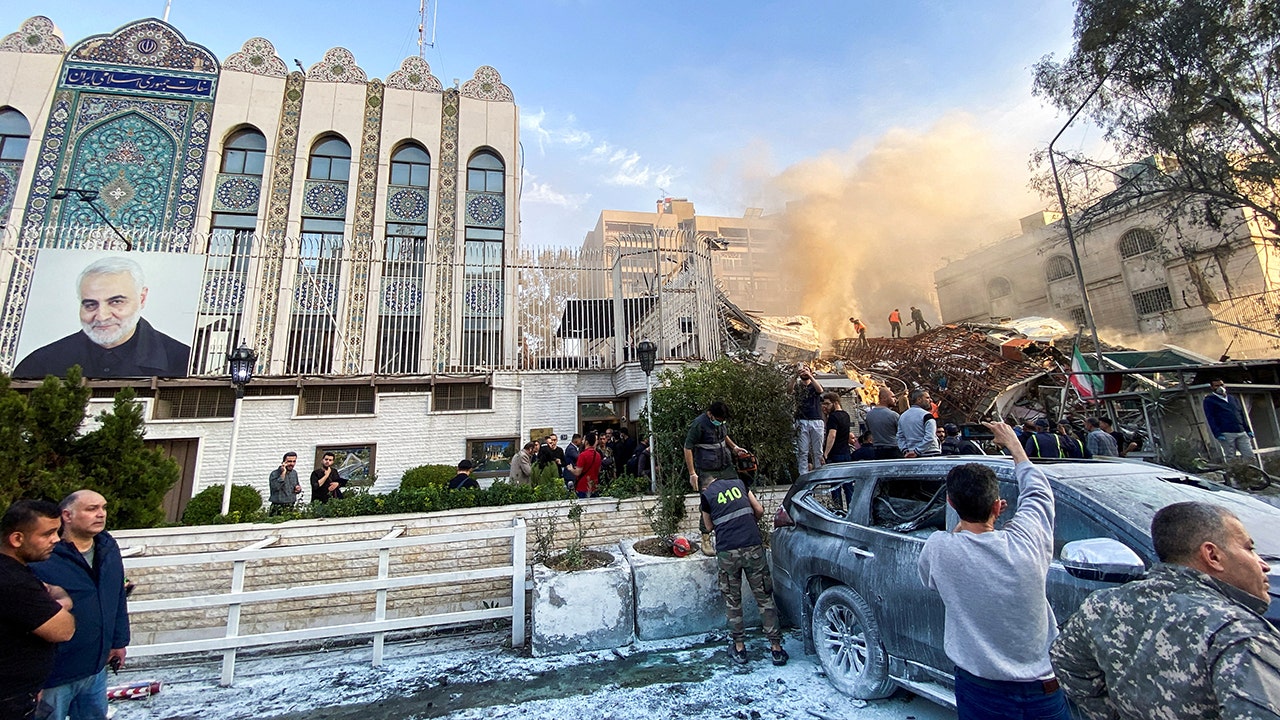
In a recent Israeli airstrike on the Iranian consulate in Damascus, Syria, a senior commander in Iran’s Revolutionary Guards Corps, Mohammad Reza Zahedi, was killed. This attack has further escalated tensions between Israel and Iran, as Zahedi was previously sanctioned by the U.S. Treasury Department in 2010 for his involvement in supporting the Lebanese militant group Hezbollah. The exact details of the airstrike, including the motivation behind it and the implications for the ongoing conflict in the region, are still unclear as this is a developing story.
The killing of Mohammad Reza Zahedi in the Israeli airstrike has sparked concerns about the potential for further retaliation and violence in the already volatile region. Zahedi’s role in supporting Hezbollah, a group designated as a terrorist organization by many countries, indicates the complex web of alliances and conflicts at play in the Middle East. The involvement of outside powers such as Israel and the United States adds another layer of complication to the situation, raising questions about the broader geopolitical dynamics in the region.
As tensions continue to simmer between Israel and Iran, the airstrike on the Iranian consulate in Damascus represents another flashpoint in the ongoing conflict between the two countries. The targeting of a high-ranking Iranian official like Zahedi suggests that Israel is willing to take bold and decisive action to protect its interests and challenge Iran’s influence in the region. The repercussions of this attack are likely to reverberate across the Middle East, affecting not only the relationship between Israel and Iran but also the broader stability of the region.
The killing of Mohammad Reza Zahedi in the Israeli airstrike underscores the high stakes involved in the power struggle between Israel and Iran. Both countries have long been engaged in a shadow war, using proxies and allies to advance their respective interests in the region. The death of a senior Revolutionary Guards commander like Zahedi is likely to escalate hostilities and further strain diplomatic relations between Israel and Iran. The international community will be closely monitoring the situation, as any escalation of violence could have far-reaching consequences for the region.
The involvement of outside powers like the United States in sanctioning Zahedi highlights the global dimensions of the conflict in the Middle East. The ongoing power struggle between Israel and Iran is not just a regional issue but also has implications for the broader international community. The use of military force and the targeting of high-ranking officials like Zahedi raise concerns about the potential for a wider conflagration in the region. As tensions continue to escalate, the need for diplomatic solutions and de-escalation measures becomes ever more urgent.
In conclusion, the Israeli airstrike on the Iranian consulate in Damascus, which resulted in the killing of Mohammad Reza Zahedi, has further heightened tensions between Israel and Iran. The complex web of alliances and conflicts in the Middle East, as well as the involvement of outside powers like the United States, adds layers of complexity to the situation. The repercussions of this attack are likely to be felt across the region, with potential for further violence and instability. The international community will be closely monitoring developments in order to prevent a wider conflict from erupting.