





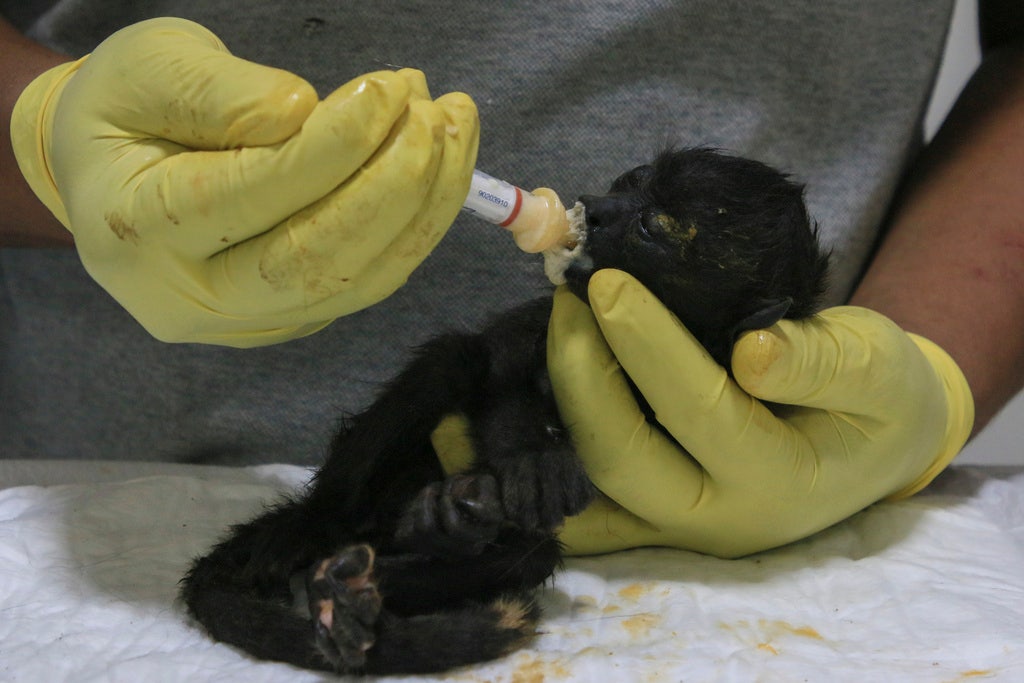
The extreme heatwave in Mexico has been causing devastating impacts on the environment, leading to the deaths of howler monkeys who are falling dead out of trees due to severe dehydration. At least 83 howler monkeys have been found dead in Tabasco state, with many others being rescued by local residents and rushed to veterinarians for immediate care. The monkeys were suffering from dehydration and heatstroke, with some showing signs of recovery after receiving treatment. The local wildlife biologist, Gilberto Pozo, warned against adopting the monkeys as pets due to their delicate nature and the potential pathogens they could carry.
The howler monkeys get most of the water they need from the food they eat, making them vulnerable during droughts and heatwaves. The combination of high temperatures, drought, and forest fires has contributed to the deaths of the monkeys in Mexico. Pozo’s group has set up recovery stations for the monkeys and is working on organizing a team of specialized veterinarians to provide the care they need. Despite the challenges, there is hope for the survival of the remaining monkeys with the efforts being made to rehabilitate and release them back into the wild.
The extreme temperatures in Mexico have shattered records in at least nine cities, with Ciudad Victoria reaching 117 degrees Fahrenheit. The heatwave has been responsible for the deaths of at least 26 people since March, highlighting the widespread impact of the extreme weather conditions. The President of Mexico, Andrés Manuel López Obrador, acknowledged the issue of the dying howler monkeys and expressed support for the efforts being made to save them. He commended the work of Dr. Sergio Valenzuela and pledged government assistance in addressing the situation.
The howler monkeys, known for their loud whooping bark or roar, are a key species in the local ecosystem, playing a crucial role in the balance of the environment. Local residents have shown a willingness to help and support the recovery efforts for the monkeys, but precautions need to be taken to ensure their long-term survival. It is essential for the monkeys to be rehabilitated and released back into their natural habitat once they have recovered. The specialized care being provided to the rescued monkeys gives hope for their future and offers a chance for them to thrive once again.
The impact of the heatwave on wildlife in Mexico serves as a stark reminder of the urgent need to address climate change and its effects on vulnerable species. The combined efforts of wildlife biologists, veterinarians, and local residents are crucial in the rescue and rehabilitation of the howler monkeys. The challenges faced by these monkeys highlight the broader issues faced by wildlife in the face of extreme weather events and the importance of conservation efforts to protect species at risk. By working together, there is hope for the survival of the howler monkeys and the preservation of Mexico’s rich biodiversity.
The story of the howler monkeys in Mexico is a poignant example of the interconnectedness of the natural world and the impacts of human activities on wildlife. The deaths of these monkeys serve as a stark warning about the urgency of addressing climate change and protecting vulnerable species. The efforts being made to rescue and rehabilitate the monkeys demonstrate the power of collective action in responding to environmental crises. By continuing to work together and prioritize conservation efforts, there is hope for a brighter future for the howler monkeys and other species facing similar threats.