




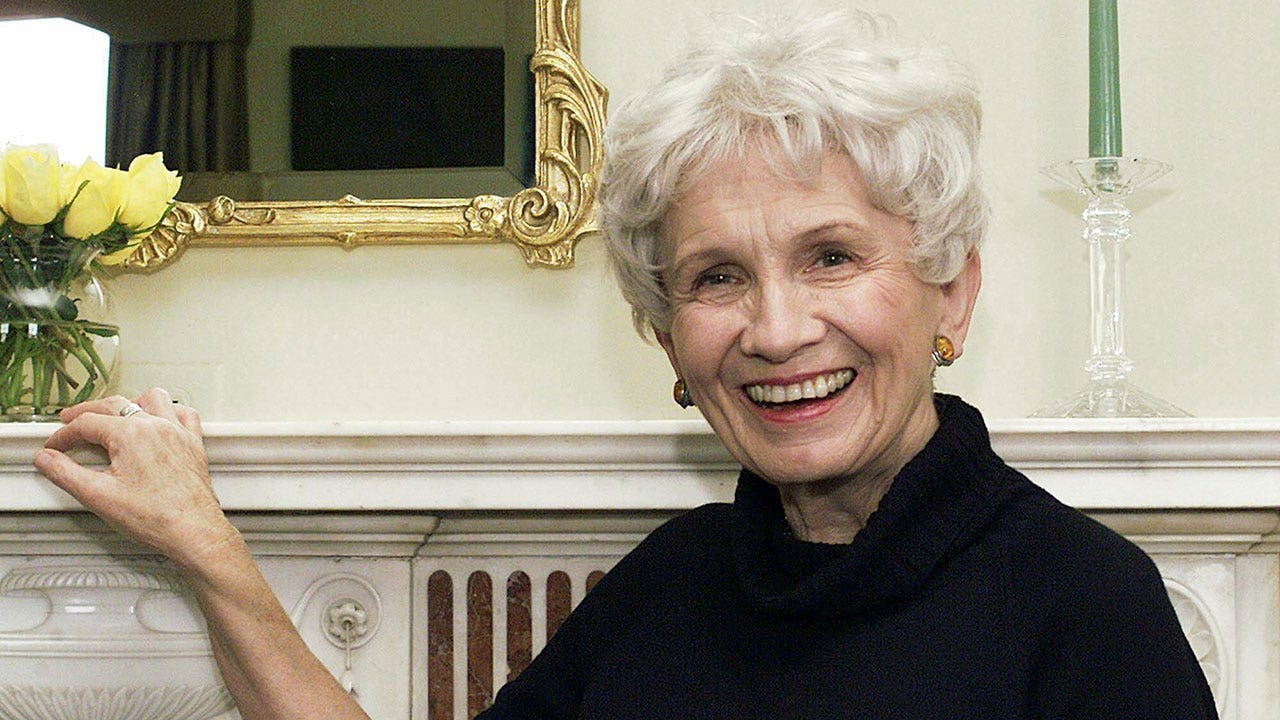
Alice Munro, a Canadian literary icon and Nobel laureate, passed away at the age of 92 at her home in Port Hope, Ontario. Her works, such as “Dear Life,” “Too Much Happiness,” “The View from Castle Rock,” and “The Love of a Good Woman,” had gained widespread popularity. Munro won the Nobel Prize in Literature in 2013. She was often ranked with other great short story writers like Anton Chekhov, John Cheever, and was the first lifelong Canadian to win the Nobel Prize exclusively for short fiction. Munro’s stories often illuminated the universal through the particular, creating tales set in Canada that resonated with readers across the globe.
Munro was little known beyond Canada until her late 30s and became one of the few short story writers to achieve commercial success. Her sales exceeded 1 million copies in North America alone. She produced dozens of classics showcasing wisdom, technique, and talent, with plots that featured artful shifts in time and perspective, along with insights into people from various backgrounds and ages. Her works, such as “The Beggar’s Maid,” “Corrie,” and “The Moons of Jupiter,” emphasize complex human relationships and dynamics.
Her stories contrasted the generations of Munro’s parents with those of their children, reflecting the social and cultural changes of the 1960s and 70s. Munro’s characters navigate themes of infidelity, memory loss, and shifting family dynamics. Munro also explored themes of shame, embarrassment, and perfectionism in her writing. Her choice to focus solely on short stories was deliberate, as she acknowledged that she did not think like a novelist and preferred working in the short form due to her knack for dissecting disconnected realities in people’s lives.
Munro’s childhood in Wingham, Ontario, deeply influenced her writing, and her keen observations of the world around her began at a young age. She was a top student in high school and received a scholarship to the University of Western Ontario where she studied journalism. Munro published her first story, “The Dimensions of a Shadow,” while still an undergraduate student. Over the years, Munro’s reputation as a gifted writer grew, and her stories often appeared in The New Yorker.
Her prose style was straightforward, yet her plots were filled with disruptions, disappointments, and unfulfilled dreams. Munro’s stories often depicted themes of broken marriages, violent deaths, madness, and missed opportunities. While her tone was matter-of-fact, her narratives revealed the complexities of human emotions and relationships. Throughout her career, Munro received numerous accolades for her work, including the Governor General’s Award, the Giller Prize, and the Man Booker International Prize.
Alice Munro’s contribution to literature extended beyond her writing, as she inspired a generation of readers and writers alike. Her ability to capture the intricacies of human experience and relationships resonated with audiences worldwide. Munro’s passing marked the end of an era in Canadian literature, but her legacy as one of the greatest short story writers of all time continues to live on through her timeless stories.