




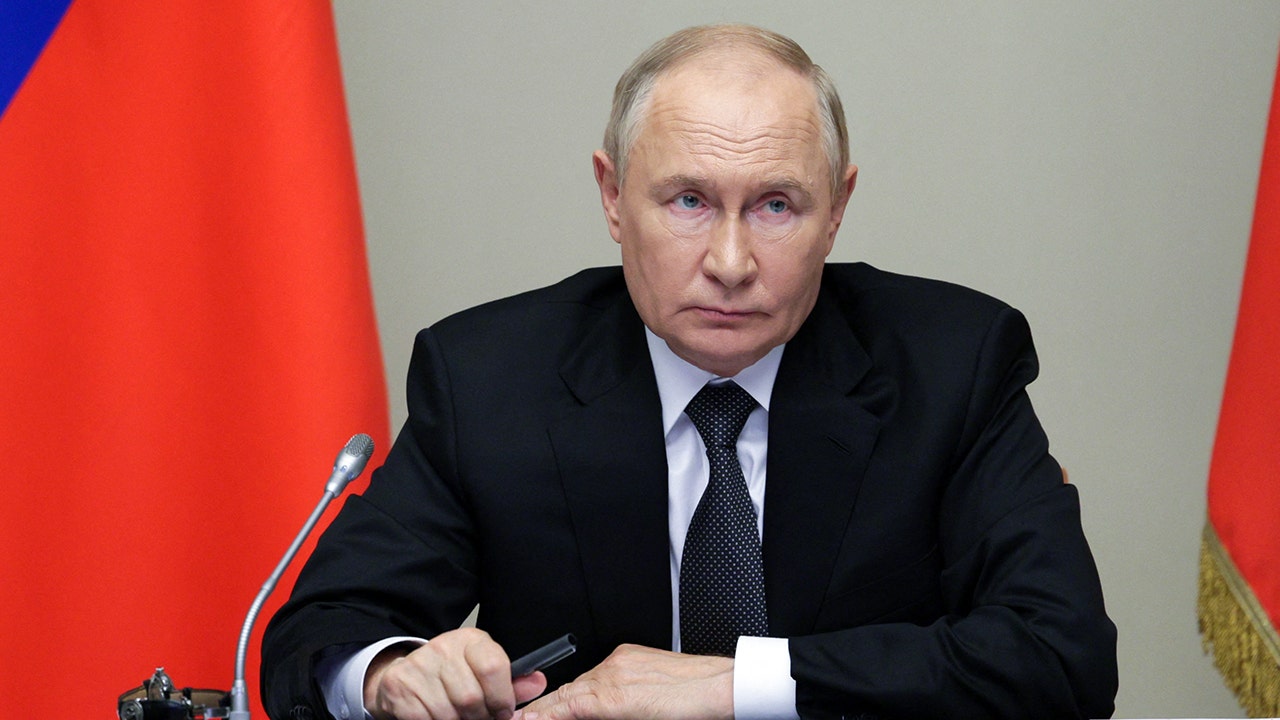
Russian President Vladimir Putin recently issued a warning to the West, stating that any nation’s conventional attack on Russia supported by a nuclear power would be considered a joint attack on his country. This announcement came as the Biden administration announced $375 million in additional security assistance to Ukraine, including air-to-ground weapons, munitions for rocket systems and artillery, armored vehicles, and anti-tank weapons. Putin made the declaration during a meeting of Russia’s Security Council, where he also announced revisions to the country’s nuclear doctrine. The revised document states that an attack against Russia by a non-nuclear power with the participation or support of a nuclear power will be viewed as a joint attack on the Russian Federation.
Putin emphasized that the revised doctrine provides greater details on the conditions for using nuclear weapons, noting they could be used in case of a massive air attack. The conditions for Russia’s use of nuclear weapons are clearly stated in the revisions, according to Putin. He stated that the possibility of using nuclear weapons would be considered if reliable information is received about a significant air and space attack on Russian territory. This could include strategic and tactical aircraft, cruise missiles, drones, hypersonic vehicles, and other flying assets. The Kremlin’s revision of its nuclear response doctrine has raised concerns about a major nuclear power loosening its declaratory policy, which experts warn is not a positive development.
In response to Putin’s warning and the revised nuclear doctrine, the Biden administration announced a $375 million security assistance package for Ukraine. This assistance includes various weapons and equipment to help Ukraine defend against Russia’s aggression. U.S. Secretary of State Antony Blinken emphasized America’s commitment to Ukraine’s defense and stated that the new assistance would be deployed quickly to help protect Ukrainian territory and its people. Ukrainian President Volodymyr Zelenskyy is expected to meet with President Biden and Vice President Harris in Washington to discuss the possibility of allowing Ukrainian troops to use long-range weapons to strike deeper into Russia.
Experts, such as Samuel Charap from RAND, have expressed concern about the potential implications of Russia’s revised nuclear doctrine. Charap warned that regardless of whether the threat is perceived as a bluff or not, it is concerning when a major nuclear power relaxes the conditions for nuclear use in its declaratory policy. The announcement by Putin and the subsequent response by the United States highlight the ongoing tensions between Russia and Ukraine, as well as the broader implications for nuclear deterrence and security in the region. Putin’s warning and the increased support for Ukraine from the United States add to the complexities of the situation and raise questions about the future of international relations and conflict resolution in the region.