



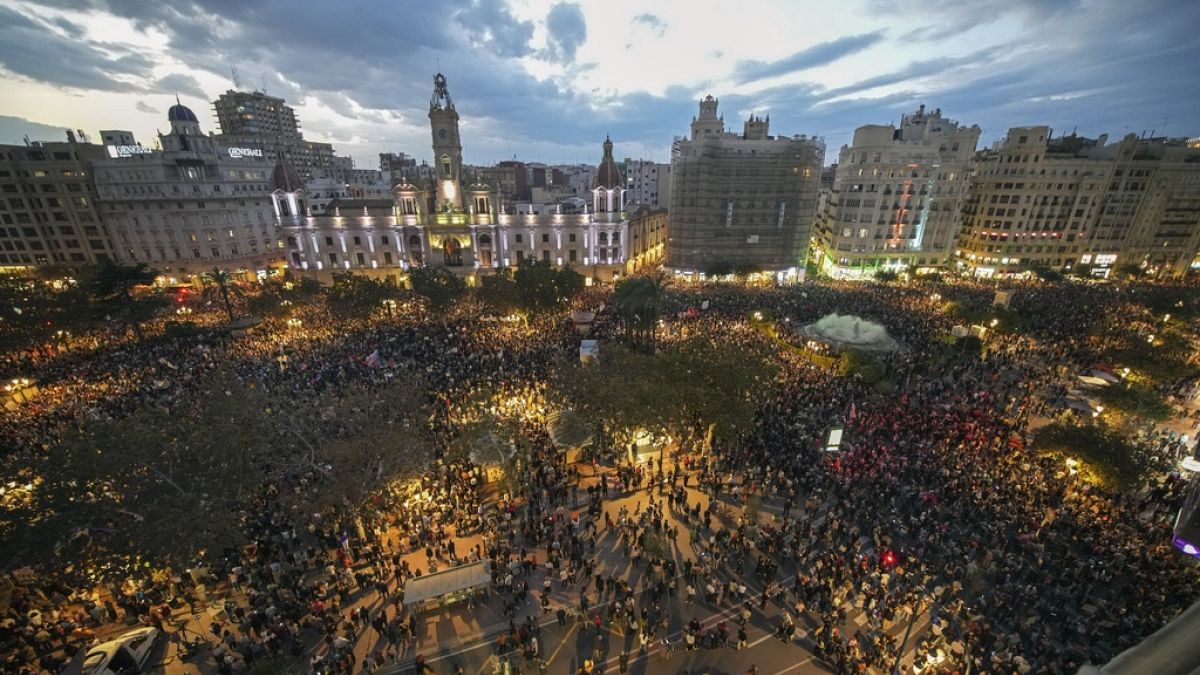
Protesters in Valencia are demanding the resignation of regional leader Carlos Mazón in response to the Spanish authorities’ handling of last week’s deadly flooding. Many believe that the response was mismanaged, with alerts about the dangers of the flood being sent out too late and authorities reacting slowly. The demonstration, organised by social and civic groups, saw thousands of people marching through the streets of Valencia, calling for Mazón to step down. Some protesters clashed with riot police in front of Valencia’s city hall, where the protest began.
Thousands of volunteers have arrived in the hardest-hit areas of Valencia’s southern suburbs to help with the cleanup efforts. It took days for officials to mobilise the thousands of police reinforcements and soldiers that the regional government had requested from central authorities. Regional governments in Spain are responsible for handling civil protection but can ask the national government in Madrid for extra resources. Mazón has claimed that he would have issued alerts earlier if he had been notified of the gravity of the situation by the official water monitoring body. He has also stated that his administration did not receive sufficient warnings from central authorities prior to the disaster.
Despite Mazón’s defense of his administration’s handling of the crisis, Spain’s weather agency issued a red alert for bad weather as early as 7:30am on the day of the flooding. However, communities were flooded by 6pm, significantly earlier than the alerts were sent out to residents’ phones after 8pm. The death toll from the flooding has reached 220, with 212 reported in the eastern Valencia region alone. Many more have lost their homes, and the streets are still covered in mud and debris almost two weeks after the disaster. The slow response and lack of adequate warnings have led to widespread anger and frustration among the affected population.
The protest in Valencia is not the first display of anger in the region following the flooding. Spain’s royals, Prime Minister Pedro Sánchez, and a number of regional leaders had mud thrown at them by angry crowds during visits to the municipality of Paiporta. The public outrage reflects the deep-seated frustration with the perceived failures of the authorities in addressing the crisis. Mazón’s claims that the magnitude of the disaster was unforeseeable and that his administration did not receive timely warnings have not appeased the protesters, who continue to demand accountability and change in leadership.
The ongoing cleanup efforts in Valencia have been bolstered by the arrival of thousands of volunteers who are assisting in the hardest-hit areas. While officials have begun the process of rebuilding and providing aid to those affected by the flooding, the anger and frustration among the population persist. Calls for Mazón’s resignation continue to echo through the streets of Valencia, with protesters demanding accountability for the slow response and lack of adequate warnings. The aftermath of the deadly flooding has brought to light the shortcomings in the region’s disaster preparedness and response, fueling a growing wave of public discontent and protest against the regional government and its leadership.
In response to the growing pressure, Mazón has expressed his respect for the protesters’ demands but has maintained his position that the crisis was unforeseeable and that his administration acted in accordance with the information available to them. However, questions remain about the delays in issuing alerts and mobilising resources, as well as the apparent lack of coordination between regional and central authorities in responding to the disaster. As Valencia continues to grapple with the aftermath of the deadly flooding, the calls for accountability and change in leadership are likely to persist, underscoring the deep-seated grievances and frustrations among the affected population.