




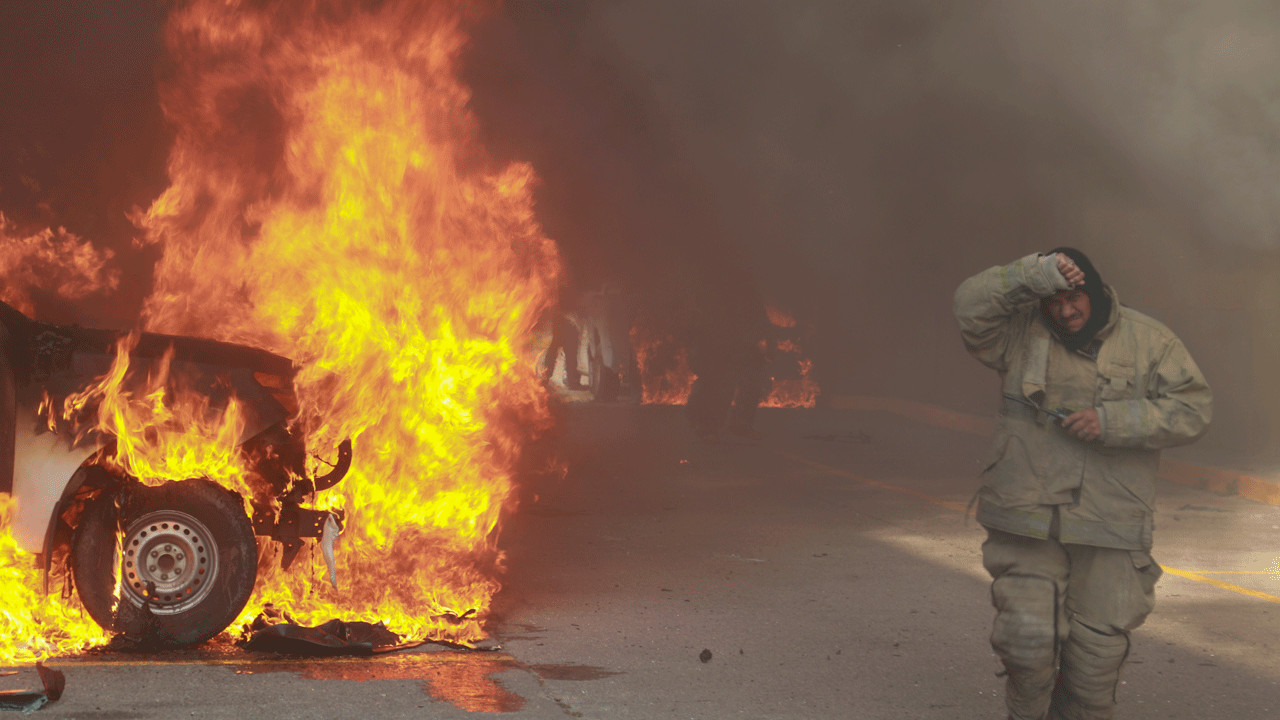
Protests erupted in Chilpancingo, Mexico, as residents demanded answers regarding the disappearance of 43 students from a rural teachers college in 2014. In addition, a student from the same college was killed in a confrontation with police in March. The violence-wracked city of Chilpancingo, capital of Guerrero state, saw protesters set the state government building ablaze and torch several cars in the parking lot. The Guerrero state government expressed regret and condemnation for the violent acts, with the state’s interior secretary resigning following the March incident. The police officers involved in the student’s death are under investigation.
Images from the protests showed numerous vehicles on fire and flames shooting out of the windows of the state office building, which houses the governor’s office. Students from the Ayotzinapa teachers’ college, known for their radical protests, often involving hijacking buses and delivery trucks, were at the forefront of the demonstrations. Earlier in the year, protesters used a pickup truck to breach the doors of Mexico City’s National Palace, the official residence of the president. The historic structure, dating back to the 1700s, was briefly invaded by protesters before security agents intervened. The ongoing protests are linked to the unresolved case of the 43 missing students, a decade after their abduction and murder.
The disappearance of the 43 students in Iguala, Guerrero, in 2014 remains a haunting human rights case in Mexico. Municipal police allegedly handed the students over to a local drug gang, leading to their deaths and disappearance. Only three of their remains have been identified since the attack, with a government truth commission pointing to collusion between authorities and the gang in what was labeled a “state crime.” The radical rural teachers’ colleges in Mexico have a history of violent protests, with the abducted students en route to another protest when they were targeted. Despite the ongoing investigations, the families of the missing students continue to demand justice and accountability for their loved ones.
The Mexican government has faced criticism for its handling of the case of the missing students, with allegations of cover-ups and collusion with criminal elements. The protests in Chilpancingo and Mexico City highlight the deep-seated anger and frustration among residents, particularly the families of the missing students. Calls for justice and transparency have grown louder in recent years, as the truth behind the disappearance of the students remains elusive. The violent protests and attacks on government buildings reflect the simmering tensions and unresolved grievances in Guerrero state, where the students’ college is located.
The protests in Guerrero and Mexico City underscore the widespread dissatisfaction with the government’s response to the disappearance of the 43 students. The use of violence and destruction by protesters reflects the urgency and intensity of their demands for justice and accountability. The Mexican authorities have pledged to investigate the police officers involved in the student’s death and address the grievances of the protesters. However, the deep-rooted issues of corruption, impunity, and collusion between authorities and criminal groups continue to overshadow the search for truth and justice in the case of the missing students. The ongoing protests serve as a stark reminder of the unresolved human rights violations in Mexico and the persistent struggle for accountability and transparency in the country’s justice system.