



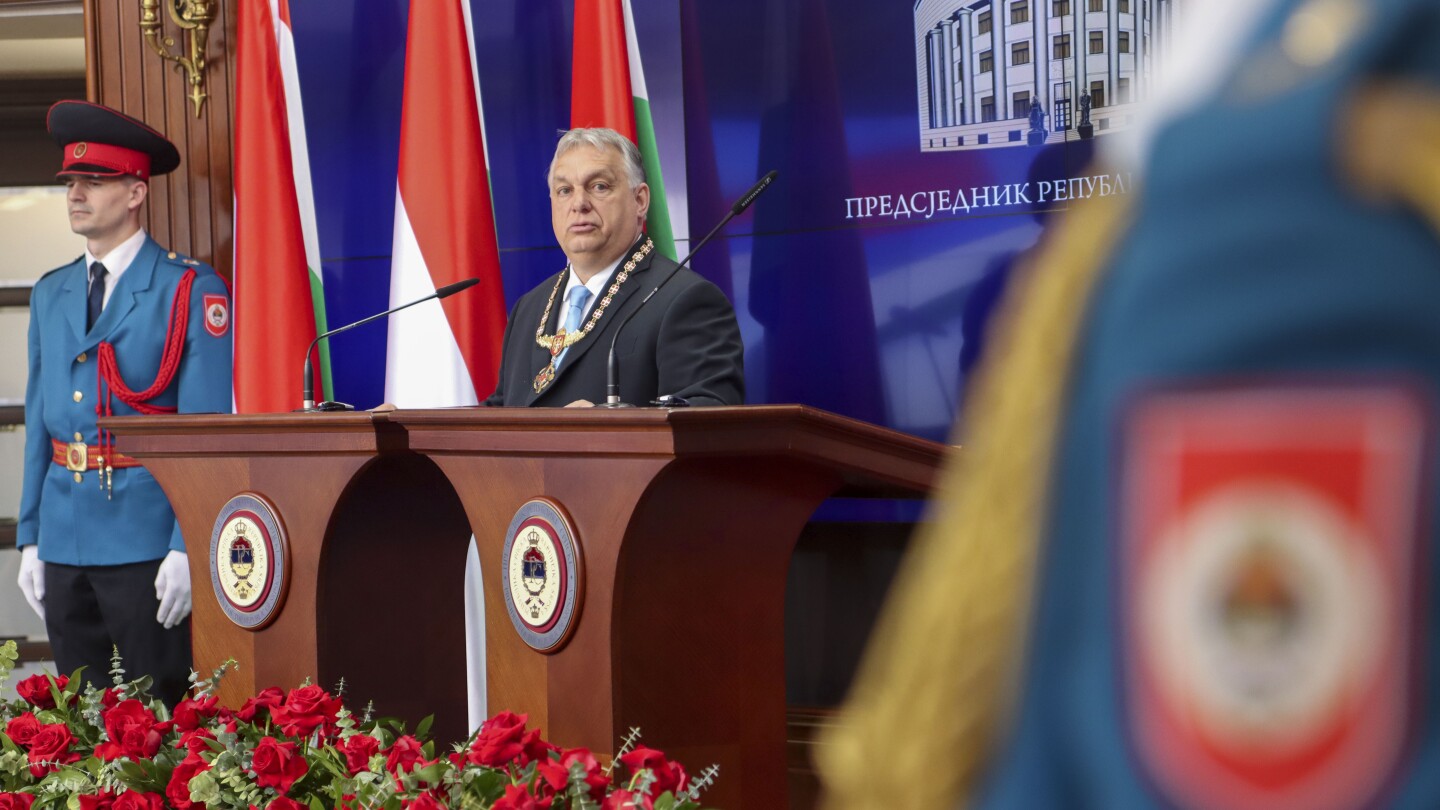
Orban’s visit to Bosnia and his reception of a medal from the pro-Russian leader of Bosnia’s Serbs, Milorad Dodik, has raised concerns in the West due to Dodik’s separatist policies and ties to Russia’s President Vladimir Putin. Bosnia-Herzegovina remains ethnically tense and politically fragile following the 1992-95 ethnic war, and there are fears that Russia may try to stir instability in the country. Orban, who has clashed with the EU in the past over his hard-line policies, expressed support for the Serbs during his visit, stating that they are essential in Europe and criticizing the EU’s treatment of Serbia.
European Union leaders have recently agreed to open talks with Bosnia on joining the bloc in an effort to bring the country into its fold. Bosnia’s three-member multi-ethnic presidency stated after a meeting with Orban that they will continue on the EU path and thanked Hungary for its support. Orban, who is known for his nationalist and anti-immigrant policies, has been a supporter of Serbia’s populist leader Aleksandar Vucic, further complicating his relationship with the EU. Dodik awarded Orban with a medal in January during a Bosnian Serb statehood holiday, despite criticism and legal challenges to the celebration.
Bosnia’s current political structure consists of two entities formed in a U.S.-brokered peace agreement that ended the 1990s’ war. The Bosnian Serbs, who control around half of the country, have long sought autonomy and have been supported by Orban and other allies in their efforts to separate from the rest of Bosnia. Orban’s visit to Banja Luka and his acceptance of a medal from Dodik highlights the complex political dynamics in the region, as well as Hungary’s ties to pro-Russian leaders. The awarding of the same medal to Putin by Dodik further underscores the close relationship between Bosnian Serbs and Russia.
Orban’s visit to Bosnia also included meetings with Hungarian businessmen and discussions about potential business partnerships in the region. Orban’s criticism of the EU’s treatment of Serbia and his support for the Bosnian Serbs have further strained his relationship with the European bloc, which has often clashed with his government over issues such as immigration and democratic values. Despite these tensions, Orban remains a powerful figure in Hungarian politics and continues to advocate for closer ties with countries like Serbia and Bosnia, even as they face challenges in their efforts to join the EU. Dodik’s awarding of medals to Orban and Putin reflects the ongoing geopolitical tensions in the region and the complex relationships between various political actors.