




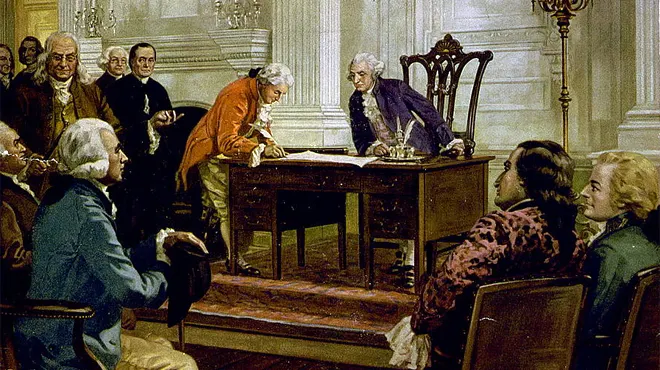
On September 19, 1796, President George Washington issued his Farewell Address as he completed his second term in office. In his address, Washington celebrated the young nation of America and reflected on his role in its creation, while also warning about the dangers of regional and sectarian division. He expressed deep gratitude towards the country for the honors it had bestowed upon him, acknowledging the debt he felt towards his beloved nation. Despite being the hero of the American Revolution, Washington was concerned about the rise of party divisions in the country during his presidency, fearing that they could threaten the unity that had been hard-fought over the past two decades.
Washington’s Farewell Address highlighted the potential harm caused by party politics, with factions misrepresenting the opinions and aims of other groups in order to gain influence. He warned that this kind of divisive behavior could alienate individuals and fragment the unity needed to sustain a successful nation. Washington emphasized the importance of national pride and unity, stating that the name of American should evoke a sense of patriotism that transcends local discriminations. This message of unity and collective pride in the new nation resonated deeply with the American people and has continued to be a foundational document for issues of Union, partisanship, and isolationism throughout history.
Washington’s decision not to run for a third term as president set a precedent for the tradition of presidents serving only two terms, a rule that was later codified by the 22nd Amendment in 1951. By relinquishing power voluntarily, Washington exhibited a rare form of leadership that prioritized the stability and strength of the nation over personal political ambitions. Despite being unanimously elected as the nation’s first president by the electoral college in 1788-1789, Washington chose to step down after his second term, paving the way for a peaceful transfer of power to his successor, John Adams.
Washington’s legacy endured long after his presidency, with his Farewell Address continuing to be recited annually in the United States Senate. His message of unity and pride in the American nation has remained relevant throughout the years, inspiring a sense of patriotism and solidarity among the people. As the father of his country, Washington left behind a lasting impact on the American political landscape, urging future generations to prioritize the common good over partisan interests. His prophetic warnings about the dangers of division and disdain for party politics continue to resonate today, serving as a timeless reminder of the importance of unity and cooperation in maintaining a strong and prosperous society.