




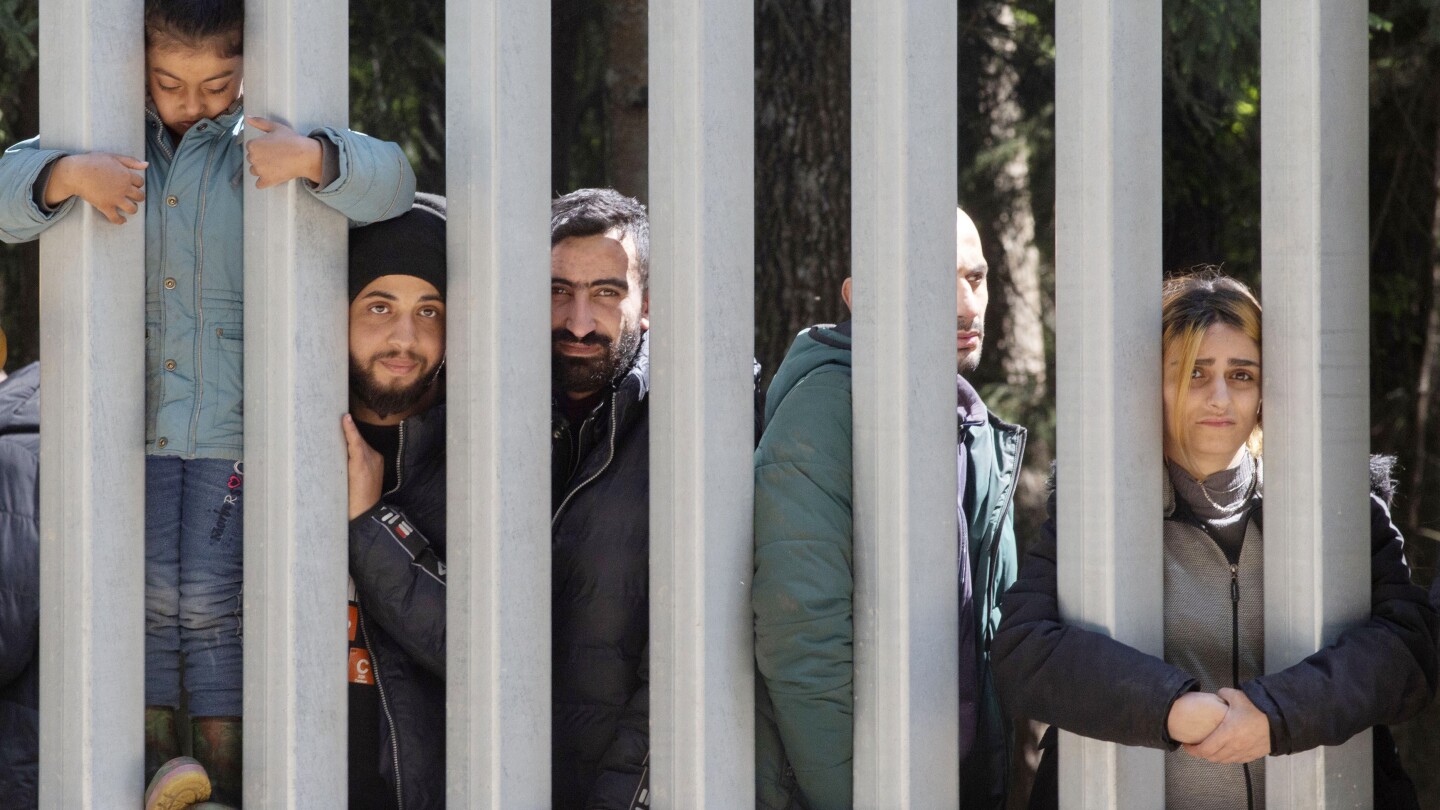
The defense minister of Poland, Wladyslaw Kosiniak-Kamysz, announced that Poland is strengthening the metal barrier along its border with Belarus to deter illegal migration. This decision comes as part of Poland’s effort to tighten its eastern frontier, particularly in response to the increased presence of Polish and allied military forces in regions close to the border. The minister also advocated for the construction of defensive bunkers, trenches, and ditches along the border with Belarus and Russia’s exclave of Kaliningrad, citing the actions already taken by the Baltic states in this regard. The move is seen as a response to the alleged orchestrated efforts by Belarus and Russia to destabilize Poland, a Ukrainian ally, and the European Union through a massive wave of illegal migration in 2022.
The metal barrier along the Polish-Belarusian border was completed last year in response to the influx of illegal migration, but some crossings still occur. The minister’s comments suggest that the barrier serves as a wider defense measure during Russia’s ongoing war with Ukraine, which shares a border with Poland. The increased spending on strengthening the barrier represents the highest allocation for such purposes in Poland’s history. The presence of Polish and allied military forces in the region is also aimed at reinforcing the eastern frontier of NATO and the European Union, particularly in the context of Russia’s aggression in Ukraine in 2022.
Poland’s defense minister expressed concerns about the role of Belarus and Russia in orchestrating illegal migration to destabilize Poland and the European Union, citing the events of 2022 as evidence of this strategy. The construction of a line of defensive bunkers, trenches, and ditches along the border with Belarus and Kaliningrad is viewed as a proactive measure to prevent further attempts to exploit the border for malicious purposes. The minister emphasized the importance of maintaining a strong defense posture in response to potential threats from neighboring countries, particularly in light of the ongoing conflict in Ukraine and the broader geopolitical implications for the region.
The Polish government’s efforts to fortify its border with Belarus reflect broader concerns about security and stability in the region, particularly as Poland seeks to protect its territory and uphold its commitments as a member of NATO and the European Union. The strategy of strengthening the metal barrier and increasing military presence along the border underscores the government’s commitment to safeguarding national security and preventing illegal migration. The ongoing cooperation with allied forces and the implementation of defensive measures demonstrate Poland’s proactive approach to addressing security challenges and countering potential threats from neighboring countries.
The political and security implications of Poland’s actions to strengthen its border with Belarus highlight the complex dynamics of regional relations and the evolving security landscape in Eastern Europe. The decision to enhance the metal barrier and deploy military forces along the border underscores the importance of maintaining a secure and stable environment in the face of external pressures and potential threats. By investing in defensive measures and increasing cooperation with allied forces, Poland is signaling its commitment to defending its territory and upholding its responsibilities as a member of NATO and the European Union. The ongoing efforts to bolster the border demonstrate Poland’s proactive stance in addressing security challenges and promoting regional stability.
In conclusion, Poland’s decision to strengthen the metal barrier along its border with Belarus in response to illegal migration reflects broader concerns about security and stability in the region. The government’s efforts to fortify the border and enhance military presence demonstrate a proactive approach to addressing security challenges and countering potential threats from neighboring countries. By increasing cooperation with allied forces and implementing defensive measures, Poland is reaffirming its commitment to safeguarding national security and upholding its responsibilities as a member of NATO and the European Union. The ongoing developments underscore the evolving security landscape in Eastern Europe and the complex dynamics of regional relations in the face of external pressures and geopolitical uncertainties.