



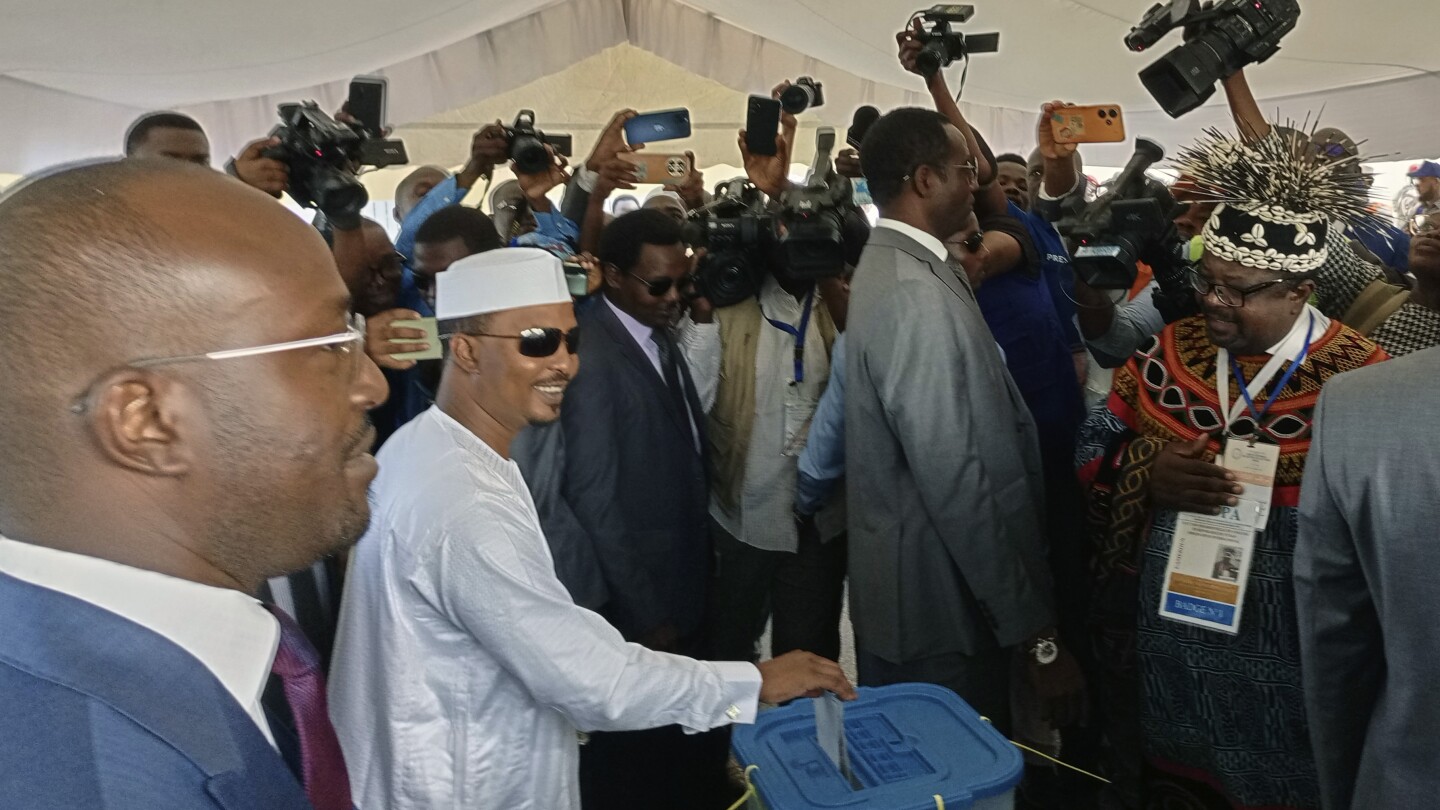
The constitutional council in Chad has confirmed the election of President Mahamat Deby Itno, who seized power in 2021 following the death of his father, President Idriss Deby. The May 6 vote saw Deby Itno winning with 61% of the vote, while his main opponent, Prime Minister Succès Masra, trailed behind with 18.5%. This marks the end of three years of military rule in the oil-exporting country of nearly 18 million people. Chad has not experienced a democratic transfer of power since gaining independence from French colonial rule in 1960.
Analysts had widely predicted Deby Itno’s victory in the election. The final results confirming his win were released by the council, despite an appeal filed by Masra challenging the preliminary results. The decision by the council solidified Deby Itno’s hold on power, further consolidating his position after taking over from his father last year. The transitional government led by Masra, who had been the leader of the opposition, now faces an uncertain future as they continue to contest the election results.
The confirmation of Deby Itno’s presidency raises concerns about the future of democracy and governance in Chad. The country has a history of authoritarian rule, with the Deby family holding power for decades. The lack of a peaceful transfer of power and the dominance of the ruling party have raised questions about political stability and the rights of opposition groups. The international community will be closely monitoring the situation in Chad to ensure that democratic principles are upheld and that the rights of the opposition are respected.
Deby Itno’s victory in the election cements his position as the country’s leader and raises hopes of stability and continuity in Chad. As an oil-exporting nation, Chad plays a key role in the region and the global economy. Deby Itno has promised to address the country’s economic challenges and improve the lives of its citizens. The new government will be closely watched to see how it handles issues of governance, human rights, and economic development. The international community will be looking for signs of progress and commitment to democratic principles.
The constitutional council’s decision to confirm Deby Itno’s election has sparked mixed reactions within Chad and the international community. While some have welcomed the outcome as a step towards stability and continuity, others have expressed concerns about the lack of transparency and fairness in the election process. The opposition, led by Masra, has vowed to continue their fight for democracy and the rights of the people. The coming months will be crucial for Chad as it navigates the challenges of governance and political transition.
Despite the challenges and controversies surrounding the election, Chad now has a confirmed president in Mahamat Deby Itno. The new government will need to address the country’s economic and social challenges while also upholding democratic principles and respecting the rights of all citizens. The international community will play a key role in supporting Chad’s efforts towards stability and development. As Chad moves forward under Deby Itno’s leadership, the focus will be on ensuring that the country remains on a path towards democracy and prosperity for all its people.