



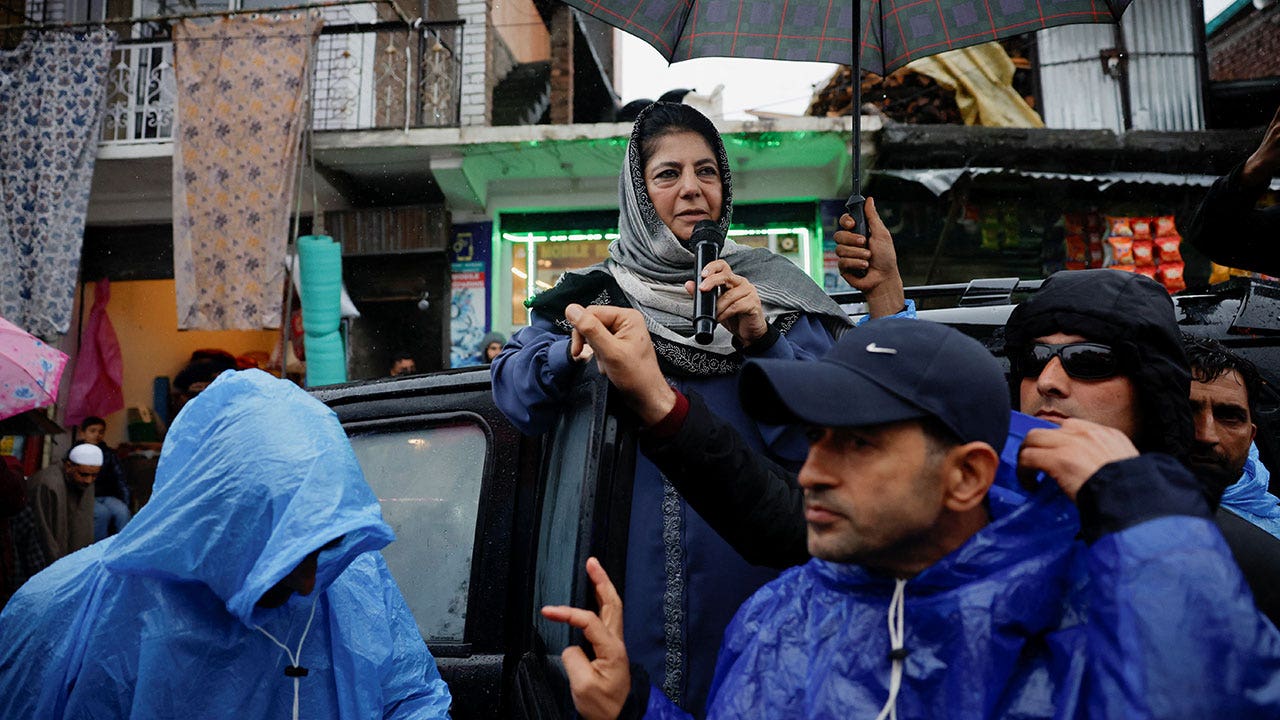
Opposition leaders in India’s Kashmir valley have accused Prime Minister Narendra Modi’s government of hindering their campaign events, with some accusing the government of denying or cancelling permissions to hold rallies in order to support BJP proxies. This comes as Modi’s Bharatiya Janata Party is not contesting elections in Kashmir for the first time since 1996, despite his claims of integrating Kashmir with the rest of the country and bringing peace to the troubled region. The government’s revocation of Kashmir’s autonomy in 2019 and its division into federally-controlled territories has stirred controversy and heightened tensions in the region, leading to allegations of interference in the election process.
In a letter to the Election Commission of India, opposition leader Omar Abdullah of the National Conference expressed concerns over the police, under the federal government’s control, cancelling permissions for his rallies without providing reasons, leading to suspicions that this was done to support BJP’s proxy candidates. Similarly, Mehbooba Mufti, who heads the People’s Democratic Party, accused the police of restricting their movement to aid BJP-backed candidates, going against the guidelines set by the election commission. This interference in the election process has raised questions about the government’s commitment to democracy and fair elections in the region, where tensions are already running high.
The Supreme Court of India upheld the decision to remove Jammu and Kashmir’s special status and reorganize the region into federally-controlled territories in 2019, a move that has been met with mixed reactions. While the BJP has not fielded any candidates in Kashmir’s three seats, it has pledged to support smaller regional parties as part of its grand strategy, though details on which parties would receive this support remain unclear. The opposition leaders have voiced their opposition to the BJP and have pledged their support to a Congress-led alliance of more than two dozen parties at the federal level, further complicating the political landscape in the region.
As the region prepares for elections in its three seats, scheduled for May 13, 20, and 25, tensions are running high between the government and opposition leaders in Kashmir. The police, responsible for maintaining law and order in the region, have been accused of interfering with opposition campaign events and favouring BJP-supported candidates, leading to concerns about the fairness of the electoral process. With India and Pakistan both claiming Kashmir in full and having fought multiple wars over the region, the political situation remains volatile, with the elections in Kashmir taking on broader regional and international significance due to the longstanding conflict between the two nuclear-armed neighbors.
The allegations of interference in the election process by the Modi government have raised concerns about the democratic process in Kashmir and the fairness of the upcoming elections. Opposition leaders have accused the government of trying to manipulate the election results by obstructing their campaign events and supporting proxy candidates. The decision by the BJP to not contest elections in Kashmir for the first time in over two decades has raised eyebrows and cast doubts on the government’s commitment to integrating the region with the rest of the country. As Kashmir prepares to vote in its three parliamentary seats, the political landscape remains fraught with tensions and uncertainty, with the outcome of the elections likely to have far-reaching implications for the region and its relationship with the rest of India.