



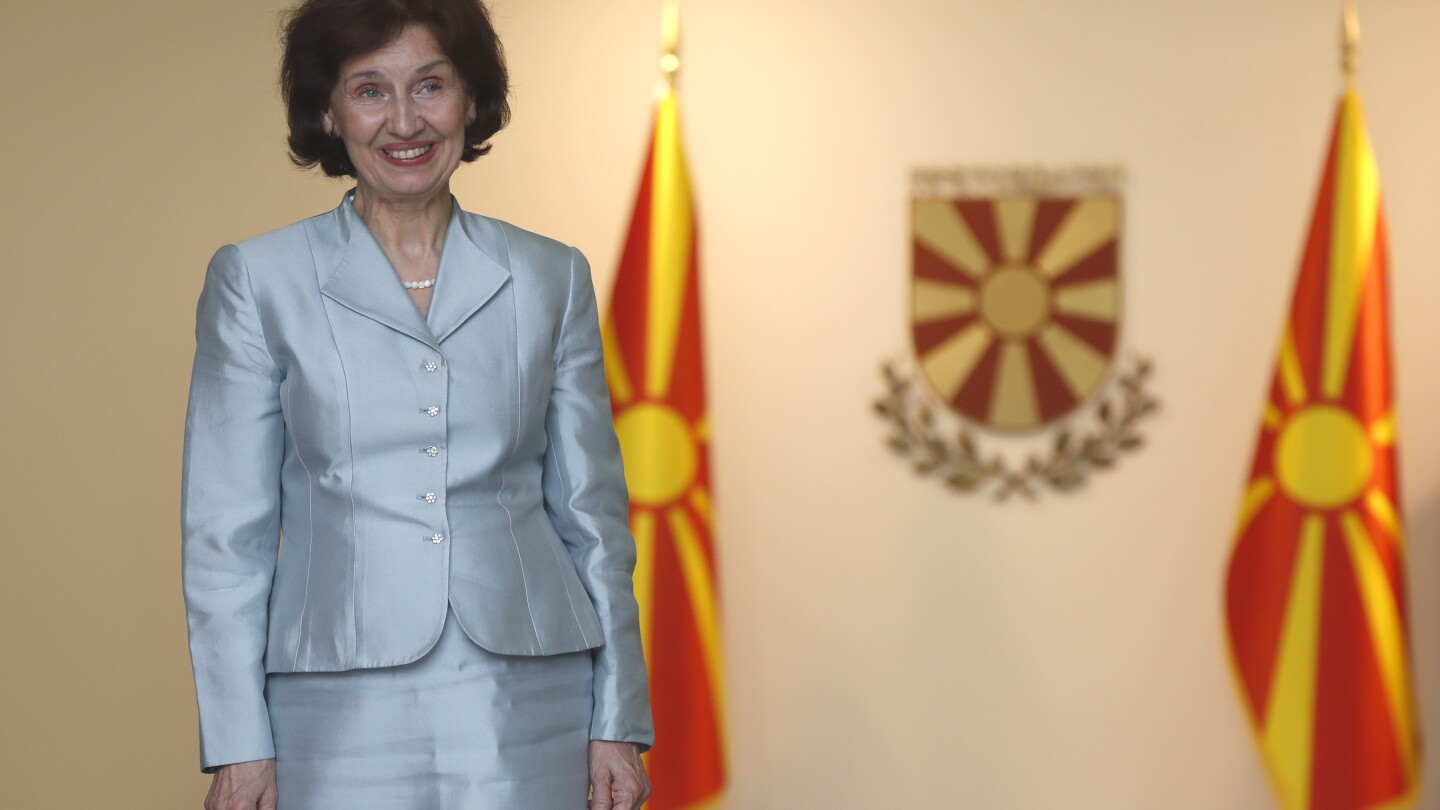
AP – North Macedonia, a candidate for European Union membership, is currently working to ease tensions with Greece and Bulgaria following recent controversial remarks made by President Gordana Siljanovska-Davkova. The president’s reference to her country as “Macedonia” during a swearing-in ceremony sparked criticism from Greece, which has historically disputed the name. Greek Prime Minister Kyriakos Mitsotakis called the comments “illegal and unacceptable,” while the European Commission and Bulgaria also expressed concern. The issue is rooted in a longstanding dispute between Greece and North Macedonia over the use of the name “Macedonia,” which was resolved in a 2018 agreement.
Despite the tensions, North Macedonia’s president has pledged to uphold the country’s international obligations while asserting her personal right to use the name “Macedonia” for self-identification. The region of Macedonia is geographically divided by the borders of Greece, Bulgaria, and North Macedonia, making the name dispute a complex and sensitive issue. The resolution of this dispute was a key factor in North Macedonia’s efforts to join the European Union and NATO, with the country finally gaining membership in the military alliance in 2020. The recent election victory of the conservative VMRO-DPMNE party in North Macedonia is expected to lead to a new government after the party spent years in opposition.
The controversy surrounding President Siljanovska-Davkova’s remarks underscores the delicate nature of international relations in the region. Greek Prime Minister Mitsotakis’s firm stance against any further use of the name “Macedonia” by North Macedonia reflects the ongoing sensitivity of the issue. The European Commission’s involvement highlights the broader implications of the dispute for EU integration efforts in the Western Balkans. Bulgaria’s warning to North Macedonia about adhering to international agreements serves as a reminder of the complex diplomatic dynamics at play.
North Macedonia’s path to EU membership has been marked by challenges, including the name dispute with Greece and the recent tensions with Bulgaria. The new government, led by the conservative-backed coalition, will need to navigate these issues carefully in order to maintain stability and progress towards EU accession. As North Macedonia seeks to strengthen its ties with the EU and its neighbors, finding a balance between national identity and international obligations will be critical. The resolution of the name dispute with Greece and Bulgaria will be a key factor in determining the country’s future trajectory and its prospects for EU membership.
In conclusion, the recent developments in North Macedonia highlight the ongoing complexities of regional politics in the Western Balkans and the challenges faced by countries seeking EU membership. The delicate balance between national identity and international relations underscores the need for diplomatic solutions to longstanding disputes. As North Macedonia moves forward under a new government, the resolution of the name issue with Greece and Bulgaria will be a crucial step towards securing its place in the European Union. The EU’s support and engagement in the region will also be essential in addressing these challenges and fostering stability and cooperation in the Western Balkans.