



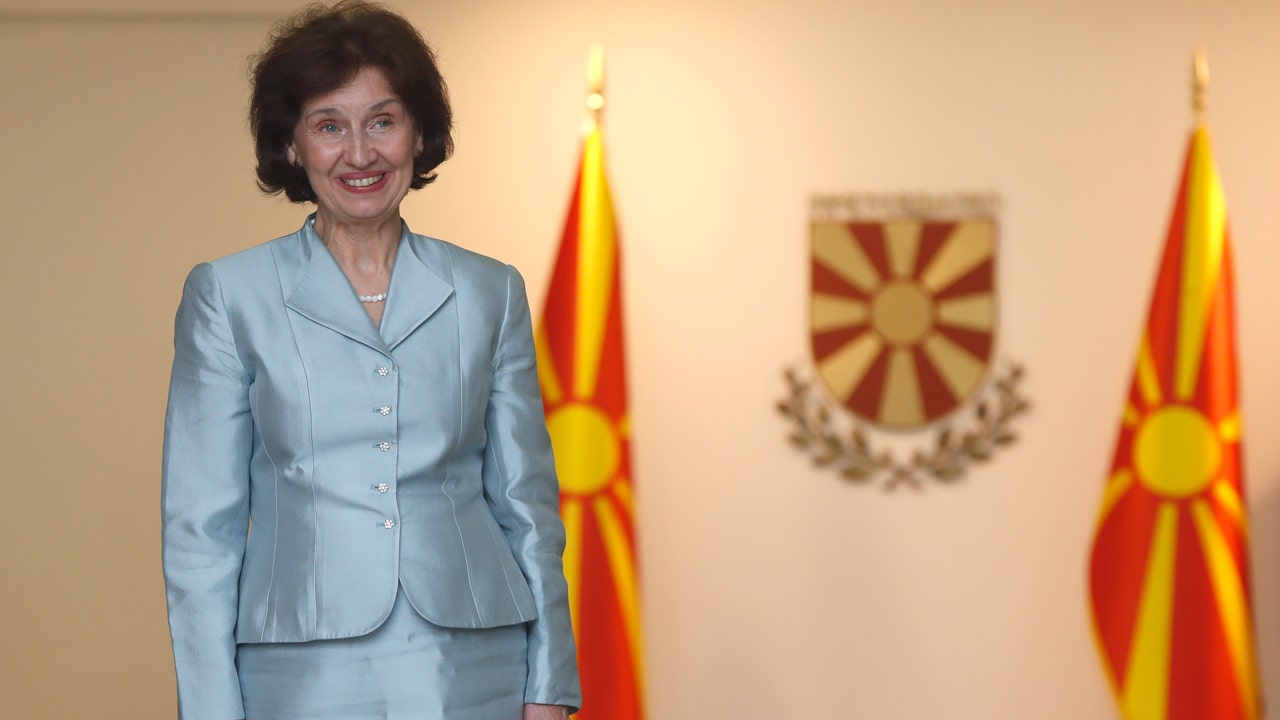
North Macedonia is currently dealing with disputes with its European Union neighbors, Greece and Bulgaria, following the recent election victory of a conservative-backed coalition and president. The country changed its name from Macedonia in 2018 as part of an agreement with Greece to end a long-standing dispute over the name. However, the newly elected President Gordana Siljanovska-Davkova caused controversy by referring to her country as “Macedonia” during her swearing-in ceremony, prompting a strong reaction from Athens.
Greek Prime Minister Kyriakos Mitsotakis labeled the president’s remarks as “illegal and unacceptable,” and declared that Greece would not accept any further steps of this nature. The European Commission also criticized the comments, and Bulgaria warned North Macedonia that it would be held to the terms of international agreements it had signed. Despite the backlash, Siljanovska-Davkova’s office stated that she would respect the country’s international obligations while also asserting her right to use the name Macedonia for personal self-identification.
The region of Macedonia is geographically divided by the national borders of Greece, Bulgaria, and North Macedonia, leading to the name dispute that has hindered North Macedonia’s efforts to join the European Union and NATO. The country finally joined NATO in 2020 after overcoming this obstacle. The recent landslide victory of North Macedonia’s conservative VMRO-DPMNE party in the presidential and parliamentary elections signals a significant shift in the country’s political landscape, with the opposition party now poised to lead the government after years in opposition.
As North Macedonia seeks to establish stronger relations with its EU neighbors and move forward with its EU and NATO aspirations, resolving the disputes over the name issue with Greece and Bulgaria will be crucial. The country must navigate these challenges diplomatically while upholding its international obligations and commitments. The recent election results have set the stage for a new chapter in North Macedonia’s political landscape, with opportunities to address longstanding issues and pursue its goals of EU and NATO membership. It remains to be seen how the new government will handle these delicate diplomatic matters and chart a path towards further integration with the European Union and NATO.