




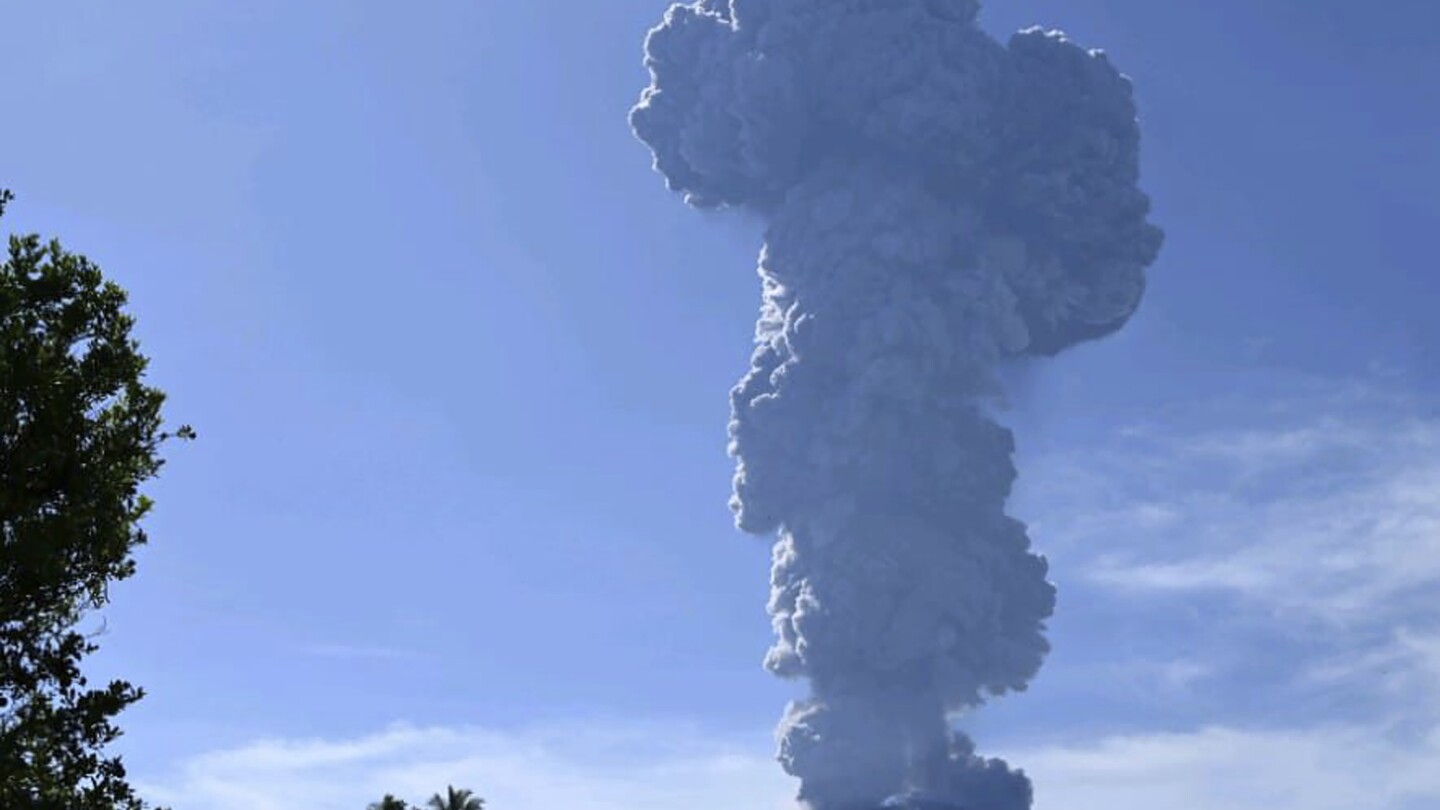
The eruption of Mount Ibu, a volcano in Indonesia’s North Maluku province, caused concern among officials as thick grey ash and dark clouds were spewed 5,000 meters into the sky for five minutes. Hendra Gunawan, chief of the Center for Volcanology and Geological Hazard Mitigation, stated that the volcanic earthquakes are still intense, indicating a potential for future eruptions. Following the eruption, the alert level for the volcano was raised from 2 to 3, the second-highest level, prompting officials to widen the radius of the area that should be vacated. While evacuation tents have been prepared by local authorities, no evacuation order has been issued yet. Residents and tourists were advised to stay at least 5 kilometers away from Mount Ibu’s crater, as more than 13,000 people live within this radius on the northern side of the volcano.
Mount Ibu, standing at 1,325 meters (4,347 feet) in height, is situated on the northwest coast of the remote island of Halmahera. Indonesia, with its population of 270 million people, is known for its high volcanic activity, boasting a total of 120 active volcanoes. The country’s location along the “Ring of Fire,” a horseshoe-shaped series of seismic fault lines around the Pacific Ocean, makes it susceptible to frequent volcanic eruptions. This geographical setting has led to Indonesia being a hotbed for volcanic activity, requiring constant monitoring and preparedness from authorities to ensure the safety of the population living near these volatile natural formations.
The eruption of Mount Ibu is a cause for concern not only due to the immediate impact of the spewed ash and dark clouds but also because of the potential for future eruptions. The intense volcanic earthquakes indicate a level of instability that could result in further explosive activity from the volcano. With the alert level raised to 3, precautions are being taken by local authorities to ensure the safety of residents and tourists in the vicinity of Mount Ibu. The provision of evacuation tents suggests that preparations are underway for a possible evacuation if the situation escalates, although no official order has been issued yet.
As the situation at Mount Ibu continues to be monitored, the need for vigilance and adherence to safety guidelines remains paramount. Residents are urged to stay informed about developments regarding the volcano’s activity and to heed any evacuation orders that may be issued in the future. The potential threat posed by volcanic eruptions underscores the importance of preparedness and the implementation of safety measures in volcanic-prone regions. Indonesia’s history of volcanic activity serves as a reminder of the unpredictable nature of these natural phenomena and the necessity for ongoing monitoring and response mechanisms to mitigate potential risks to public safety.
The eruption of Mount Ibu serves as a stark reminder of the volatile nature of Indonesia’s geological landscape and the constant threat posed by its numerous active volcanoes. The country’s location along the “Ring of Fire” makes it particularly susceptible to seismic and volcanic activity, necessitating a comprehensive strategy for monitoring, preparing for, and responding to such events. The recent eruption highlights the importance of effective communication and coordination among authorities, residents, and tourists to ensure a rapid and coordinated response in the face of natural disasters. As the situation at Mount Ibu unfolds, the focus remains on safeguarding lives and property while mitigating the potential impact of volcanic activity on the surrounding areas.