



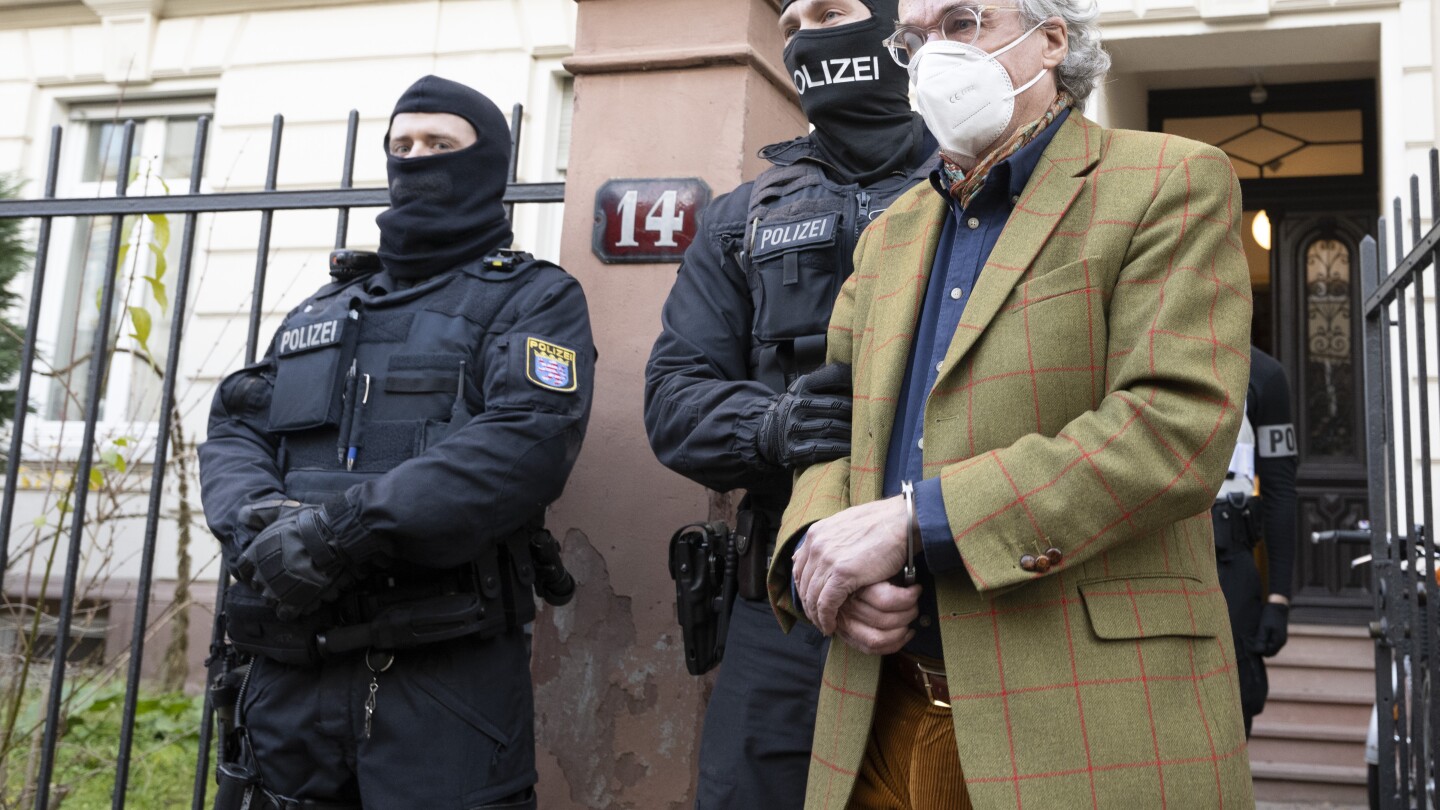
The Frankfurt state court announced that nine suspects, including a self-proclaimed prince and a former far-right lawmaker, will stand trial starting on May 21 in connection with an alleged plot to overthrow the German government. This case is the most high-profile of the three cases related to the conspiracy that emerged in late 2022. The accused were charged with terrorism offenses, with prosecutors alleging that they held beliefs in various conspiracy theories such as Reich Citizens and QAnon ideology, believing that Germany is controlled by a “deep state.”
The group reportedly planned to install Heinrich XIII Prince Reuss as the provisional leader of Germany and intended to storm the parliament building in Berlin to arrest lawmakers. Prosecutors claim that the suspects aimed to negotiate a new political order primarily with Russia, one of the victorious allied powers of World War II. Most of the defendants are facing charges of being part of a terrorist organization and preparing for high treason. The court expects the trial to extend into 2025 due to the complexity and seriousness of the charges.
Apart from the nine suspects in the Frankfurt case, another 17 alleged members of the group have been charged separately in indictments in Stuttgart and Munich. The trial of nine individuals in Stuttgart is set to begin on April 29, while the remaining eight will face trial in Munich starting on June 18. The broader conspiracy case highlights the growing influence of extremist ideology and the serious threat posed by individuals and groups who are willing to resort to violent means in their pursuit of political goals.
The involvement of a former lawmaker with the far-right Alternative for Germany party and a retired paratrooper in the alleged plot underscores the reach of extremist networks and the potential dangers they pose to democratic institutions. The accused reportedly subscribed to a range of conspiracy myths and aimed to destabilize the government through violent means. The trial of the suspects will shine a spotlight on the activities of radical individuals and groups within German society and the need for vigilance in combating extremism and ensuring the integrity of the democratic system. Authorities have taken swift action to prosecute those involved in the conspiracy and send a clear message that such activities will not be tolerated in Germany.
The trial of the nine suspects in the Frankfurt case is expected to be closely watched by the public and policymakers as it unfolds over the coming years. The case has raised concerns about the rise of extremist ideologies and the potential threats they pose to the stability of democratic institutions. By holding the accused accountable for their actions and exposing the details of the alleged plot, authorities are seeking to prevent future attempts to undermine the government and uphold the rule of law. The trial will provide important insights into the motives and methods of individuals who seek to sow discord and violence in society and serve as a warning to those who may be contemplating similar actions in the future.