






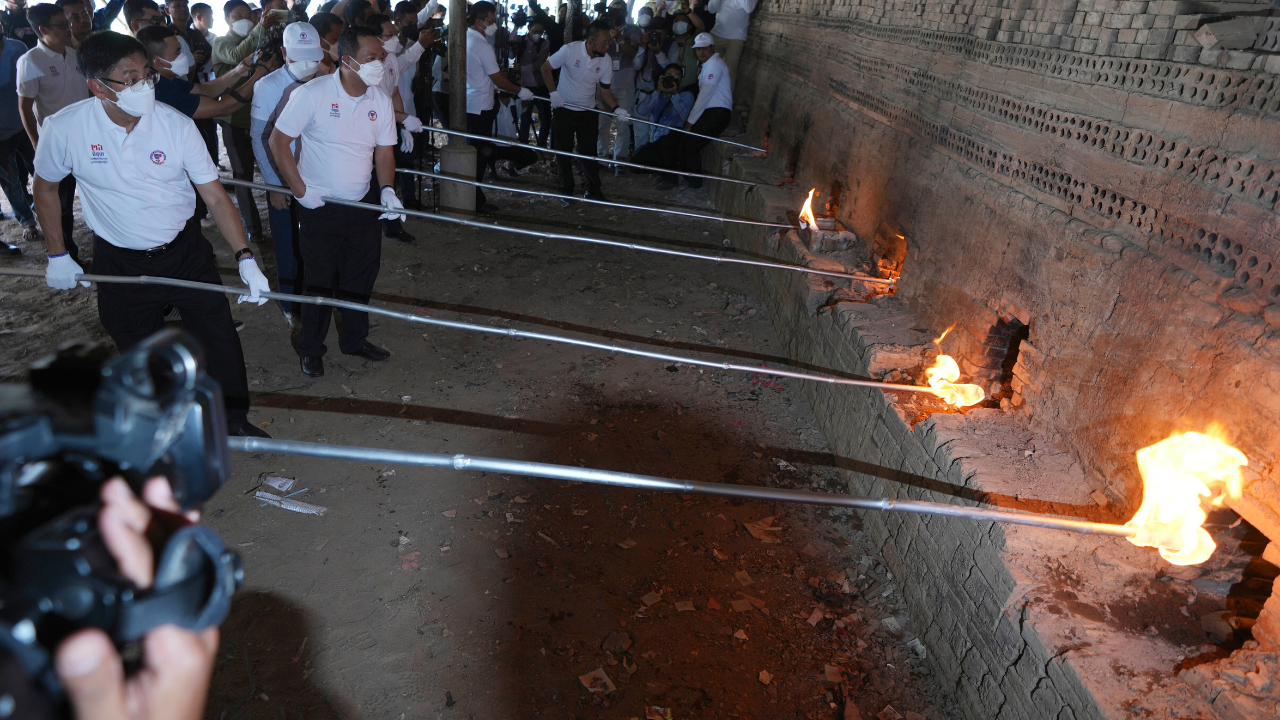
Cambodian authorities recently destroyed over seven tons of illicit drugs and ingredients, with 4.1 tons being drugs like heroin, marijuana, methamphetamine, ecstasy, and ketamine. Gen. Meas Virith stated that the destroyed drugs had a wholesale value of $22.7 million and a street value of almost $70 million. The drugs were burned in a brick kiln on the outskirts of the capital, Phnom Penh. Virith emphasized the importance of educating people about the dangers of illicit drugs as the best way to combat the illegal trade, rather than solely focusing on crackdown measures. He stated that investing in drug education, awareness, and protection can help reduce drug activities in the long run.
In the first five months of the year, Cambodian authorities pursued over 3,800 drug-related cases, leading to the arrest of over 10,000 individuals, including foreigners. The production and trafficking of synthetic drugs, particularly methamphetamine, are at record highs in Southeast Asia, according to the United Nations Office on Drugs and Crime. The agency reported that crystal methamphetamine seizures have increased annually in Cambodia for seven consecutive years, reaching over 1.4 tons in 2023, indicating the ongoing expansion of the drug market in the country. Additionally, the amount of seized heroin doubled in 2023, possibly signaling a resurgence in the heroin market in East and Southeast Asia after declining seizures the previous year.
The National Authority for Combating Drugs announced that over 3.2 tons of various chemicals and ingredients used to produce illegal drugs were also destroyed during the ceremony. Meas Virith warned that these ingredients could have harmed millions of people had they not been seized. He emphasized the importance of educating Cambodians from all walks of life about the dangers posed by illicit drugs and the benefits of prevention through awareness and protection measures. Virith stated that investing in drug education is a more constructive approach than relying solely on repeat crackdown measures, which may not address the root cause of the issue.
Cambodia’s pioneering post-Khmer Rouge era newspaper, the Phnom Penh Post, will cease print publication, marking the end of an important era in the country’s media landscape. The publication has played a significant role in reporting on important events and issues in Cambodia since its inception, but it will now shift to an online-only format. The move reflects the changing media landscape globally, with many publications adapting to digital platforms to reach a wider audience. Despite the shift to online publication, the Phnom Penh Post will continue to provide news and information to readers, maintaining its commitment to journalism and serving the public interest.
The United Nations Office on Drugs and Crime highlighted the growing threat of drug trafficking in Southeast Asia, particularly the production and trafficking of synthetic drugs like methamphetamine. The agency reported increasing seizures of crystal methamphetamine in Cambodia, indicating the escalation of the drug market in the country. In addition, the amount of seized heroin doubled in 2023, suggesting a resurgence in the heroin market in the region. The rise in drug trafficking poses a significant challenge to the societies in Southeast Asia and underscores the need for coordinated efforts to combat the illicit drug trade. By focusing on education, awareness, and preventive measures, authorities in Cambodia are working to reduce drug activities and protect their citizens from the harmful effects of illegal drugs.