




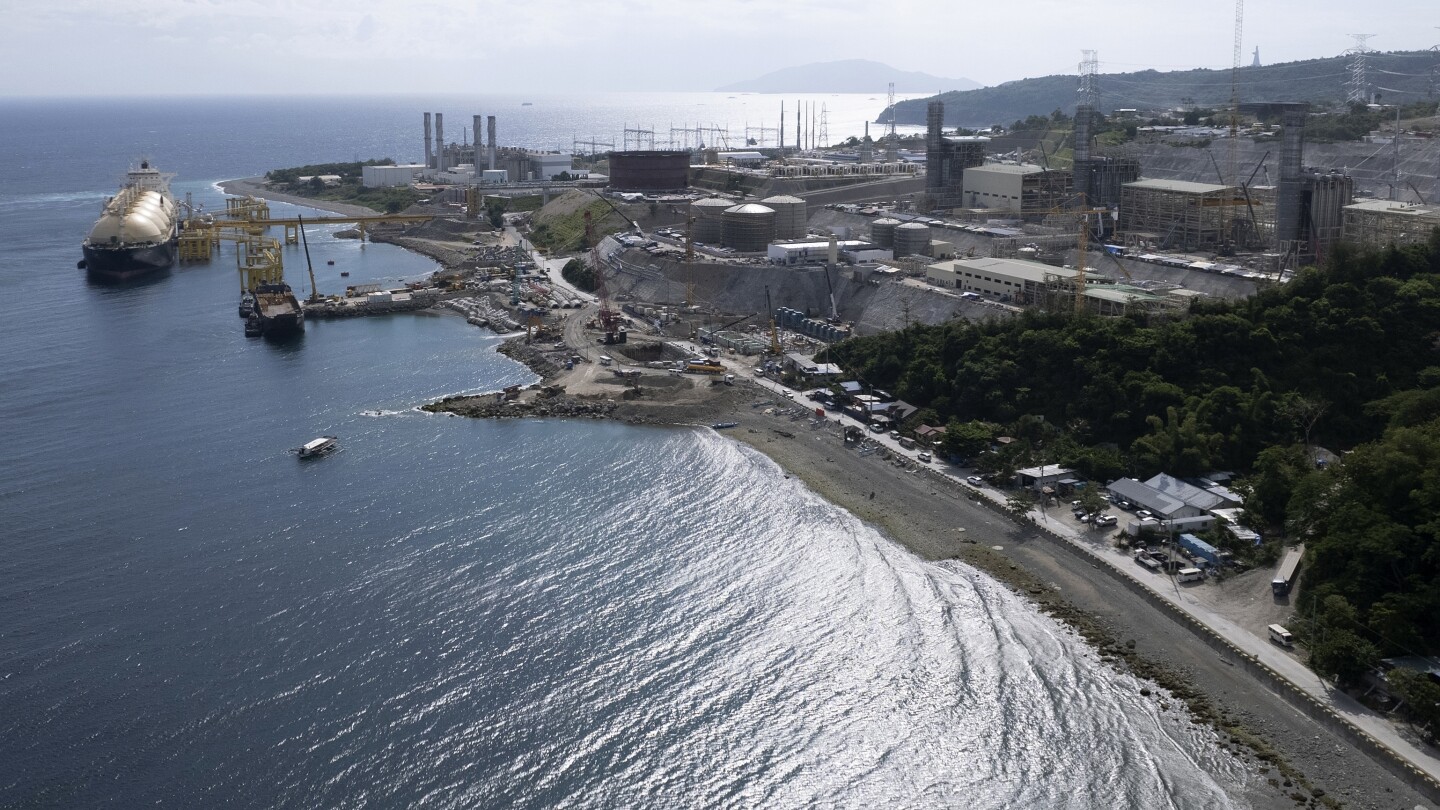
The Philippines is in the midst of a significant expansion of natural gas power, despite the urgent need to phase out fossil fuels due to climate change. The country aims to become a liquified natural gas hub for the Asia-Pacific region, with Batangas province being a major focal point of this development. Currently, there are four gas power plants in the province, with plans for four more, along with six new terminals for importing liquified gas. The government argues that this electricity is crucial for national development.
Governor Hermilando Mandanas of Batangas province has been a vocal supporter of natural gas power and stands to benefit financially from the buildout. Mandanas owns a large share in a real estate firm, AbaCore Capital Holdings Inc., which saw a surge in value as energy companies moved into the area. He promoted the expansion of natural gas in media interviews and public events, with AbaCore launching its own natural gas project. Despite stepping down as CEO when he was elected as governor in 2016, Mandanas still owned nearly 30% of the company as of last fall.
Ethics experts have raised concerns about Mandanas’s involvement in the natural gas industry and his ownership stake in AbaCore Capital Holdings Inc. Philippine politicians are prohibited from owning substantial stakes in companies that may conflict with their official duties. Legal experts believe the governor’s actions violate laws on ethics in public office and may warrant his suspension or removal from office. Environmental experts also suggest that LNG projects should be reevaluated in light of these findings.
Despite the concerns raised by experts, Mandanas denies any direct involvement of his associated businesses in the natural gas buildout in Batangas. He maintains that natural gas is the best choice for the country and argues that AbaCore is not involved in the energy business within the province. However, his wife, Regina Reyes, openly acknowledged that her husband’s policies would benefit the family company. A deal signed in 2019 between an AbaCore affiliate and three Chinese firms resulted in a significant increase in the value of the properties involved.
The associated press investigation into the natural gas buildout in Batangas highlights the potential conflict of interest and ethical issues surrounding the project. Legal experts and environmental advocates have raised concerns about Governor Mandanas’s ties to the industry and the financial benefits he stands to gain. As the Philippines continues to expand its natural gas infrastructure, the role of politicians in these developments and the need for transparency and accountability in decision-making processes are increasingly important. The government’s commitment to addressing climate change and transitioning to cleaner, renewable energy sources may be undermined by these ethical dilemmas.