



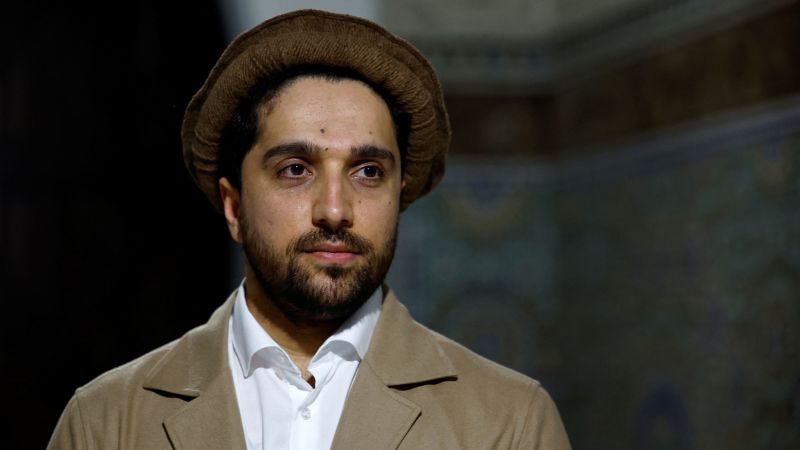
After the withdrawal of US troops from Afghanistan three years ago, the Taliban has tightened its grip on the country, introducing oppressive laws that restrict political freedoms and women’s rights. Ahmad Massoud, the son of Ahmad Shah Massoud, who led the resistance against the Taliban decades ago, now leads the National Resistance Front. Despite limited international media coverage and the closure of Afghan media outlets by the Taliban, Massoud claims to have carried out numerous military operations this year with a force of 5,000 soldiers.
Massoud criticizes the international community for appeasing the Taliban, allowing them to enforce oppressive rules with impunity. He asserts that diplomatic engagement has only emboldened the Taliban and that resistance against them requires power and force. He believes that the Taliban’s victory wasn’t on the battlefield but at the negotiating table with the US, leading to their current hold on power.
Despite operating from a secret location outside Afghanistan, Massoud’s National Resistance Front has expanded its operations to nearly 20 provinces in the country. They engage in unconventional guerrilla operations and have a force made up of former members of Afghanistan’s armed forces. Massoud emphasizes that all of his group’s attacks are targeted at military sites and not civilians, aiming to weaken the Taliban’s control.
Acknowledging the challenges posed by the Taliban’s control of a significant amount of US military equipment left behind, Massoud remains determined to continue the resistance. He highlights the strategic importance of support from other countries to combat the global terror threat emanating from Afghanistan. Massoud speaks about the historical significance of the Afghan people’s support in determining the ultimate victory, emphasizing the importance of popular legitimacy over weaponry.
Massoud discusses his upbringing and the influence of his father, Ahmad Shah Massoud, on his current mission. He reflects on his father’s assassination by al Qaeda and the vow he made to continue his father’s vision for a free and peaceful Afghanistan. Massoud stresses that their resistance movement is not just against the Taliban but also aims to build a democratic, decentralized, and pluralistic future for Afghanistan. He envisions a nation where all citizens enjoy equal rights, regardless of gender, ethnicity, or religious beliefs.
Despite the current control and armament of the Taliban, Massoud expresses confidence in their resistance’s ability to challenge the Taliban’s rule. He cites the fractures within the Taliban and the political process initiated in Vienna as steps toward a democratic alternative for Afghanistan’s future. Massoud believes that the Taliban’s lack of discipline, competence, and widespread internal disunity will lead to their downfall, paving the way for a stable, democratic government in Afghanistan. He remains steadfast in his determination to win the fight for his nation’s soul and future, no matter the odds.