





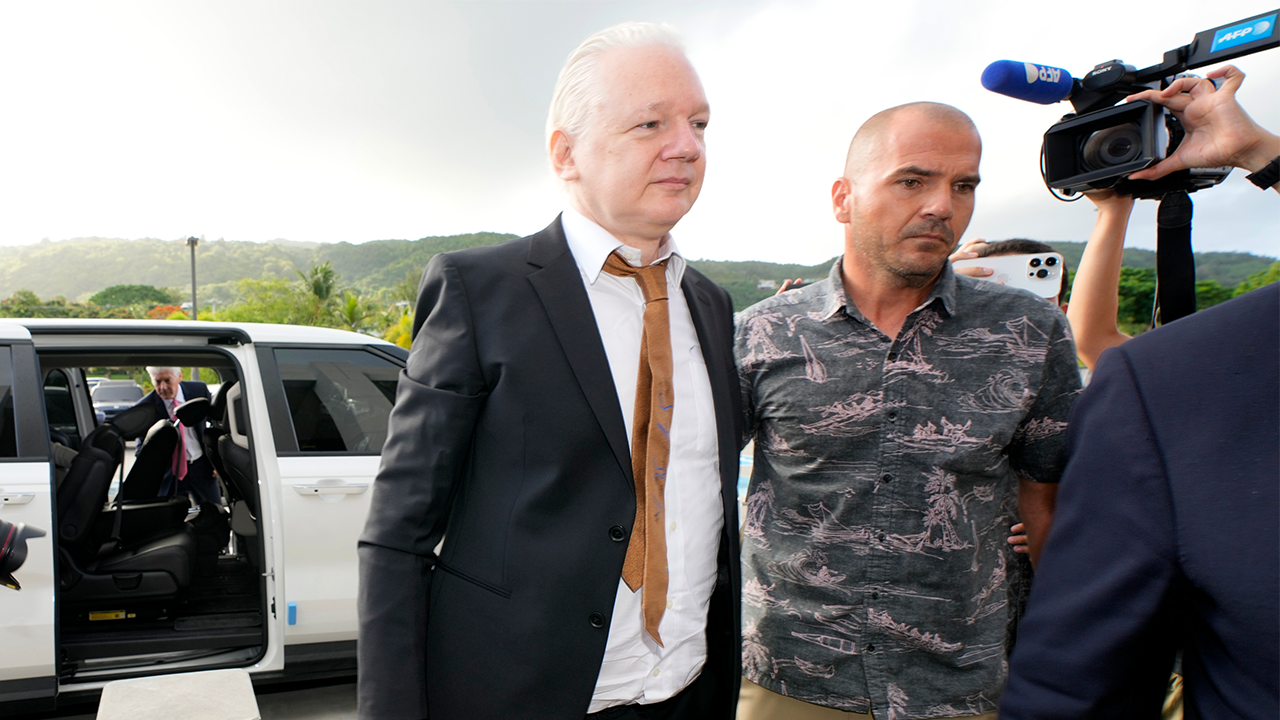
WikiLeaks founder Julian Assange pleaded guilty and was sentenced to time served on Wednesday as part of a deal he reached with the U.S. Justice Department to end his imprisonment. Assange, an Australian publisher, entered the guilty plea in federal court in Saipan, the capital of the Northern Mariana Islands, to avoid being extradited from the U.K. to the U.S. to face charges for publishing classified U.S. military documents. The plea deal allowed him to avoid facing 17 counts under the Espionage Act and a potential sentence of up to 175 years in an American maximum-security prison. The charges stemmed from WikiLeaks’ 2010 publication of cables leaked by U.S. Army intelligence analyst Chelsea Manning, detailing alleged war crimes by the U.S. government.
Before reaching the plea deal, Assange spent years trying to avoid extradition and was finally released after admitting guilt to a single felony count. The deal required him to destroy classified information provided to WikiLeaks, setting a dangerous precedent for journalism. Australian Prime Minister Albanese expressed support for Assange’s release, emphasizing the need to bring him back home. Assange’s wife shared her elation at the news of his release after a period of uncertainty. Details of the agreement were expected to be made public after the judge signed off on the deal.
Assange had been held at London’s high-security Belmarsh Prison since being removed from the Ecuadorian Embassy in 2019 and sought asylum there for years. The U.S. Justice Department avoided an appeal hearing challenging Assange’s extradition on First Amendment grounds by reaching a plea deal. Assange’s lawyers successfully argued that the U.S. provided inadequate assurances regarding free speech protections for him as ordered by a British court.
President Obama’s administration decided not to indict Assange in 2013 over WikiLeaks’ publication of classified cables, as it would have implicated journalists from major news outlets as well. Obama later commuted Chelsea Manning’s sentence for violations of the Espionage Act, and Manning was released in 2017 after years of imprisonment. Assange became the first journalist to be charged under the Espionage Act, a move criticized by many press freedom advocates. Concerns over press freedom remain even after Assange’s release as he was forced to admit to journalistic activities as part of the plea deal.
Assange’s case had been a longstanding and contentious issue, with many activists and supporters calling for his release. Australian lawmakers had been working through diplomatic channels to support a positive outcome in his case. With Assange’s release and return to Australia, there is a sense of relief among his family, friends, and supporters who believe in free speech and journalistic freedom around the world. The implications of his case on press freedom and government transparency are expected to be scrutinized by media and human rights organizations globally.