





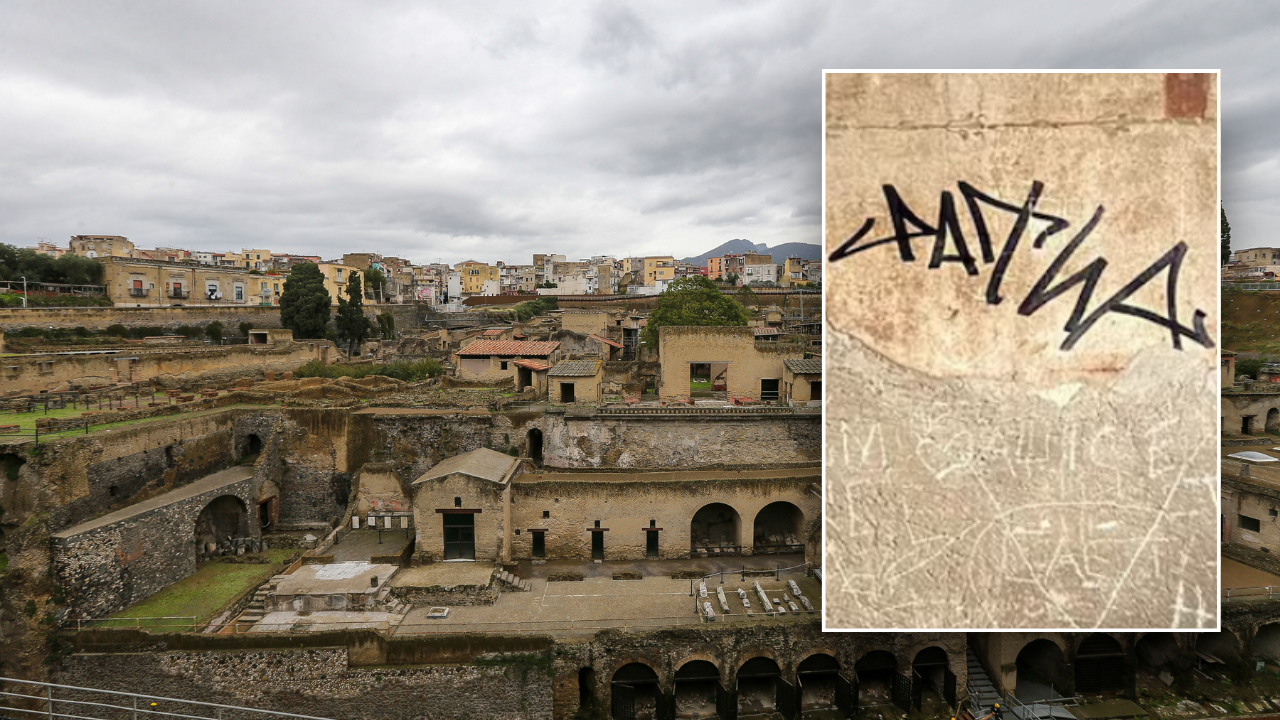
A 27-year-old man from the Netherlands was reprimanded by Italian police for allegedly vandalizing a historic Roman wall in Herculaneum, an Ancient Roman town that was buried in volcanic ash from Mount Vesuvius’ eruption in 79 AD. The tourist signed the walls of a domus with a marker on Sunday night, leading to his identification and report for damage to artistic works. Italian Culture Minister Gennaro Sangiuliano condemned the act, emphasizing the importance of preserving heritage and punishing such behavior with firmness. This incident is not isolated, as tourists have previously defaced other iconic sites in Italy, prompting apologies and awareness of the significance of these historical landmarks.
The suspect, who was touring southern Italy on vacation, was accused of causing damage and oxidation to the artwork on the ancient stuccoes of the house in Herculaneum. The police described his signature as indelible, highlighting the permanent nature of the vandalism. The man’s actions elicited a swift response from law enforcement, underscoring the serious consequences of defacing archaeological sites and landmarks. Italian authorities, led by Minister Sangiuliano, stressed the need to protect and respect cultural heritage, as any harm to these sites affects not just the local community but also global appreciation of history and identity.
In a public statement, Minister Sangiuliano expressed his dismay at the incident, emphasizing the collective responsibility to safeguard Italy’s cultural treasures. The preservation of such sites is vital for maintaining the country’s beauty, heritage, and identity, making it essential to address any acts of vandalism decisively. The Dutch tourist’s actions serve as a reminder of the ongoing challenge to protect historical monuments from damage caused by visitors, intentional or otherwise. The local police, supported by relevant authorities, swiftly took action to identify the perpetrator and hold him accountable for his actions, signaling a zero-tolerance approach towards vandalism at heritage sites.
Tourism in Italy has seen several instances of visitors defacing iconic landmarks, such as the Colosseum in Rome, prompting apologies and calls for greater awareness of the significance of these historical sites. Last summer, a British tourist carved his and his fiancée’s names onto a wall, drawing widespread condemnation for desecrating a monument of global importance. The incident underscored the need for all visitors to recognize and respect the historical value of the sites they visit, advocating for responsible tourism practices that prioritize the preservation and protection of cultural heritage. Such incidents highlight the delicate balance between promoting tourism and safeguarding historical authenticity.
The Dutch tourist’s act of vandalism in Herculaneum serves as a cautionary tale against the damage that can be inflicted on ancient structures and artifacts by careless or deliberate actions. As Italy grapples with preserving its rich history amidst a steady stream of tourists, authorities face the ongoing challenge of enforcing regulations to deter vandalism and ensure the sustainable conservation of heritage sites. The international community, too, plays a crucial role in fostering respect for cultural heritage and advocating for responsible travel practices that prioritize the protection of historical landmarks. By raising awareness about the consequences of defacing ancient monuments, society can work towards a shared commitment to safeguarding these treasures for future generations.
In conclusion, the incident in Herculaneum involving the Dutch tourist underscores the need for heightened vigilance and strict measures to prevent vandalism at historical sites. Minister Sangiuliano’s condemnation of the act reflects a broader commitment to protecting Italy’s cultural heritage and promoting responsible tourism practices. Tourists worldwide are reminded of their role in preserving historical landmarks and respecting the significance of these sites in shaping our understanding of the past. As Italy continues to grapple with the challenges of maintaining its cultural legacy amidst mass tourism, efforts to educate visitors on the importance of conservation and respect for heritage remain paramount. Ultimately, safeguarding these treasures requires a collective commitment to ensuring their preservation for future generations to appreciate and learn from.