





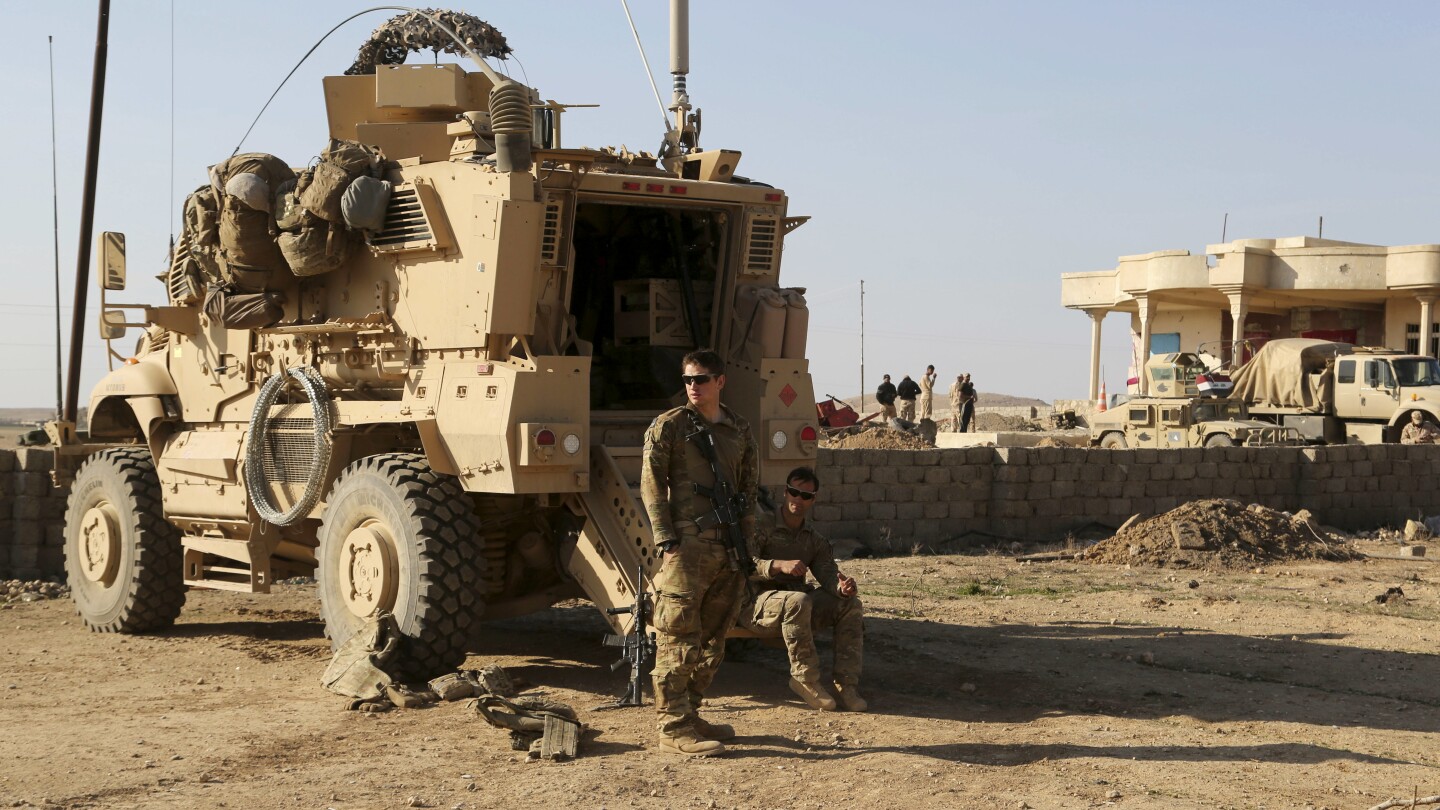
The Army announced that 34-year-old Capt. Eric Richard Hart, a soldier serving with the Indiana National Guard in Iraq, died in a non-combat incident. Hart, who was from Indianapolis, Indiana, passed away on Saturday in Iraq. He was assigned to the Headquarters and Headquarters Battalion of Indiana’s 38th Infantry Division. The circumstances surrounding his death are currently under investigation. Despite combat operations ceasing, the U.S. still maintains a presence of 2,500 troops in Iraq to assist the Iraqi military in counter-Islamic State operations and training. These forces have faced multiple attacks in the past year, including Iranian-backed attacks in response to Israel’s military operations in Gaza and Lebanon.
In September, the U.S. announced an agreement with the Iraqi government to conclude the American-led coalition’s military mission against the Islamic State group in Iraq by 2025. As part of this agreement, U.S. troops have begun departing bases that they have occupied for the past two decades. The U.S. has had a continuous presence in Iraq since the 2003 invasion, with combat forces leaving in 2011 but returning in 2014 to help the Iraqi government defeat IS. Iraqi officials have periodically called for a withdrawal of coalition forces, particularly after a U.S. airstrike in January 2020 that killed Iranian Gen. Qassem Soleimani and Iraqi militia leader Abu Mahdi al-Muhandis near the Baghdad airport.
Before the announcement of Capt. Hart’s death, a total of 4,419 troops had died in Iraq since the start of the 2003 Operation Iraqi Freedom military campaign. This includes 3,482 combat deaths and 937 non-combat deaths, as reported by the Defense Department data. Additionally, a total of 31,993 troops were wounded in action in Iraq. The Defense Department’s summary does not account for all forces who returned from war with later-emerging wounds, such as post-traumatic stress disorder or toxic exposure. The U.S. has faced ongoing challenges and threats in Iraq, with troops continuing to be exposed to risks even in non-combat situations.
The presence of U.S. forces in Iraq has been a point of contention and debate, with calls for a withdrawal from various sectors. The recent agreement to end the military mission against the Islamic State by 2025 reflects efforts to wind down the U.S. military presence in Iraq. However, the security situation remains complex, with ongoing attacks against U.S. forces from various factions. The death of Capt. Hart serves as a reminder of the risks faced by military personnel deployed in Iraq, even in non-combat circumstances. The investigation into his death will shed light on the circumstances surrounding the incident and may provide insights into the broader security challenges in the region.
As the U.S. continues to navigate its military presence in Iraq and the broader Middle East region, the focus remains on supporting Iraqi forces in countering threats from groups like the Islamic State. The evolving security landscape, including threats from Iranian-backed forces and other militant groups, adds complexity to the mission of U.S. troops in the region. The sacrifice of personnel like Capt. Hart underscores the ongoing risks and challenges faced by military service members deployed in Iraq. The Army, in collaboration with other agencies, will continue to investigate the circumstances of Capt. Hart’s death and work towards ensuring the safety and well-being of all deployed personnel.