



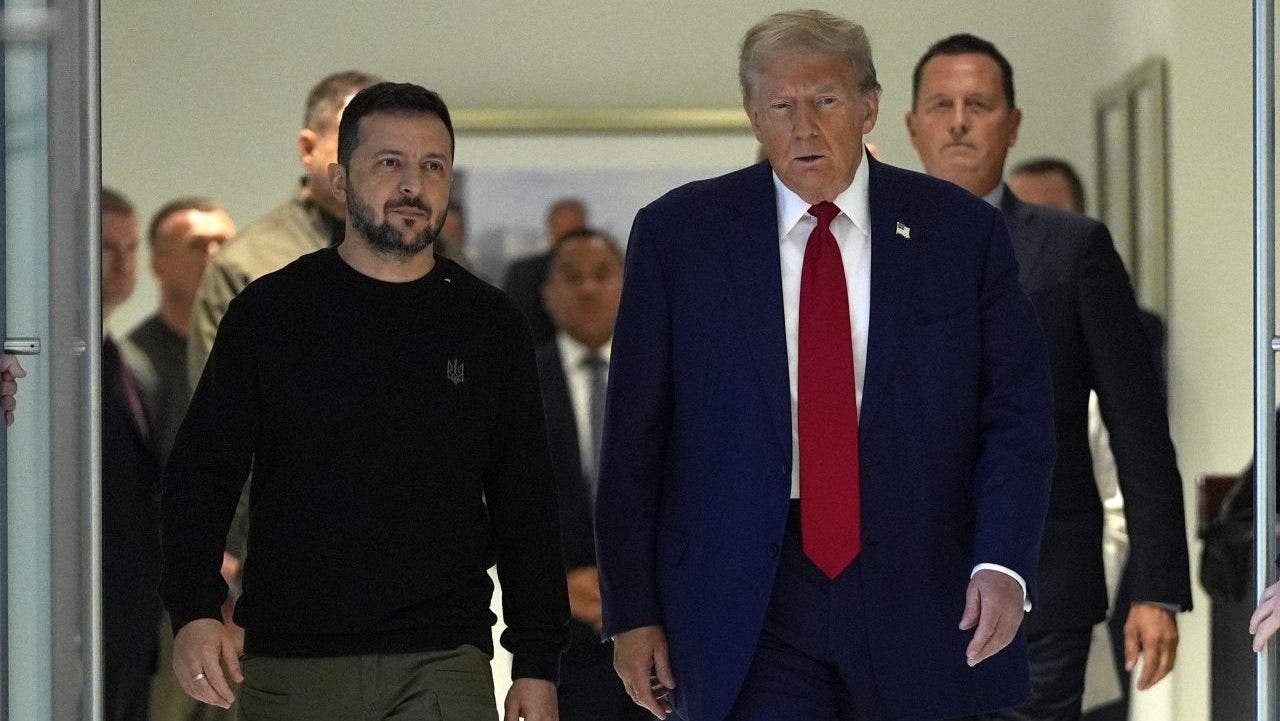
The re-election of Donald Trump as president of the United States for a second term has caused geopolitical shock waves, particularly in relation to U.S. ties abroad, and amidst Russia’s ongoing war in Ukraine. Trump and Vice President-elect JD Vance have criticized the Biden administration’s support for Ukraine after Russia’s 2022 invasion, promising to bring an end to the war, although specific details on this plan have not been provided. Vance previously suggested that Ukraine should cede the land seized by Russia and establish a demilitarized zone, a proposal rejected by Ukrainian President Volodymyr Zelenskyy. Reports have indicated that some advisers close to Trump are pushing for Ukraine to agree on terms that would freeze frontlines and allow Russia to keep the land it has seized illegally, while also preventing Ukraine from pursuing NATO membership for 20 years. Zelenskyy has warned that appeasing Russia in this manner would only increase security concerns for the U.S. and European allies.
Efforts to end the war in Ukraine have been met with varied responses. Former CIA Moscow station chief Dan Hoffman has criticized treating Ukraine as the aggressor state and suggested that the U.S. should focus on inducing Putin to come to the negotiating table, rather than pressuring Ukraine to make a deal. Hoffman highlighted the importance of providing Ukraine with sophisticated weaponry and allowing Kyiv to use this weaponry without restrictions on targeting Russia. Kurt Volker, the U.S. special envoy to Ukraine during the Trump administration, has speculated that Trump would pressure Putin to end the war by providing more substantial aid to Ukraine than the Biden administration. However, while some believe that Trump may lift restrictions on long-range weapons use to aid Ukraine, skepticism remains due to Trump’s past statements about halting aid to the country.
There is uncertainty surrounding Trump’s approach to Russia’s war in Ukraine, with concerns raised by sources within NATO, Ukraine, and Republicans in Congress. Trump’s ambiguous stance on the conflict and his history of attacking critics have led to hesitancy in speaking out against his strategies. While some Republicans are opposed to arming Ukraine, others argue that supporting the country is crucial for weakening Russia, which is closely aligned with China. House Foreign Affairs Committee Chair Michael McCaul expressed confidence in Trump’s ability to enhance American strength and stability globally and reiterated the importance of backing Ukraine. With Trump yet to staff his Cabinet, it is too soon to determine Washington’s policy on Ukraine, although steps taken during his previous administration may provide insights into his approach.
Some officials have pointed to Trump’s previous policies and public statements as indicators of how he may handle the Russia-Ukraine conflict going forward. Richard Goldberg, a former member of the White House National Security Council during the Trump administration, emphasized that Trump was not appeasing Russia in his first term, and while he desires an end to the war, specifics on this objective remain vague. Trump’s strategic ambiguity may be aimed at keeping Putin on edge and leveraging U.S. support for Ukraine while applying pressure on Moscow. As the international community awaits further developments in U.S. foreign policy under Trump’s second term, the nuances of his approach to the Russia-Ukraine conflict will be closely scrutinized to determine its impact on global security and stability.