



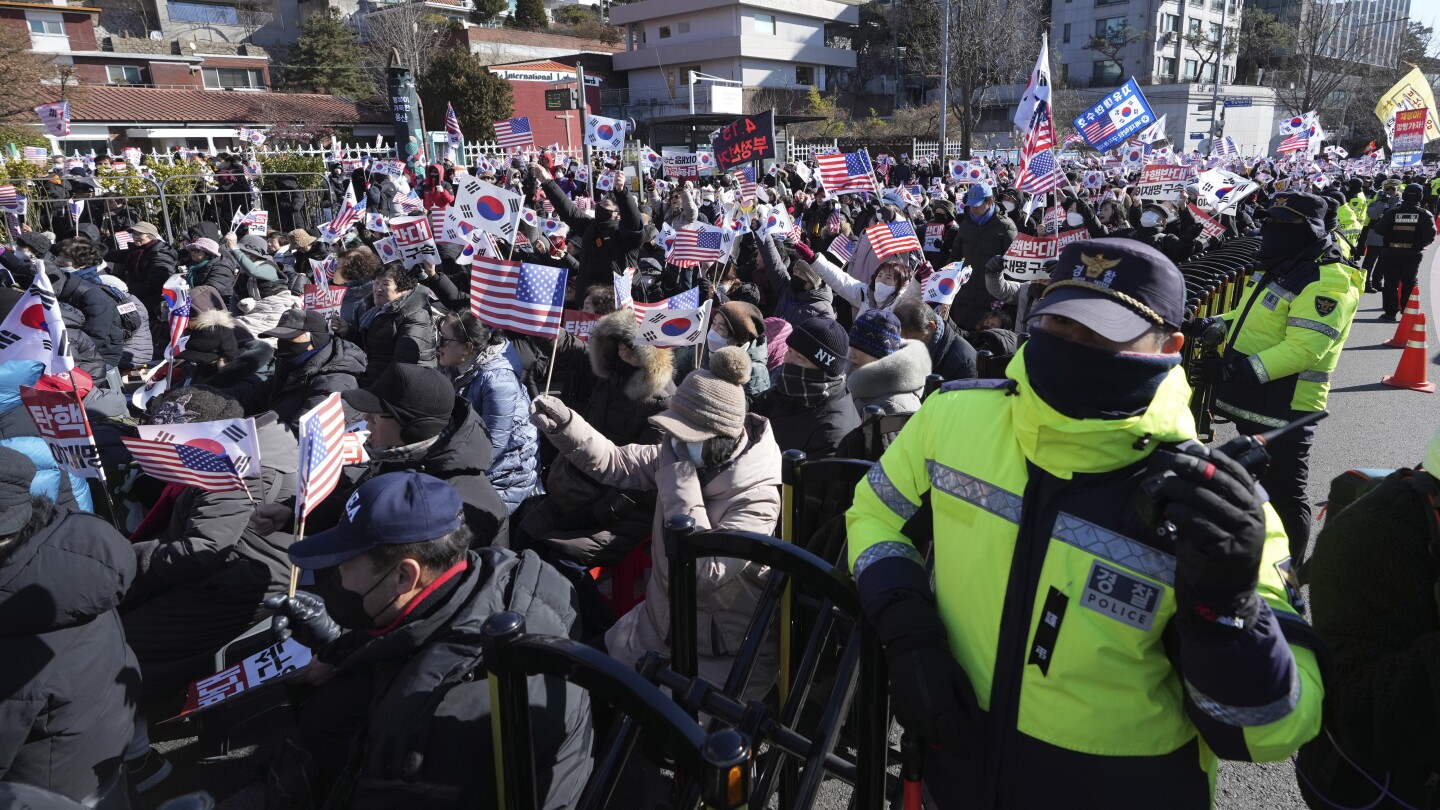
A South Korean court issued warrants on Tuesday to detain impeached President Yoon Suk Yeol and search his office and residence over allegations of rebellion in connection with his declaration of martial law. This marks the first time a warrant has been issued to detain a sitting South Korean president, but experts believe there is little chance of detention or searches unless Yoon is formally removed from office. The investigation is focusing on whether Yoon’s declaration of martial law on December 3 amounted to rebellion, a charge that could carry the death penalty or life imprisonment under South Korean law. Yoon has presidential immunity from most criminal prosecution, but not for allegations of rebellion or treason.
Yoon’s powers have been suspended since he was impeached by the opposition-controlled National Assembly on December 14 for his imposition of martial law, which he argues was a legitimate act of governance. The Constitutional Court is set to determine whether to dismiss Yoon as president or reinstate him. Yoon has so far ignored repeated requests by investigative authorities to appear for questioning, and the presidential security service has blocked attempts to search his office and residence citing a law that bans raids on sites with state secrets. Yoon’s lawyer has called the detainment warrant “invalid” and “illegal,” while the anti-corruption agency has no immediate plans on how to proceed with the warrants.
Former South Korean President Park Geun-hye, who was impeached in 2017 over a corruption scandal, also refused to meet with prosecutors while in office. She was later arrested after being removed from office by the Constitutional Court. Yoon’s imposition of martial law, which lasted only six hours, led to significant political turmoil, halting high-level diplomacy and rattling financial markets. Despite Yoon’s deployment of troops and police, lawmakers managed to overturn the martial law declaration unanimously. Yoon’s defense minister, police chief, and top military commanders have already been arrested over their roles in the martial law enactment, with conflicting claims about the intent behind the deployment of troops.
The political crisis in South Korea deepened when the Democratic Party and other opposition parties voted to impeach acting President Han Duck-soo over his refusal to fill three justice seats at the Constitutional Court. This move could potentially affect the court’s ruling on Yoon’s impeachment. Deputy Prime Minister and Finance Minister Choi Sang-mok has taken over as South Korea’s new interim leader. The investigation into Yoon’s declaration of martial law and allegations of rebellion will continue, with uncertainty surrounding the future of the country’s leadership and political landscape. The warrants issued for Yoon’s detention and the search of his office represent a significant development in the ongoing political turmoil in South Korea.