





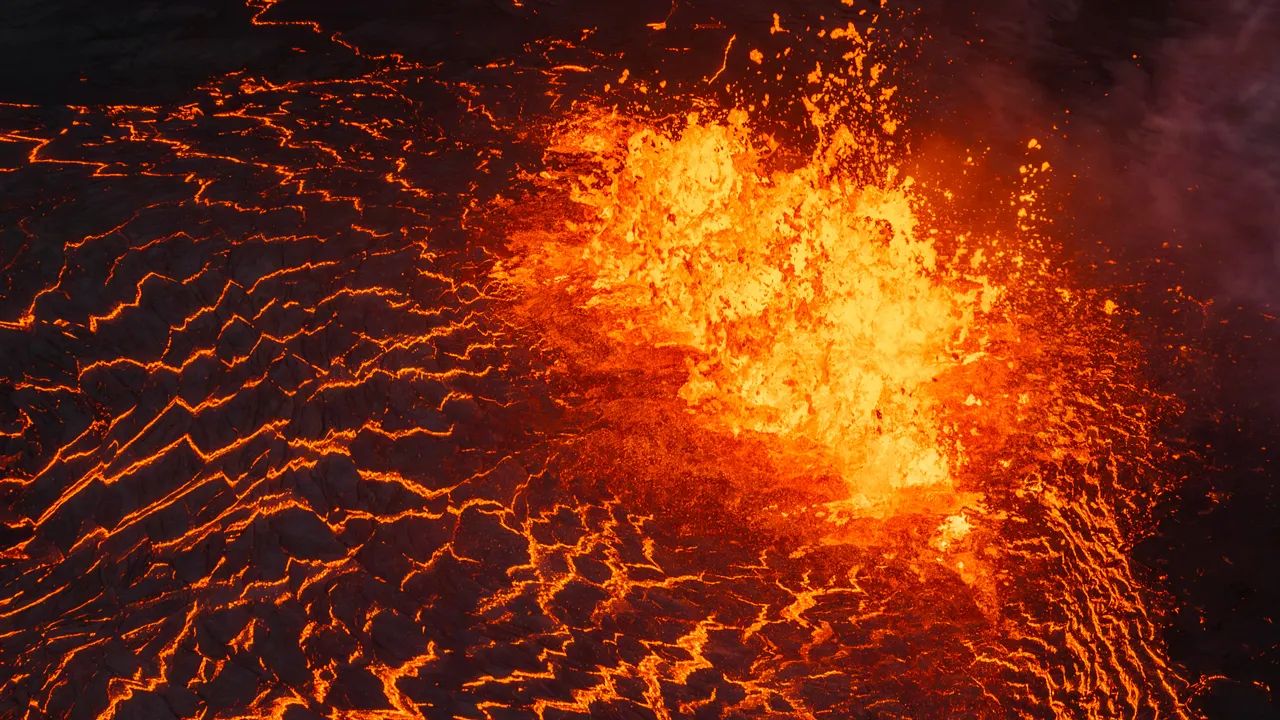
A volcano in southwestern Iceland erupted on Wednesday, marking the fifth and most powerful eruption since the volcanic system near Grindavik reawakened in December after 800 years. The eruption spewed record levels of lava, with the fissure growing to 2.1 miles in length. Volcanologist Dave McGarvie noted that the amount of lava initially flowing could have buried Wembley Stadium in London under 49 feet of lava every minute. The jets of magma reaching 165 feet into the atmosphere indicated a powerful eruption with significant scale.
The eruption threatened the coastal town of Grindavik, home to 3,800 people, and led to the evacuation of the popular Blue Lagoon geothermal spa. The town had been under threat since a swarm of earthquakes in November forced an evacuation before the initial eruption in December. Protective barriers outside Grindavik were able to deflect the lava, but the town remained without electricity and two of its three roads were inundated with lava. The eruption was more powerful than its predecessors due to a larger accumulation of magma underground before breaking the earth’s surface.
The rapid and powerful start of the eruption followed by a quick diminishing pattern has been observed by researchers with this volcano. The question remains as to when it will end, as eruptions like this have not been carefully witnessed in this part of Iceland before. Iceland, located above a volcanic hot spot in the North Atlantic, sees regular eruptions. The most disruptive recent eruption was in 2010 when the Eyjafjallajökull volcano spewed ash into the atmosphere, leading to widespread airspace closures in Europe.
Despite the recent eruptions in Iceland, there has been no impact on aviation thus far. The eruption on Wednesday displayed a substantial amount of magma accumulating underground before being released to the surface, resulting in a powerful and significant event. Volcanologist Dave McGarvie noted the unique nature of this eruption compared to previous observations in Iceland, highlighting the uncertainty of when it will end. The potential for continued eruptions in this cycle poses challenges for the region, with ongoing threats to the town of Grindavik and surrounding areas.