





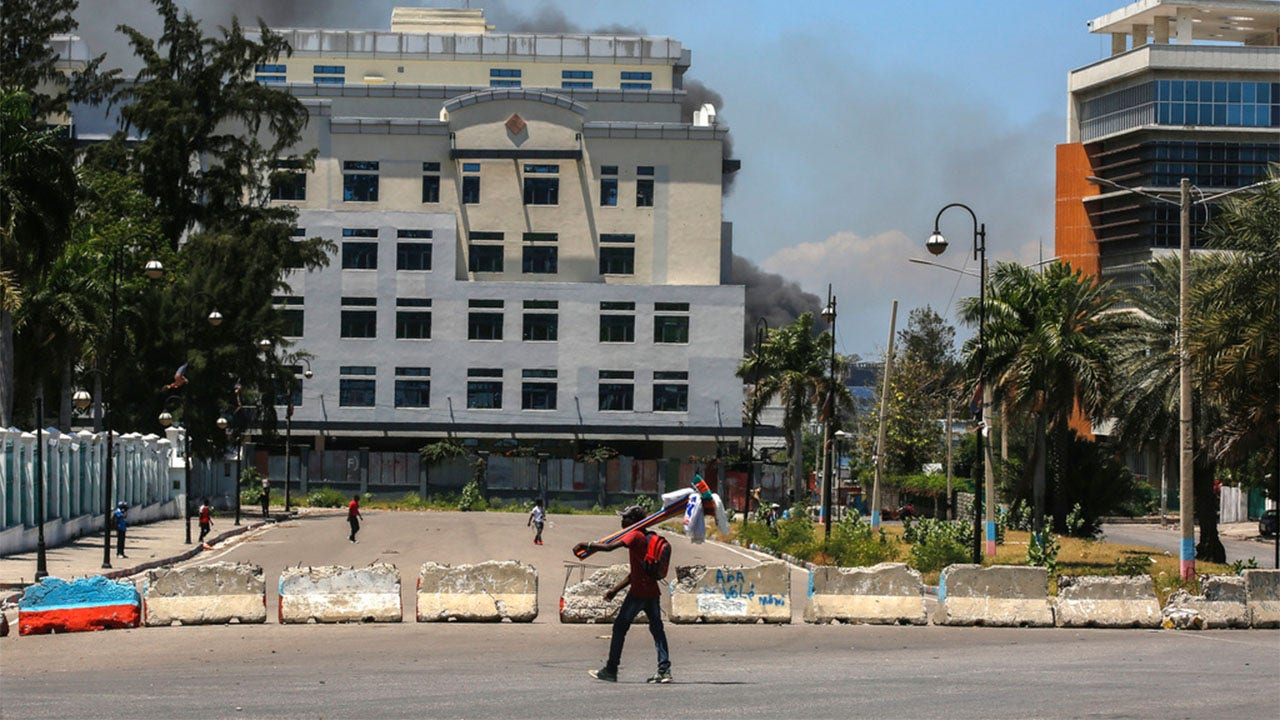
Amid a surge of violence in Haiti, armed gangs looted the national library in Port-au-Prince, putting the country’s historical documents at risk. The attacks on educational and artistic institutions have been condemned by UNESCO, with former FBI agent Eric Jergenson stating that criminal gangs carry out these attacks to intimidate and potentially gain political advantage. The United Nations reported that over 53,000 people have fled the capital in less than three weeks to escape the gang violence, signaling a worsening situation in the country.
The exodus from the capital began after powerful gangs launched attacks on government institutions, leading to over 1,500 reported deaths and 17,000 people becoming homeless. Prime Minister Ariel Henry announced his resignation, pending the creation of a transitional presidential council, amidst the escalating violence. The transitional council, responsible for selecting a new prime minister and council of ministers, has yet to be formed. This challenging situation has led to a significant displacement of people, with many fleeing to the rural southern region of Haiti to seek safety.
The looting of the national library is just one in a series of attacks on educational and cultural institutions across Port-au-Prince, showcasing the destructive impact of the ongoing violence. Gangs have targeted police stations, the international airport, and prisons, releasing thousands of inmates, further destabilizing the region. The violence has forced the current prime minister to remain locked out of the country, making it difficult to address the escalating crisis. The international community has taken notice of the situation, with organizations like UNESCO expressing concern over the attacks on Haiti’s heritage.
The situation in Haiti has prompted a surge of people fleeing the capital to escape gang violence, with many seeking refuge in the rural southern region. The unrelenting attacks have left thousands dead and homeless, creating a humanitarian crisis that requires urgent attention. The lack of a stable government and the ongoing violence have complicated efforts to address the root causes of the conflict, leaving many vulnerable and displaced. The international community has been called upon to support Haiti during this challenging time and to assist in finding a sustainable solution to the crisis.
The attacks on educational and cultural institutions in Haiti have been condemned by UNESCO and experts have highlighted the political motivations behind these actions. The looting of historical documents and the destruction of important landmarks are not only a loss for Haiti’s heritage but also a manifestation of the underlying political tensions and power struggles within the country. The need for a stable government and effective security measures has never been more urgent, as the escalating violence continues to threaten the lives and livelihoods of Haitian citizens. The international community must come together to support Haiti in addressing the root causes of the crisis and finding sustainable solutions for peace and stability.
The violent attacks and resulting displacement in Haiti underscore the urgent need for a comprehensive response to the crisis. As thousands flee the capital to seek safety in the southern region, the challenges facing the country continue to mount. The lack of a stable government and the ongoing gang violence have created a complex and volatile situation that requires immediate attention and support. The international community must act swiftly to assist Haiti in addressing the root causes of the conflict and in providing humanitarian aid to those affected by the violence. Only through concerted efforts and solidarity can Haiti overcome these challenges and build a peaceful and prosperous future for its citizens.