




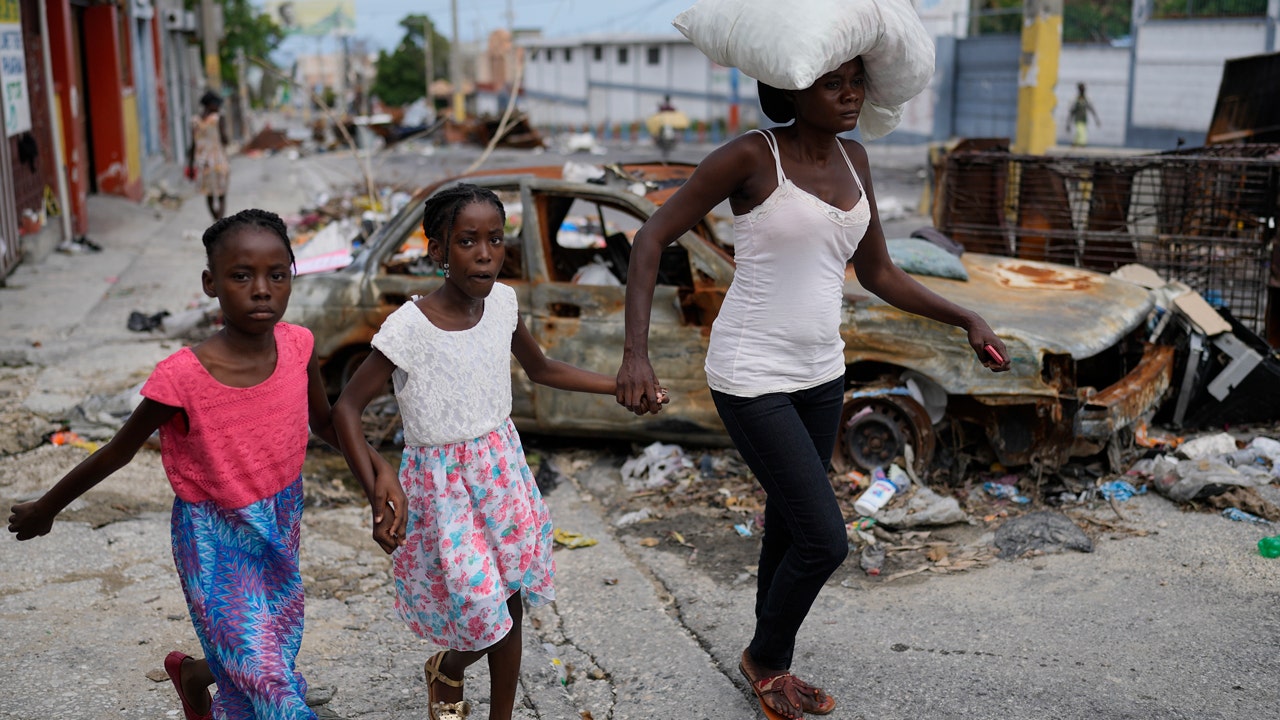
Gangs in Haiti launched a massive attack on several neighborhoods in Port-au-Prince, engaging in fierce battles with police, burning homes, and forcing hundreds to flee the area. The violence, which started late Wednesday, affected neighborhoods like Solino, Delmas 18, 20, and 24. The main international airport, closed for nearly two months due to gang violence, was located southwest of these neighborhoods. Residents described the chaos as gangs burned everything in sight, prompting many to flee in terror, leaving behind their belongings.
The aftermath of the attacks left once-busy neighborhoods deserted and silent, except for the occasional sound of a lone goat. People who managed to escape the violence carried whatever belongings they could save, such as clothes and household items. Some fled on foot, motorcycle, or colorful tap-tap buses, while others walked empty-handed, having lost everything. Gunshots rang out throughout the night, separating families and instilling fear among residents. Many recounted the horror of the gunfire and chaos that ensued as they tried to save themselves.
The attacks targeted an area controlled by Jimmy Chérizier, also known as Barbecue, the leader of a powerful gang federation called G9 Family and Allies. This attack was part of a series of coordinated assaults initiated by gang leaders in February, which led to widespread violence and instability. The violence escalated to the point where Prime Minister Ariel Henry resigned and a transitional presidential council appointed a new prime minister, Fritz Bélizaire, in an effort to address the crisis. However, the council’s decision has sparked concerns about potential fractures within the leadership and the handling of the ongoing security crisis.
Haitians are expressing growing demands for safety and security as gangs continue to pose a significant threat, remaining heavily armed and powerful compared to the national police force. The scale of violence in Haiti has surged dramatically, with over 2,500 people killed or injured in the first three months of the year, representing a more than 50% increase compared to the same period last year. The prevalence of gangs controlling a large portion of the capital, Port-au-Prince, has led to over 90,000 people fleeing the city in just one month, with peaceful neighborhoods now becoming targets of gang violence.
Despite the pervasive fear and devastation caused by the attacks, some residents like Vanessa Vieux have chosen to stand their ground. Vieux, who resides next to a police officer, has opted to stay in her home even as others flee the violence. While she sent her elderly mother to the countryside for safety, she remains confident in the protection provided by Haiti’s National Police. The situation in Haiti reflects a fragile balance between the escalating gang violence, the efforts of law enforcement to maintain control, and the determination of some residents to resist displacement and maintain hope for a more peaceful future.