



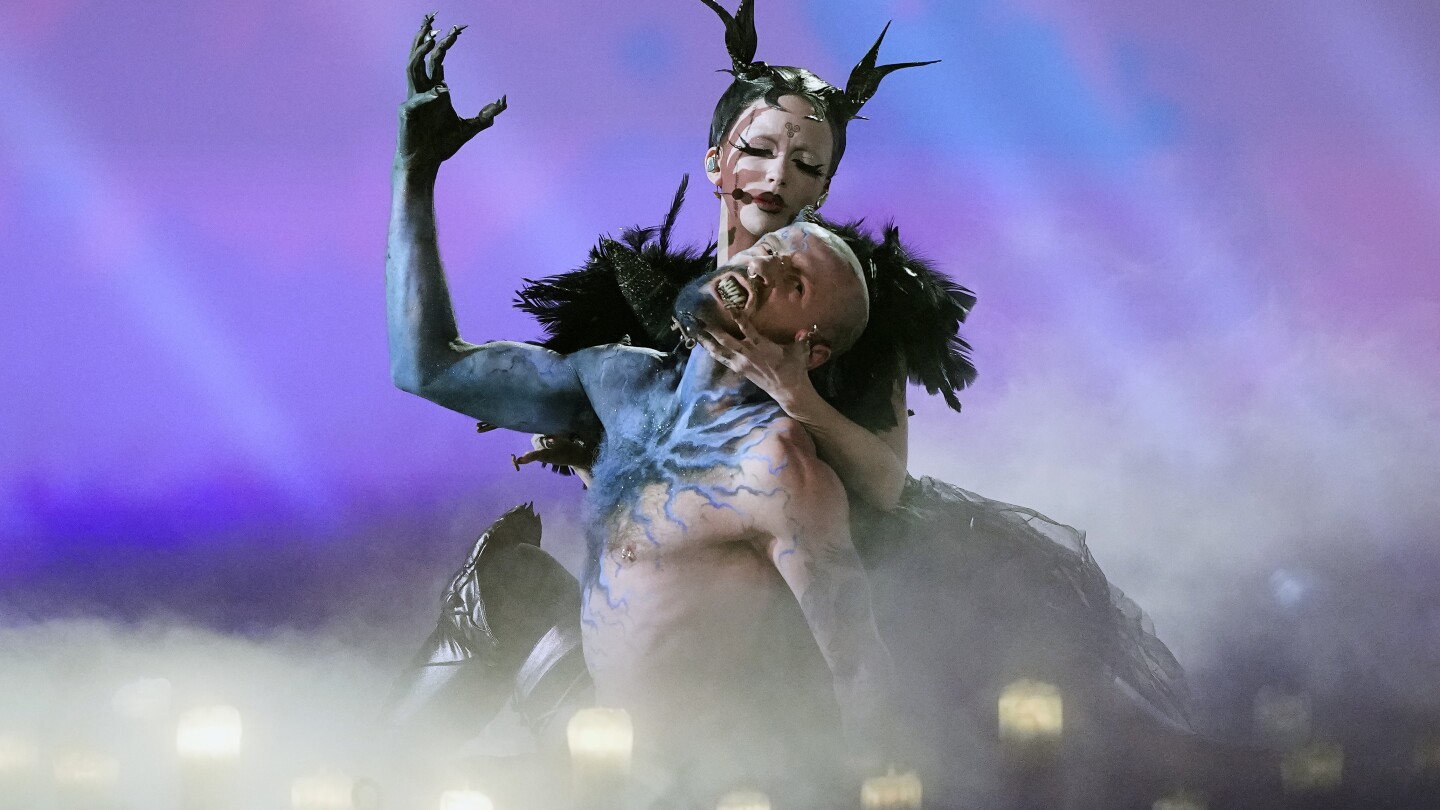
The 68th Eurovision Song Contest is set to take place in Malmo, Sweden, with acts from over two dozen countries competing for the coveted title. The final round will be broadcast live on Saturday, with millions of viewers across Europe and beyond tuning in to watch and vote for their favorite performances. The show will start at 9 p.m. Central European Summer Time, or 8 p.m. in the UK. In the U.S. and Canada, the broadcast will begin at 3 p.m. EDT. Viewers can watch the competition on national broadcasters in participating countries, on Eurovision’s YouTube channel, or through the Peacock streaming service in the U.S.
Voting in Eurovision is open for 24 hours before the final for viewers in nonparticipating countries like the U.S., who can vote online or using the Eurovision app. Viewers in participating countries can vote during the competition through the website, app, phone, or text message, but they cannot vote for their own country’s entry. Countries are awarded points based on both viewer votes and rankings from music industry professional juries, with the highest scoring country being crowned the winner. Eurovision has a rich history, dating back to 1956, and has grown from seven countries to almost 40, including non-European nations such as Israel and Australia.
The Eurovision Song Contest is a celebration of pop music, known for its eclectic mix of songs ranging from anthemic to silly, often accompanied by elaborate costumes and extravagant staging. Many mainstream artists, including ABBA, Celine Dion, and Måneskin, have used Eurovision as a platform to launch their careers. The contest has also produced multiple winners who have gone on to achieve global fame. This year’s favorites include acts from Switzerland, Croatia, and Israel, with Israeli singer Eden Golan seeing a surge in betting odds. Israel’s participation has sparked protests in Malmo by Palestinians and their supporters over the week of Eurovision events.
Despite its campy reputation, Eurovision is a significant event that originated as a means of promoting unity after World War II and showcasing live-broadcast technology. It has evolved into a highly popular competition with a massive global audience. The winner of Eurovision not only gains bragging rights as the best act in Europe, but also has the potential to kickstart their music career on an international stage. Excitement is building as fans prepare to witness the talent and spectacle of this year’s competition, with expectations high for memorable performances and unexpected twists as the battle for Eurovision glory unfolds in Malmo.