



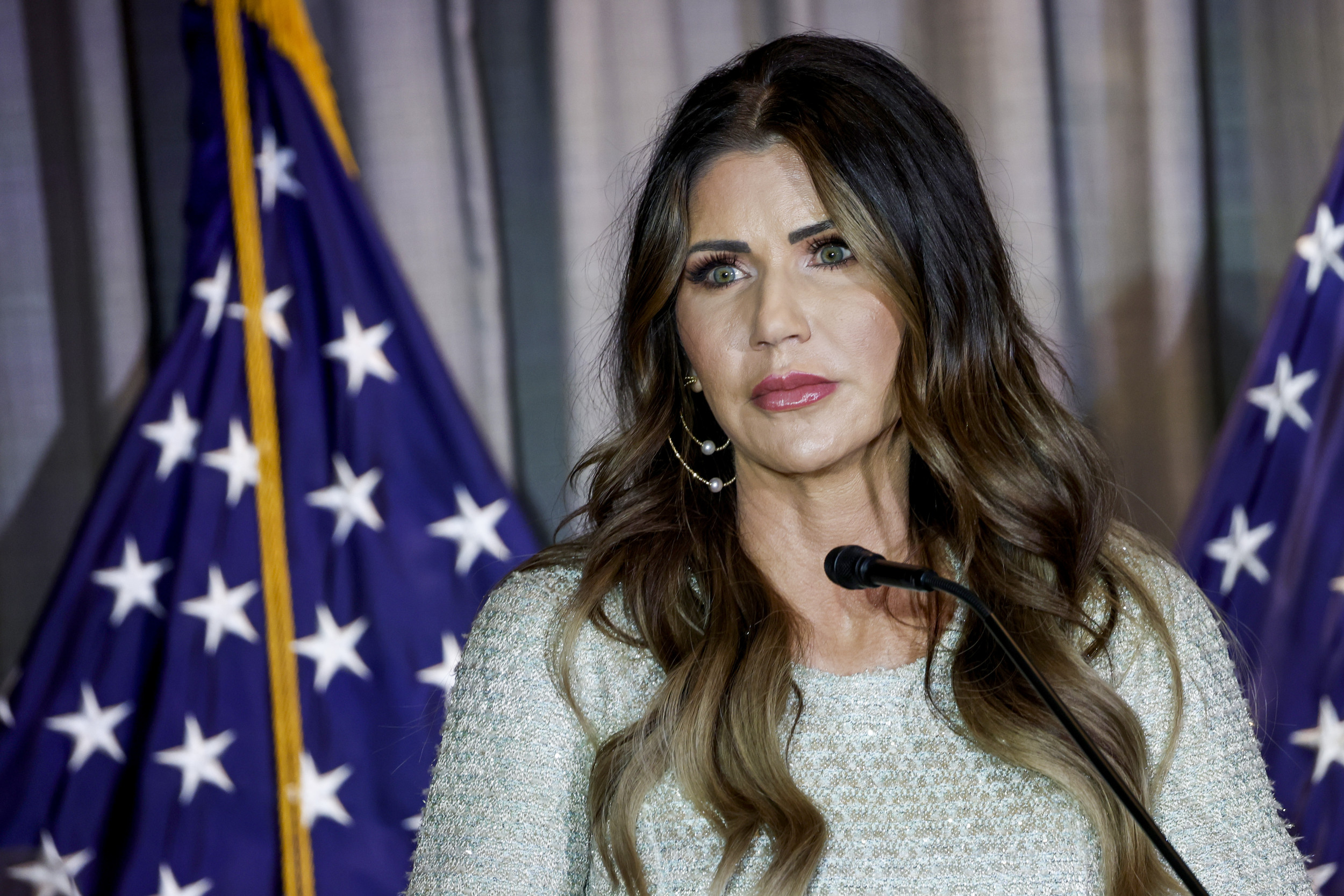
Three Native American tribes in South Dakota have banned Governor Kristi Noem from visiting their reservations following her accusations that Mexican drug cartels are facilitating crime on Indigenous land in the state. The Standing Rock Sioux Tribe made the announcement after Noem’s comments linking tribal leaders and parents to drug cartels. This ban follows similar actions by the Cheyenne River Sioux Tribe Council in April and the Oglala Sioux Tribe in February, both of which are headquartered in South Dakota. The Standing Rock reservation spans the borders of North Dakota and South Dakota. Governor Noem reiterated her claims during a town hall in March, accusing some Native American leaders of benefiting personally from the cartels operating in their territory and claiming that children on the reservations lack parental support.
Governor Noem, a close ally of former President Donald Trump and a leading Republican voice in the efforts to curb migration along the U.S.-Mexico border, has faced backlash from the Native American tribes and their leaders for her statements. Standing Rock’s chairwoman, Janet Alkire, criticized Noem’s “fear-based politics” and urged her to work with tribal leaders to increase funding and resources for tribal law enforcement and education. Noem, however, maintains that her claims about drug cartel activities on South Dakota reservations are true and necessary to address the issues of drug addiction, murder, rape, human trafficking, and other crimes. Despite the banishments, Noem stated in a video message that banning her does not solve the problems faced by the communities.
In response to the shortage of law enforcement officers on Indigenous land, Governor Noem’s office announced a new initiative to train tribal law enforcement officers. The initiative aims to address the lack of officers on South Dakota’s nine reservations and improve law enforcement capabilities in these communities. Training for potential law enforcement officers will take place within the state this summer, as opposed to the current practice of sending officers to New Mexico for a 13-week training program. Governor Noem and state Attorney General Marty Jackley expressed their commitment to working with tribal authorities to address the issues faced by Indigenous communities in South Dakota. The letter sent to the Oglala Sioux Tribe Law Enforcement Services highlighted the importance of providing desperately needed law enforcement services for South Dakota communities.
The tensions between Governor Noem and the Native American tribes in South Dakota reflect broader issues of governance, law enforcement, and cooperation in Indigenous communities. The banishments of Noem from the tribal reservations underscore the need for respectful and collaborative relationships between state authorities and tribal leaders to address complex social and criminal challenges faced by Indigenous populations. The accusations made by Governor Noem have also sparked conversations about drug cartel activities, crime rates, and the lack of resources for law enforcement in Native American territories. The ongoing dialogue between the state government and the tribal councils is crucial in finding solutions that prioritize the safety and well-being of Indigenous communities in South Dakota.
The banishment of Governor Kristi Noem from three Native American reservations highlights the significance of respecting Indigenous sovereignty, addressing social issues, and fostering cooperation between state authorities and tribal leaders. Noem’s accusations of Mexican drug cartels operating on Indigenous lands have sparked controversy and backlash from the tribes, leading to her banishment from their territories. The unfolding situation in South Dakota reflects broader challenges faced by Indigenous communities, including the shortage of law enforcement officers, drug-related crimes, and the need for increased resources and support. The initiatives proposed by Governor Noem’s office to train tribal law enforcement officers signify a step towards addressing these issues and improving collaboration between the state and tribal entities.
As discussions continue between Governor Noem and the Native American tribes in South Dakota, it is essential to prioritize mutual respect, understanding, and cooperation in finding sustainable solutions to the complex challenges faced by Indigenous communities. The banishments of Noem from the tribal reservations serve as a reminder of the importance of respectful dialogue, meaningful engagement, and productive partnerships between state authorities and tribal governments. By working together to address issues such as crime, drug trafficking, and law enforcement shortages, there is potential to create positive changes that benefit both Indigenous populations and the broader South Dakota community. The ongoing efforts to train tribal law enforcement officers and improve collaboration between state and tribal authorities represent a promising step towards building safer and more secure environments for Indigenous peoples in the state.
You Might Like