




The Georgian parliament recently approved a controversial bill that requires media organizations and nonprofits to register as “pursuing the interests of a foreign power” if they receive more than 20% of their funding from abroad. This bill has sparked weeks of mass protests in Georgia, with critics likening it to Russian laws that suppress independent media and limit freedoms. Georgian President Salome Zourabichvili has stated that she plans to veto the law, but the governing parliamentary party has enough votes to override any potential veto.
The Georgian government argues that the bill is necessary to prevent what they see as harmful foreign influence over the country’s politics and to protect against the destabilization efforts of unspecified foreign actors. However, the opposition denounces the bill as “the Russian law,” highlighting similarities between this legislation and measures taken by Russia to curb independent media and activism. European Council President Charles Michel has emphasized the importance of Georgia respecting democratic principles and the rule of law if it wishes to join the EU.
Mass protests against the bill have taken place in Georgia, with demonstrators clashing with police and the use of tear gas and water cannons to disperse crowds. President Zourabichvili has faced increasing tension with the governing party and has vowed to veto the law, even though the party has the necessary majority to override her decision. Protesters have accused the government of using violence against opposition supporters and criticized the bill as a threat to Georgia’s European aspirations.
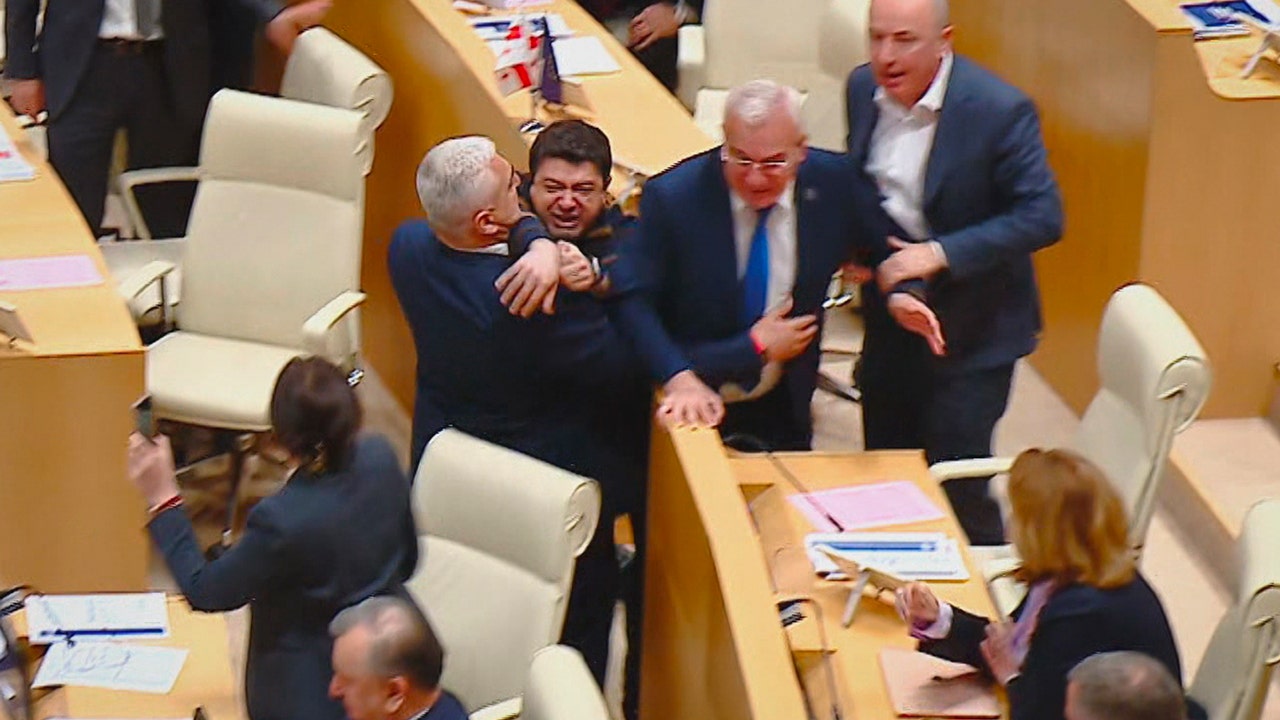
The debate in parliament was interrupted by a brawl, with tensions running high between government officials and opposition members. Lawmakers accused the opposition of using the protests for their own political purposes, while opposition members emphasized the importance of standing against what they see as oppressive legislation. After the debate, 84 lawmakers voted in favor of the law, and 30 voted against it. The bill will now go to President Zourabichvili, who has 14 days to either sign or veto it.
The ongoing protests and debates in Georgia highlight a divide between the government and opposition over democratic values and the country’s future direction. Critics argue that the bill threatens freedom of speech and independent media, while supporters maintain that it is necessary for national security and stability. As the country navigates these tensions, the role of foreign influence, internal politics, and the aspirations of the Georgian people will all play a significant role in shaping Georgia’s democratic path. The outcome of this legislation could have broader implications for Georgia’s relationship with the EU and international community.