





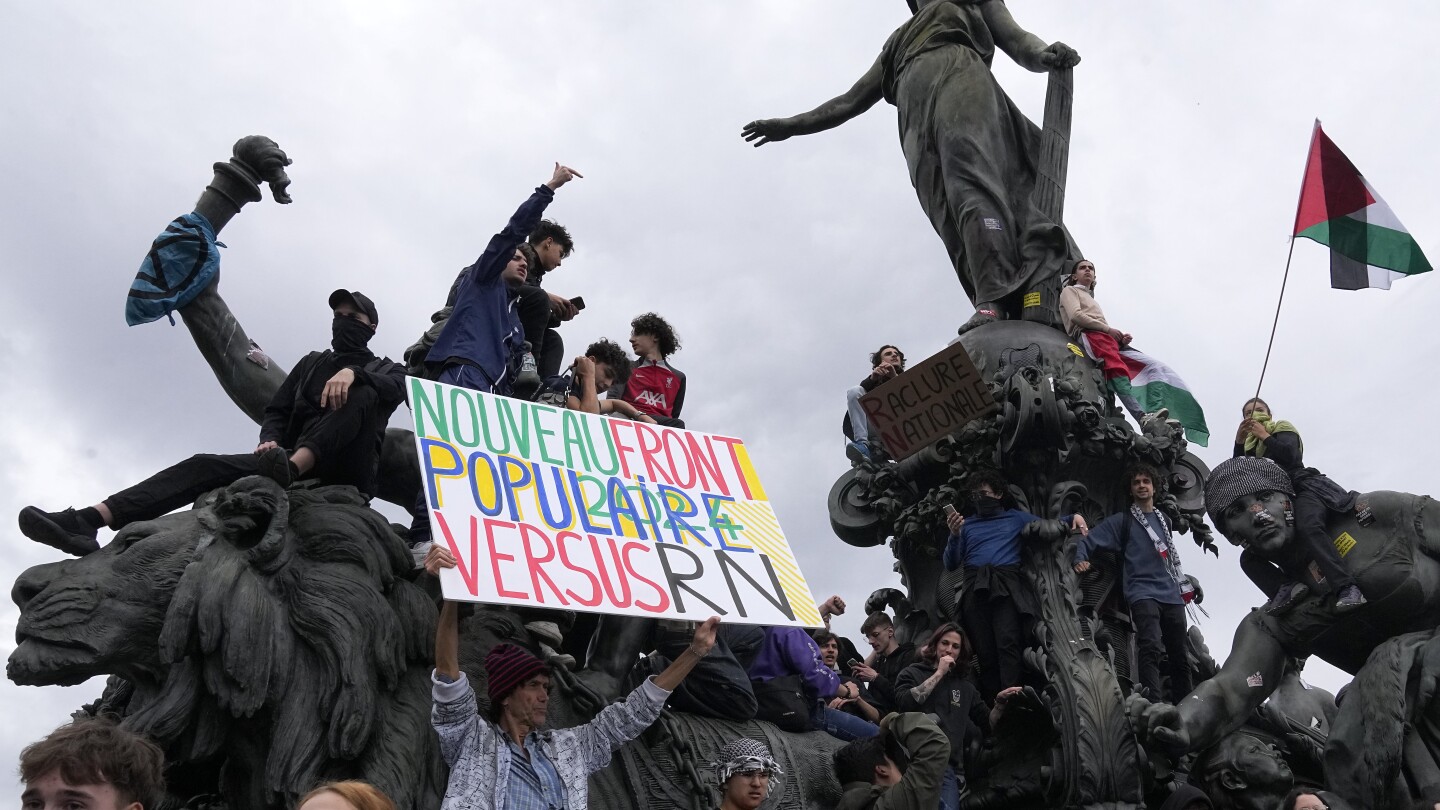
Anti-racism groups, French unions, and a newly formed left-wing coalition gathered in Paris and other cities across France to protest against the surging nationalist far right ahead of snap parliamentary elections. The protests drew 250,000 people, with 75,000 in Paris alone, despite rainy and windy weather. Participants marched through eastern Paris, holding placards advocating for equality and fraternity for all, and expressing opposition to the immigration bill. Some chanted slogans in support of Palestine and wore keffiyeh scarves. Among the protesters was 16-year-old Nour Cekar, who expressed concerns about the far right’s potential impact on individual freedoms.
With over 50 countries holding elections in 2024, concerns about the rise of far-right parties are growing among various demographics. Cekar, a high school student with French and Algerian heritage who wears a hijab, fears that the far right may infringe on women’s liberties by banning the hijab. She emphasized the importance of being able to choose what to wear and reject social media and street harassment based on her headscarf. The protests aimed to highlight the importance of unity and diversity in French society and challenge the divisive rhetoric of far-right parties seeking to disrupt social cohesion.
The protests also featured French-Malian singer Aya Nakamura’s music, with chants against racism resonating throughout the crowd. Participants emphasized the strength of France’s diversity and the need to resist the far-right agenda that seeks to undermine social harmony. Through their presence and voices, protesters like Mohamed Benammar, a French doctor with Tunisian roots, aimed to send a signal to politicians about the dangers posed by extremist ideologies. Despite some incidents of attempted vandalism and violence, the demonstrations remained peaceful overall, with a clear message of unity and resistance against far-right extremism.
As the National Rally, led by Marine Le Pen, made historic gains in the European Parliament elections, concerns about its potential dominance in the upcoming French parliamentary elections escalated. President Emmanuel Macron’s decision to dissolve the National Assembly and call for new elections raised tensions among various political factions. In response, left-wing parties set aside their differences to form a coalition and urged French citizens to unite against the far right. Polls suggest the National Rally may lead in the first round of elections, posing a significant challenge to Macron’s presidency and domestic policies.
Despite Macron retaining control over foreign affairs and defense until 2027, a victory for the National Rally could weaken his presidency and shift power towards far-right ideologies. The coalition between left-wing parties aims to counter this threat and safeguard democratic and social values in France. With the stakes high and the future uncertain, the upcoming parliamentary elections will determine the course of French politics and potentially reshape the country’s leadership. The protests and mobilization against the far right highlight the urgency of defending diversity, inclusion, and equality in the face of rising extremism.